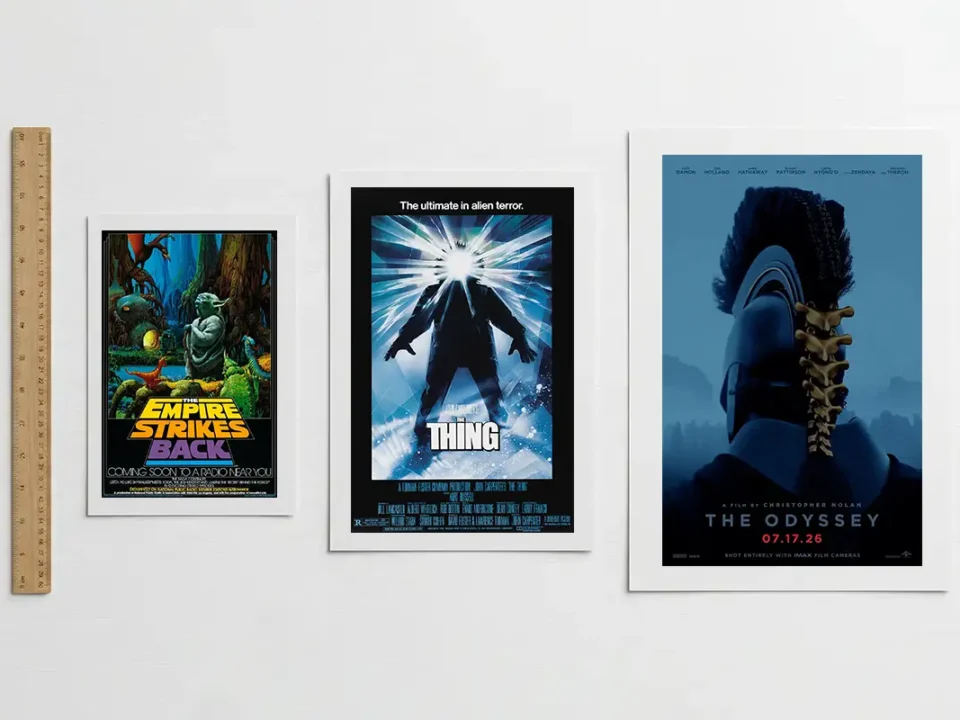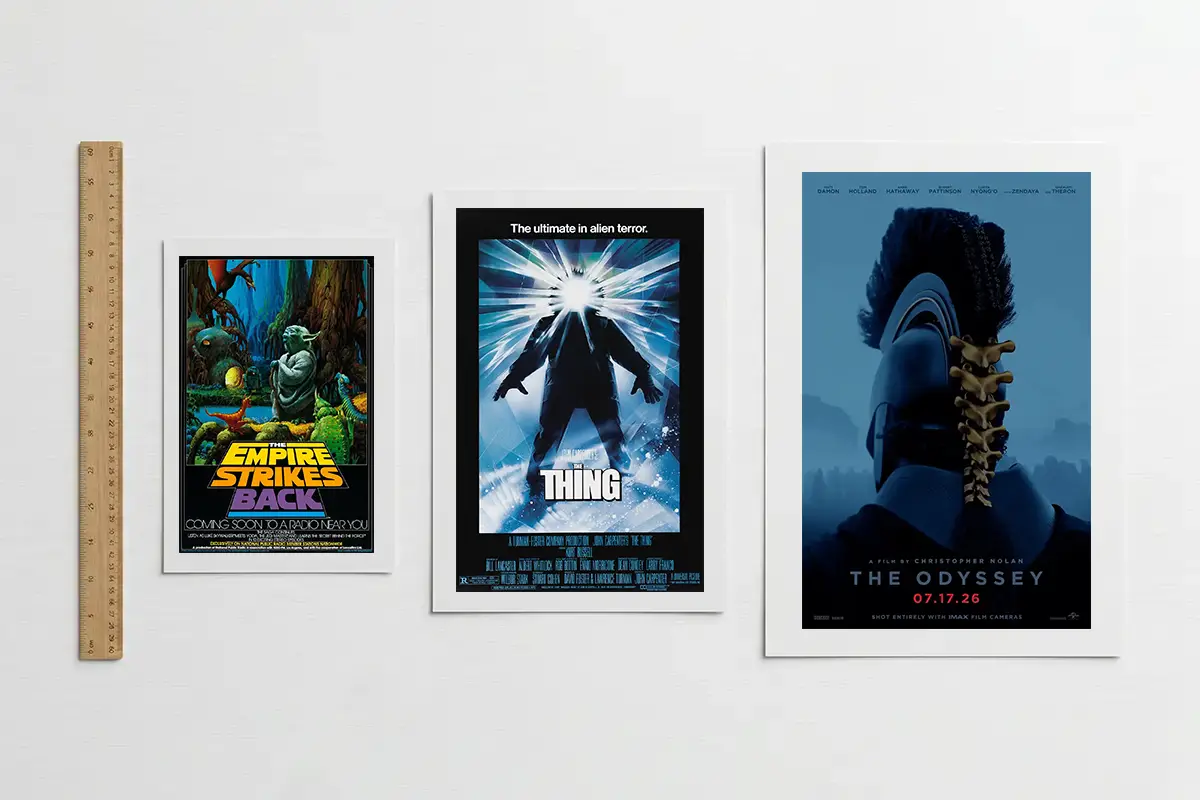

Poster Size Guide: Everything You Need to Know About Standard Poster Sizes
March 31, 2026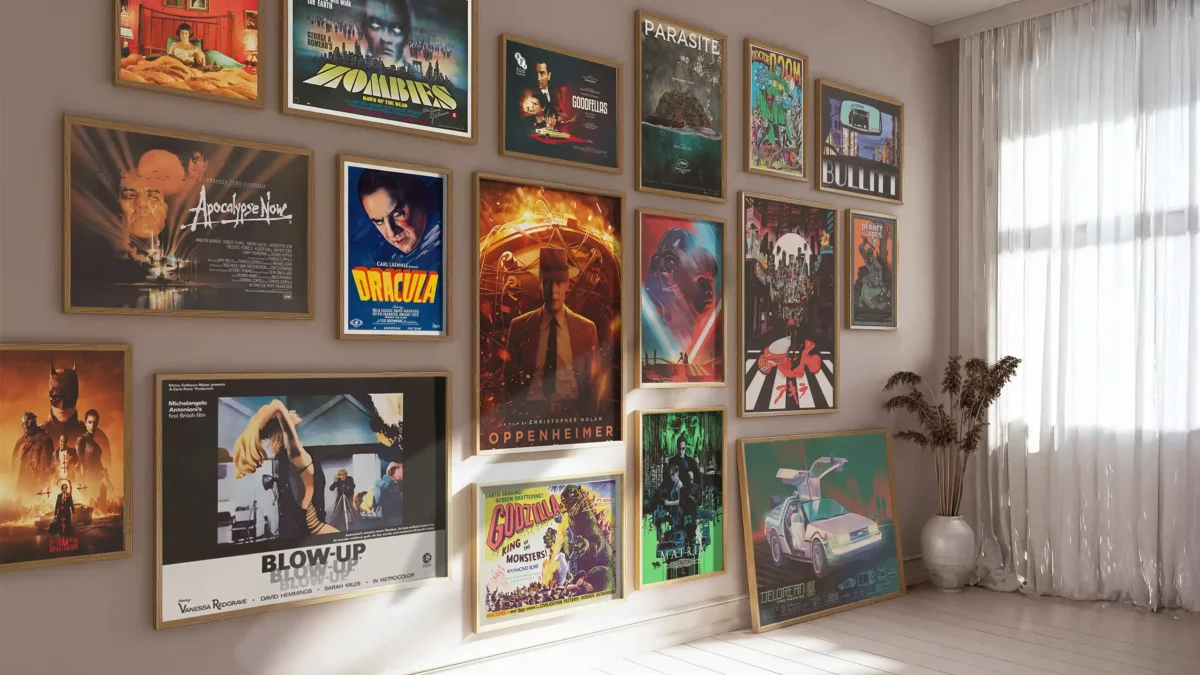
50 Best Movie Posters of All Time
The best movie posters ever created do more than sell a film — they become cultural icons. This is the definitive ranked guide to the 50 most iconic movie posters of all time, from classic Hollywood to modern cinema. Every piece is available as a museum-quality print.
📋 Jump to Era
Best Movie Posters: Modern Masterpieces (2010s–Present)
The best movie posters of the modern era pushed digital design, conceptual art, and minimalism to new heights. From Nolan’s architectural dreamscapes to Bong Joon-ho’s class warfare staircase, these iconic movie posters redefined what cinematic art could communicate.
12 Angry Men (1957)
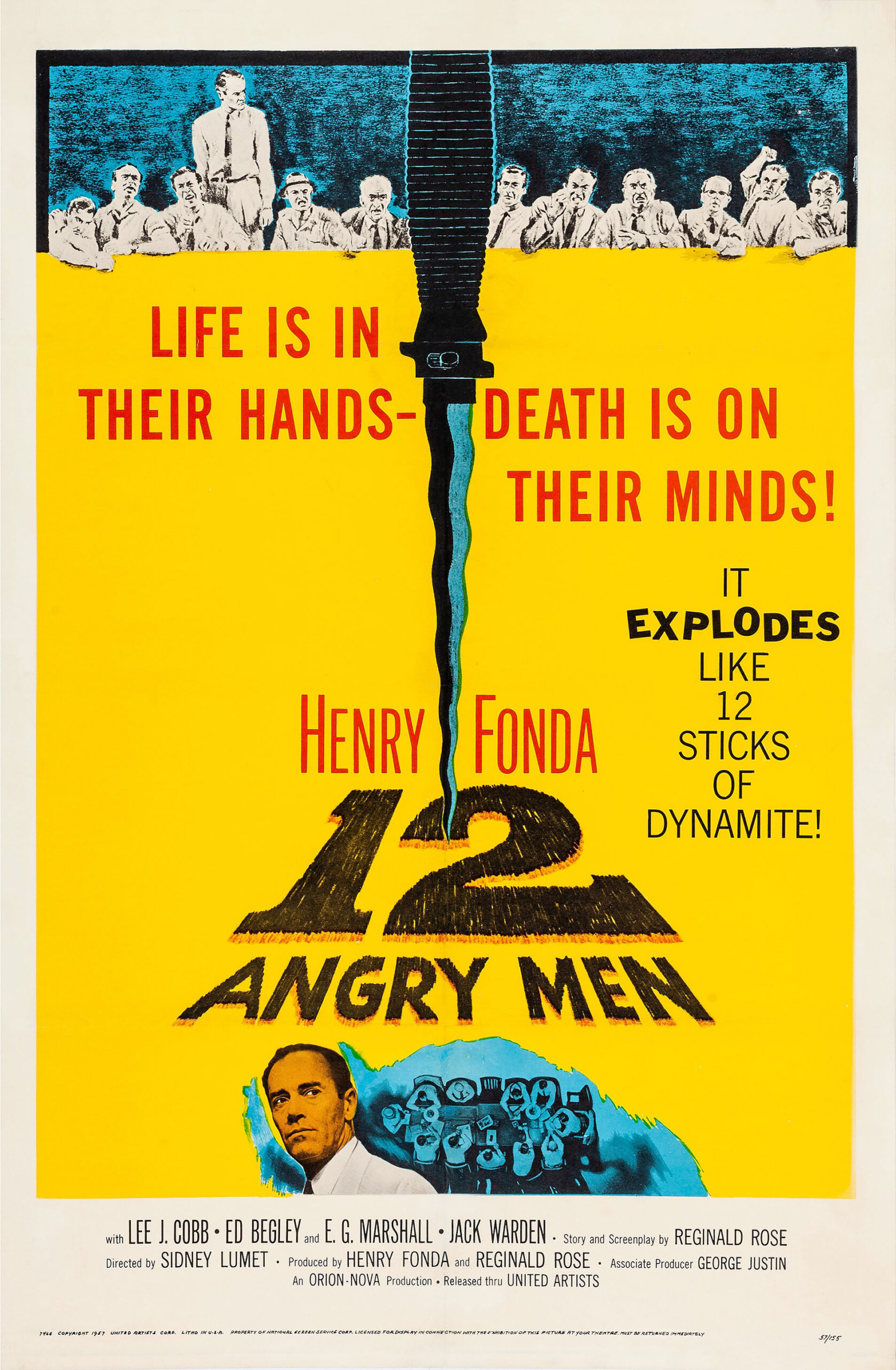
Among the best movie posters of the classic era, Twelve men in a room, shot from above, their faces angled downward — a jury box seen from the perspective of the defendant. Sidney Lumet’s claustrophobic masterpiece received a poster that used perspective itself as argument: you are the person these men are judging.
The aerial view, the close quarters, the visual compression of the frame — it communicates the film’s suffocating moral pressure before a single dialogue exchange.
Pan’s Labyrinth (2006)
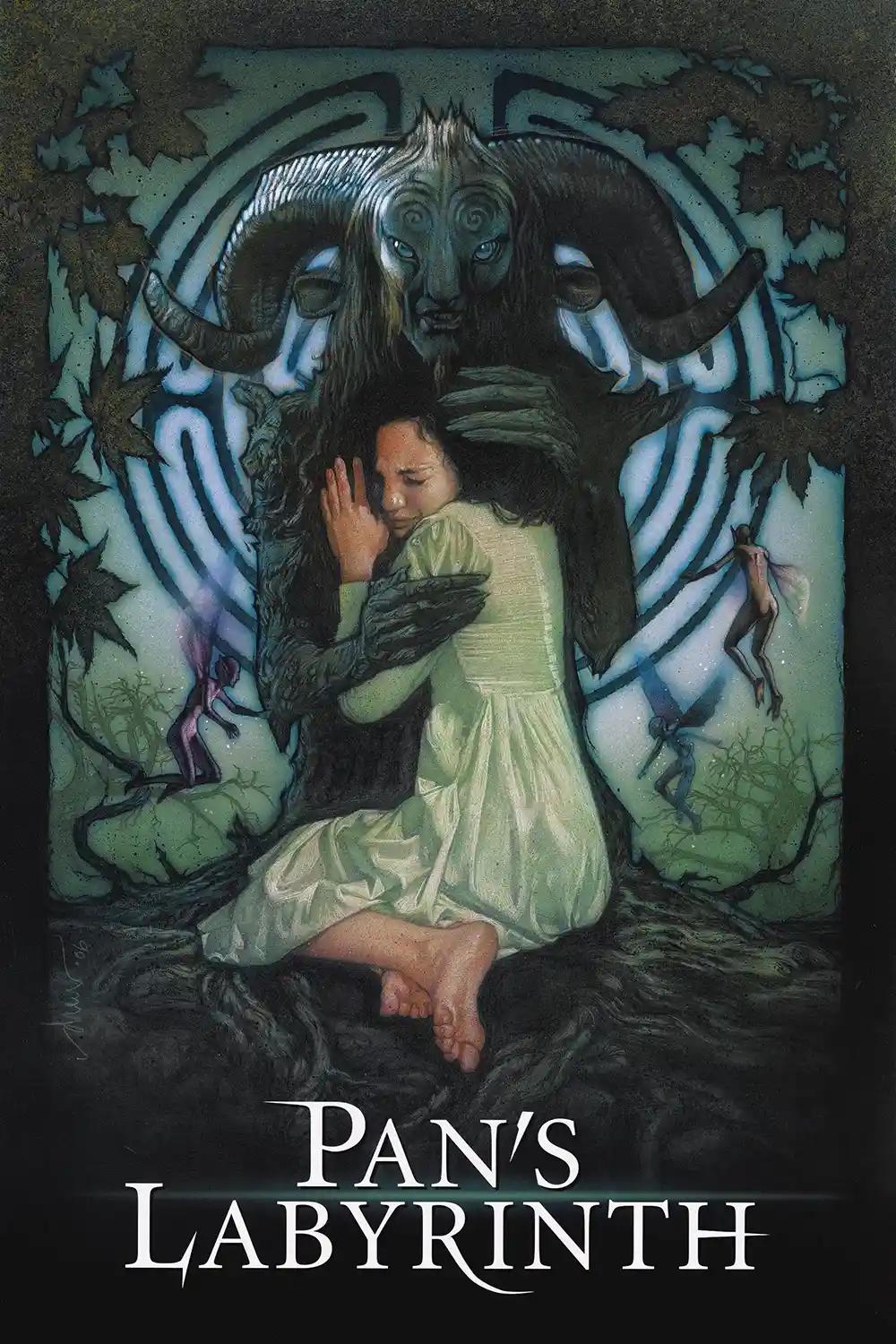
Ofelia framed inside the spiral of a dark fantasy world — creatures, stone, and magic arranged around her small figure like the architecture of a dream that isn’t safe. Guillermo del Toro’s dark fairy tale received a poster of extraordinary visual richness: the faun, the pale man, the labyrinth itself, all orbiting one girl at the center of her own terrible story.
It’s a poster that operates like a map of the unconscious.
Eternal Sunshine of the Spotless Mind (2004)
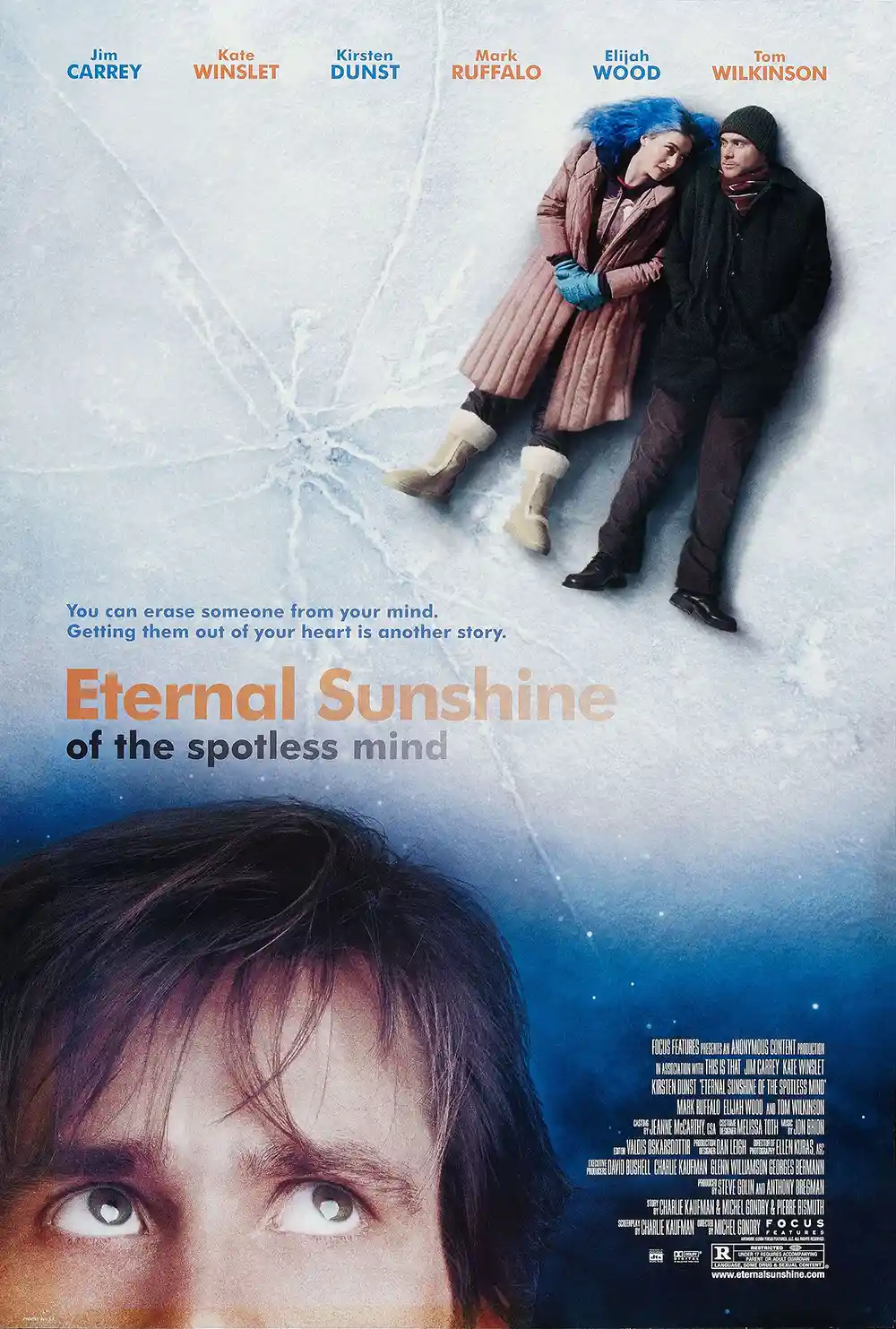
Jim Carrey and Kate Winslet lying in the snow, wrapped in each other despite the cold, the color of the image slightly drained as if memory is already fading. Michel Gondry’s film about erasing love received a poster about remembering it — the exact productive tension that makes the film work.
The blue-white palette, the intimacy, the quiet — it’s a poster that asks you to hold on before anything tells you you’re losing something.
Shop Eternal Sunshine of the Spotless Mind (2004) Canvas Art →
Taxi Driver (1976)
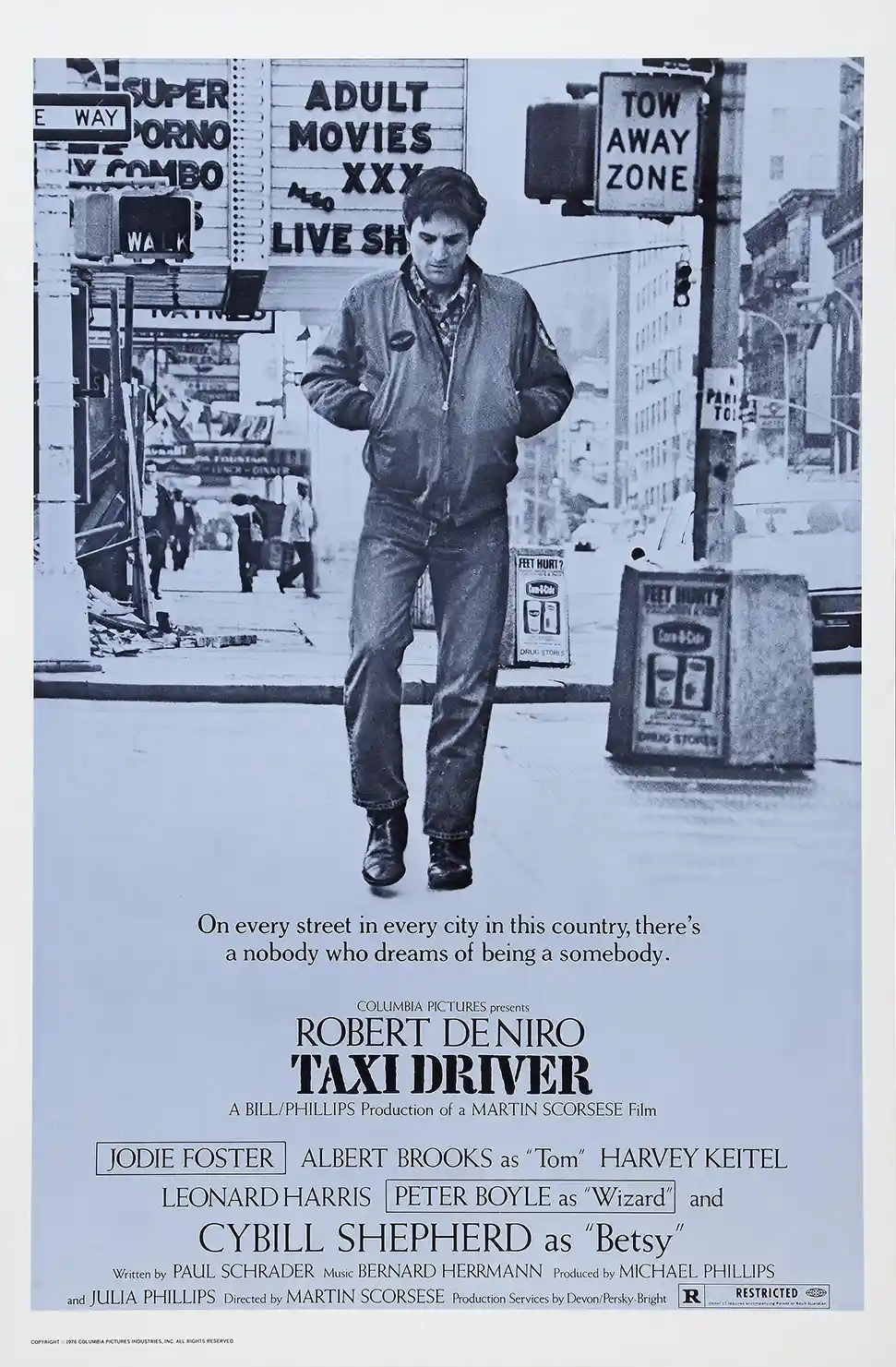
Robert De Niro’s Travis Bickle, rain-soaked streets behind him, the city as a fever and a sewer simultaneously. The Taxi Driver poster captures the alienation at the film’s core — a man looking at a city that cannot see him looking.
The neon reflections on wet asphalt, the isolation of the figure against urban density — it remains the most atmospherically faithful poster-to-film correspondence in New Hollywood cinema.
Akira (1988)
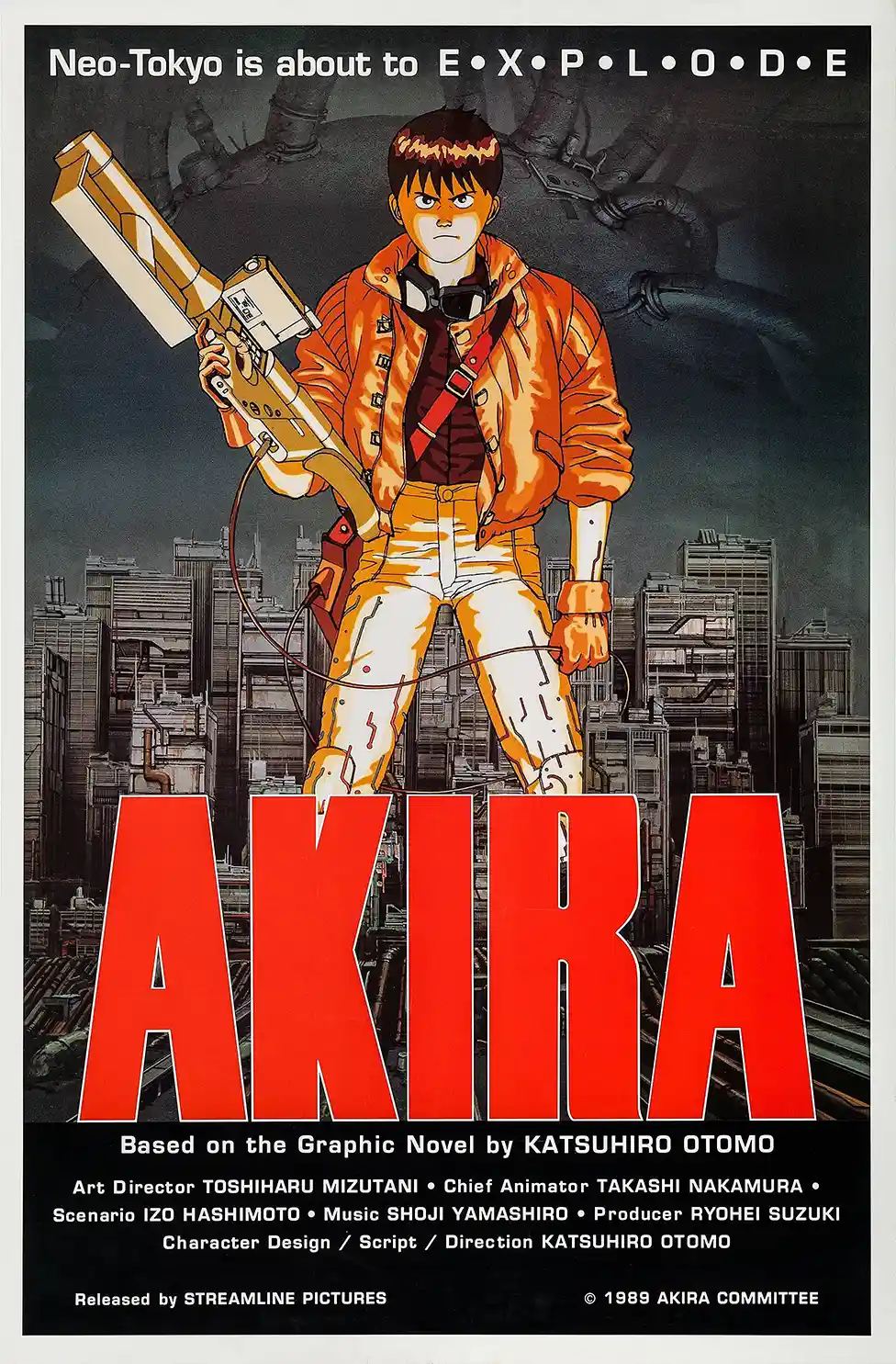
Kaneda’s red motorcycle, the neon devastation of Neo-Tokyo, the nuclear red sky of a world already ended. The Akira poster is the defining image of anime cinema for Western audiences — the first Japanese animated film poster to achieve global art-object status.
It established that animation could carry the weight of civilizational dread. Every dystopian anime aesthetic since then has referenced this image, consciously or otherwise.
Dr. Strangelove (1964)
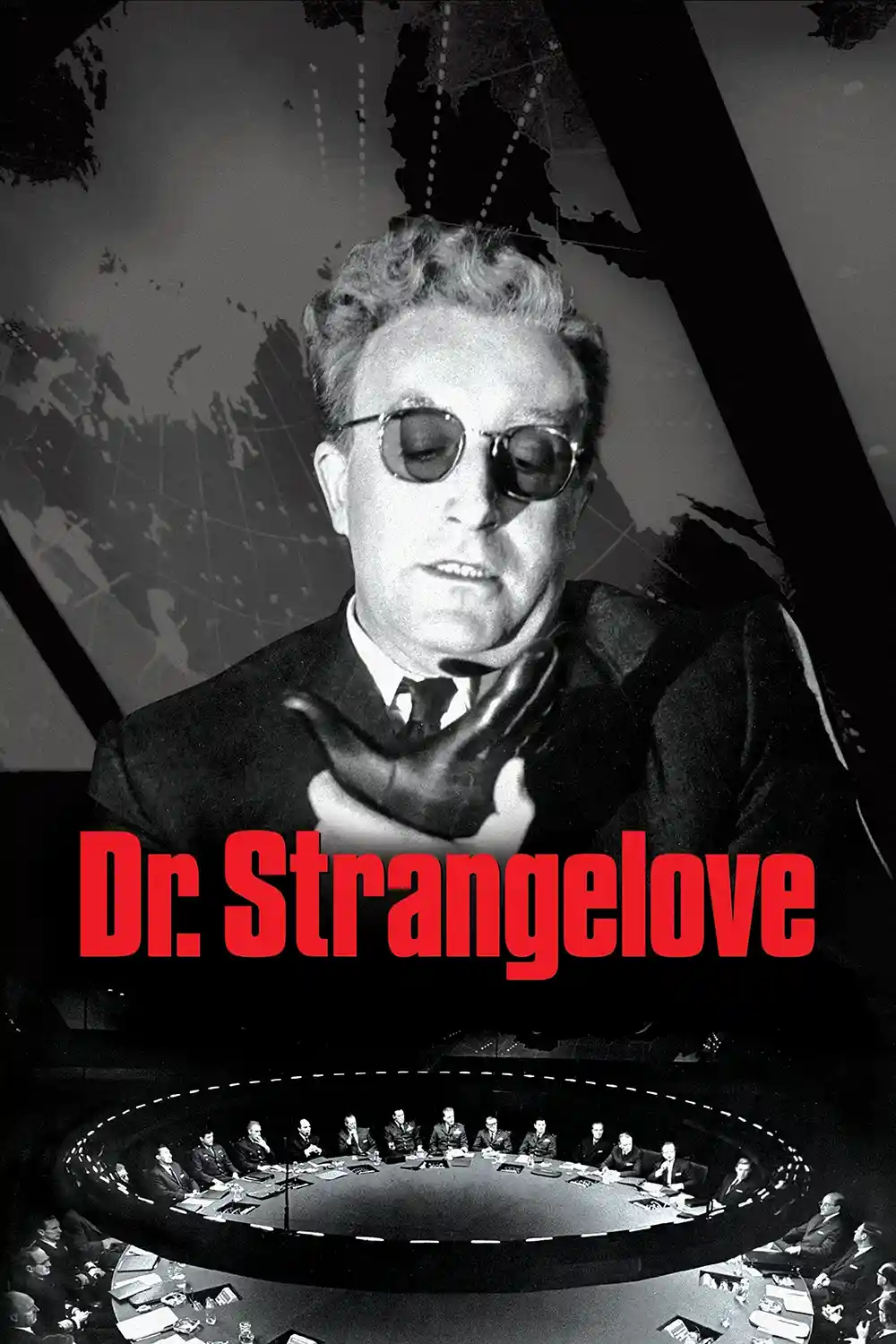
The B-52 riding the bomb. Major Kong astride the weapon of total annihilation, waving his cowboy hat like he’s won the rodeo.
Kubrick’s third entry on this list — the only director to appear three times — produced the defining poster of Cold War absurdism. It communicates the entire satirical thesis of the film in one image: the gleeful, masculine enthusiasm with which humanity was prepared to end itself.
The Grand Budapest Hotel (2014)
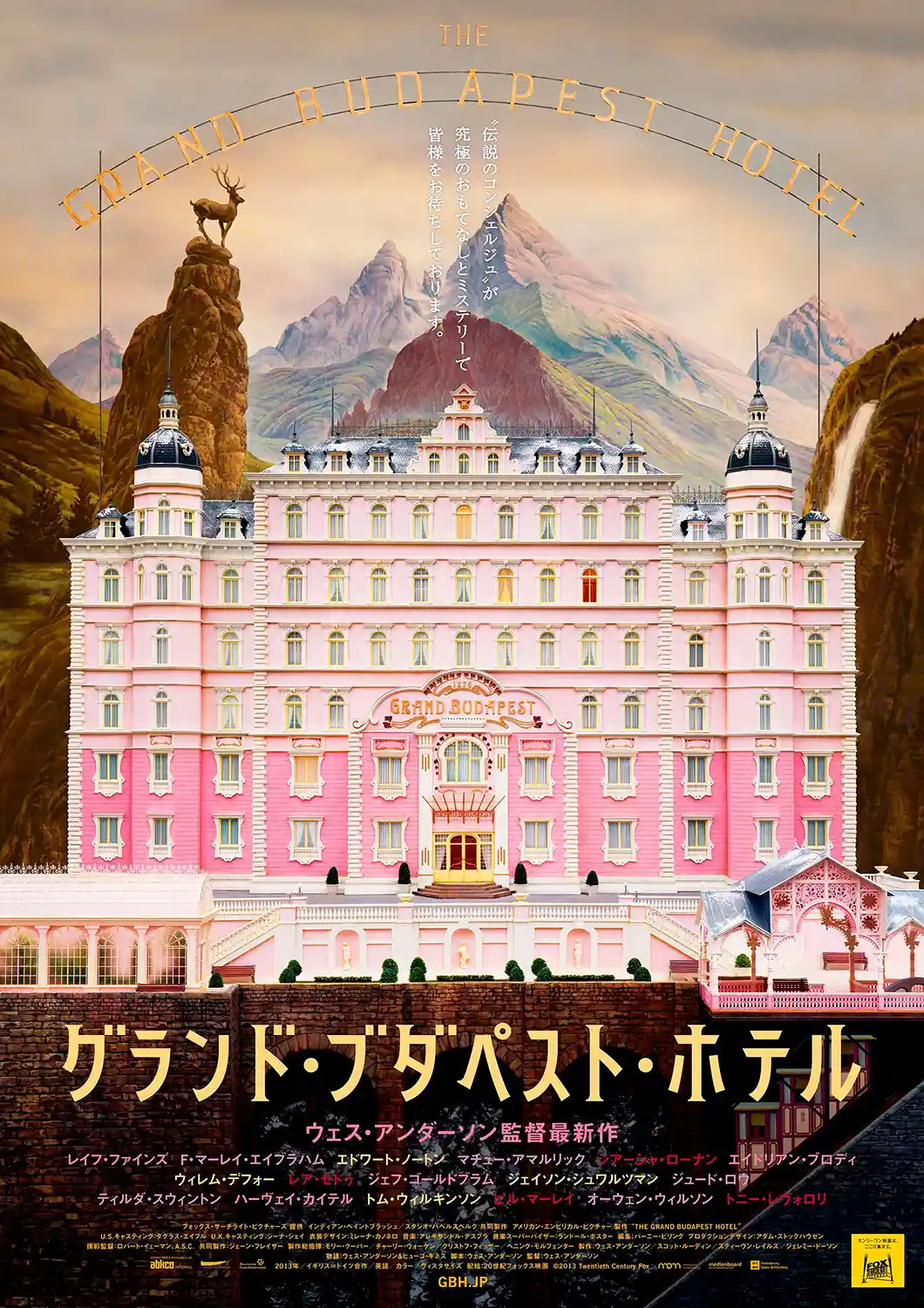
Wes Anderson’s perfectly symmetrical fantasy — every element arranged like a precious jewel in an antique box. The pastel palette, the centered composition, the almost architectural arrangement of characters and setting.
Anderson’s aesthetic is instantly recognizable in any of his posters, but Grand Budapest Hotel is the purest expression of it: a world so precisely designed it looks like a painting of a film rather than a film poster.
Goodfellas (1990)
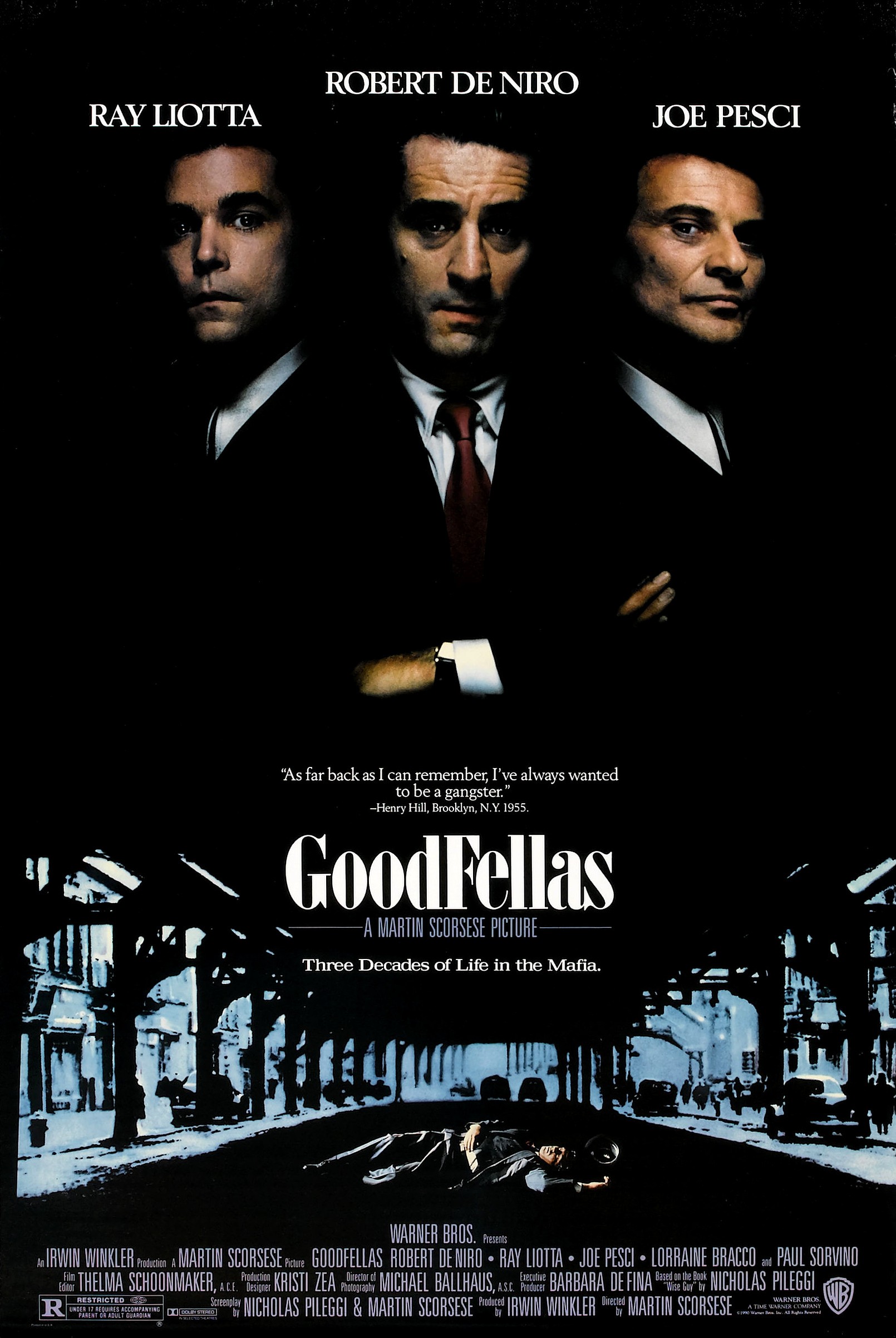
The upward-angle group portrait of the three leads — Ray Liotta, Robert De Niro, Joe Pesci — shot low to make them loom over the viewer. You are already looking up at them.
The power dynamic is established before the title appears. Scorsese’s mob epic received a poster that positioned its criminals as kings and its audience as subjects. The composition alone is a lesson in how to establish character hierarchy in a single frame.
The Dark Knight (2008)
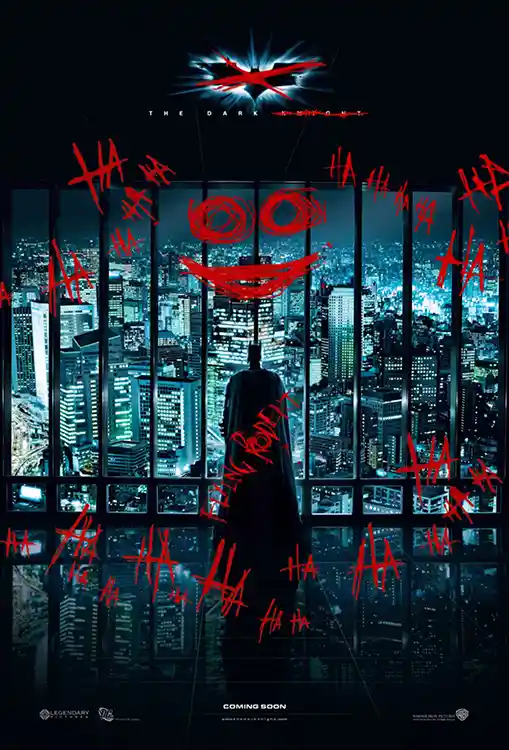
The burning bat symbol formed in the negative space of a Joker smile. One of the finest teaser posters ever designed. It told audiences everything they needed to know: this is a film about the Joker destroying everything Batman stands for.
The fire consuming the symbol. The grin around the destruction. The teaser campaign for The Dark Knight remains the gold standard of modern blockbuster marketing, and this image is its peak.
Her (2013)
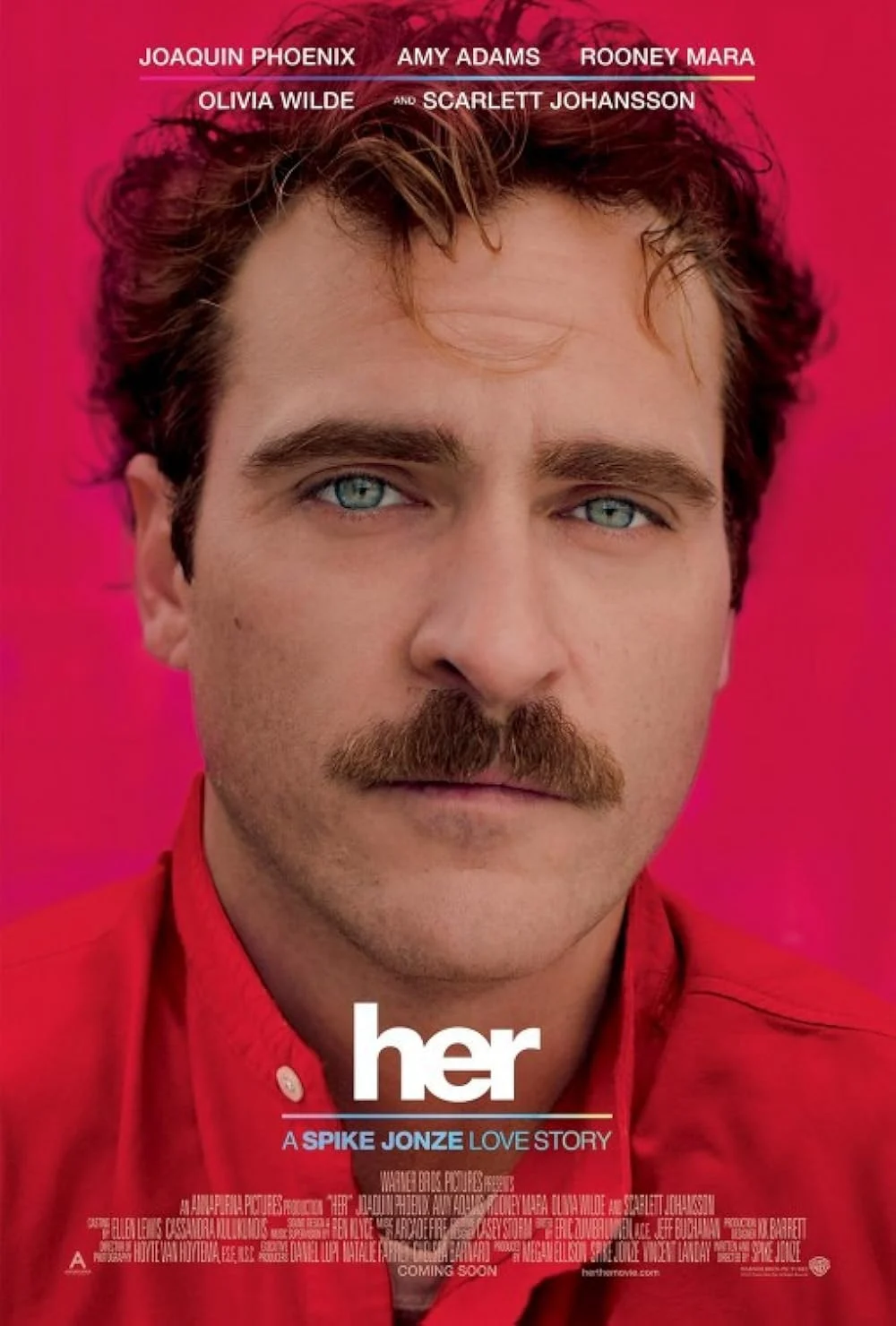
Joaquin Phoenix in a red shirt against absolute white. A love story between a man and an operating system communicated entirely through color and isolation. The red of longing against the white of absence.
Spike Jonze’s quietly devastating film received the most emotionally precise color-field poster of the decade. It doesn’t need a face, a tagline, or a title to communicate loneliness. The red shirt does all of it.
No Country for Old Men (2007)
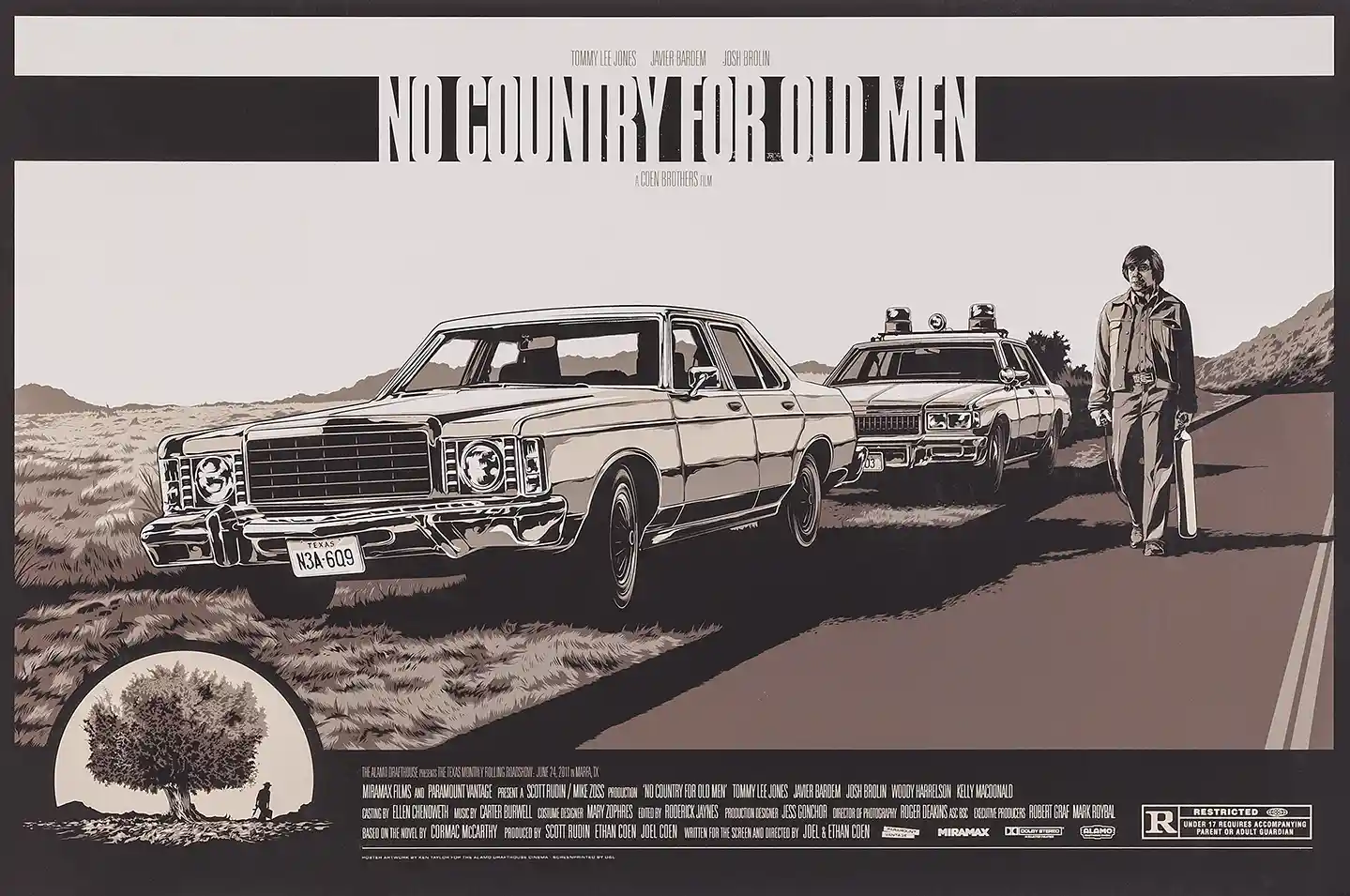
Anton Chigurh walking into darkness, a silhouette with a cattle gun, the Texas emptiness stretching behind him. Pure, unadorned dread. The Coen Brothers’ Cormac McCarthy adaptation received a poster that stripped away everything ornamental — no stars, no tagline drama, just a man walking toward you in the dark.
The restraint is the message: evil doesn’t announce itself. It walks quietly forward. Directors: Joel & Ethan Coen
A Clockwork Orange (1971)
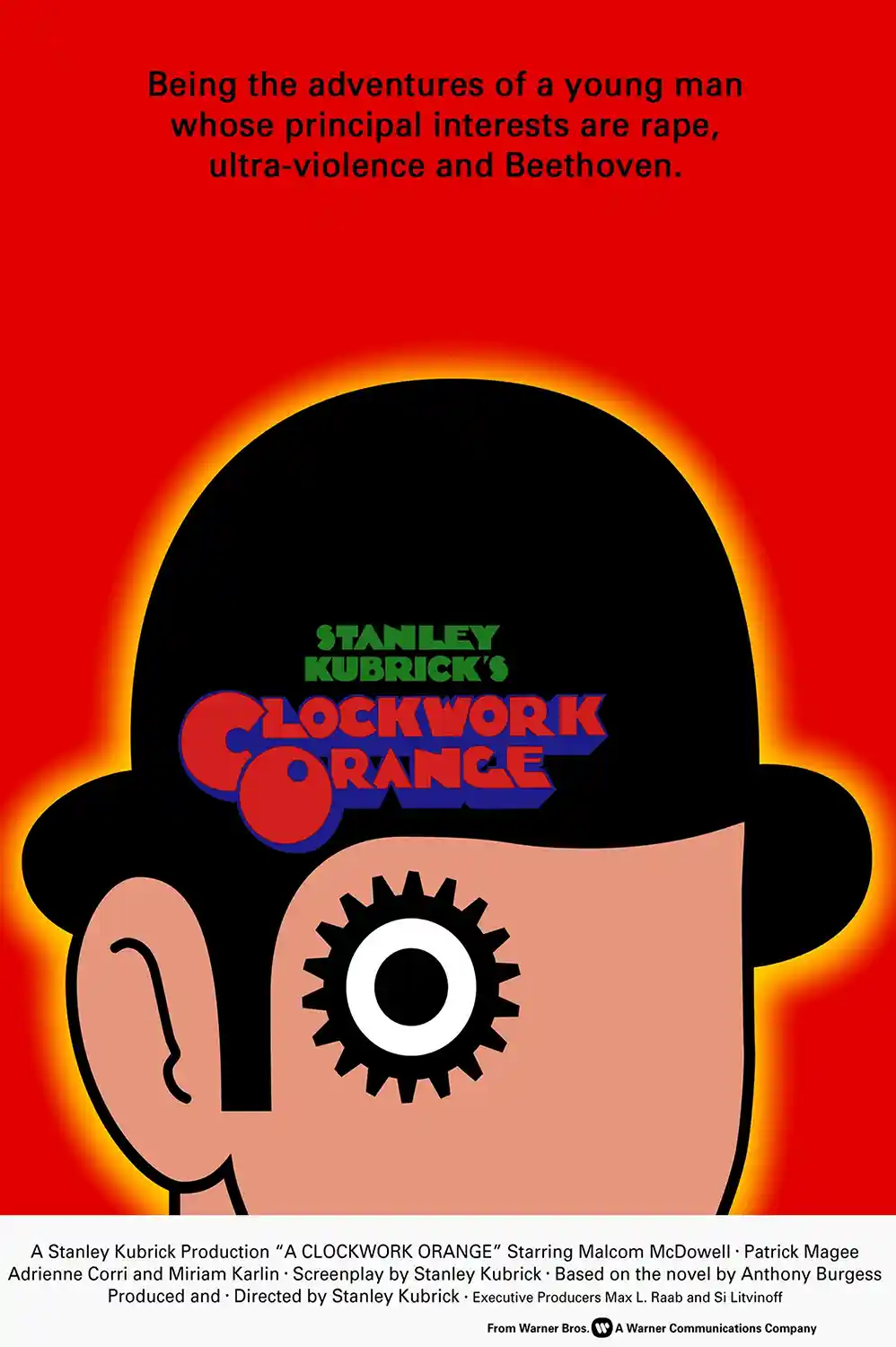
Malcolm McDowell’s single staring eye beneath the bowler hat, the geometric precision of the composition, the violence encoded in cold symmetry. Designed by Philip Castle from a concept by Stanley Kubrick himself, it’s one of the most immediately unsettling images in cinema. The eye looks directly at you.
It does not blink. It never blinks. The violence isn’t in the image — it’s in the gaze.
The Godfather Part II (1974)
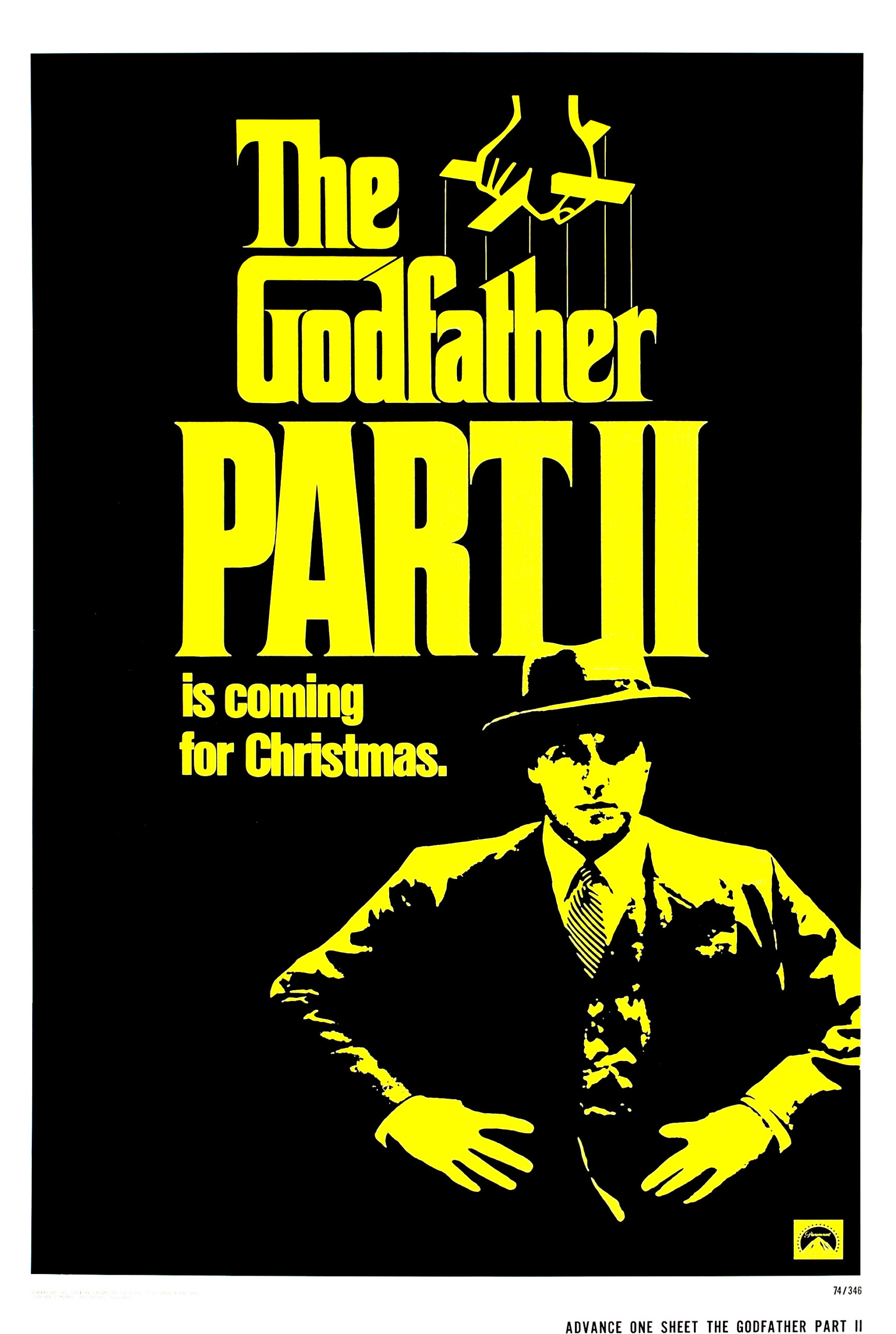
A young Vito Corleone looking out from a shadowed doorway — the origin story told in a single frame. The sequel poster mirrors and inverts the original: where the first film’s design was abstract (the puppet strings), the sequel reaches for portraiture and shadow.
The young Don’s expression carries the weight of everything the audience knows about what this man will become. One of the finest character-as-destiny compositions in poster history.
Oppenheimer (2023)
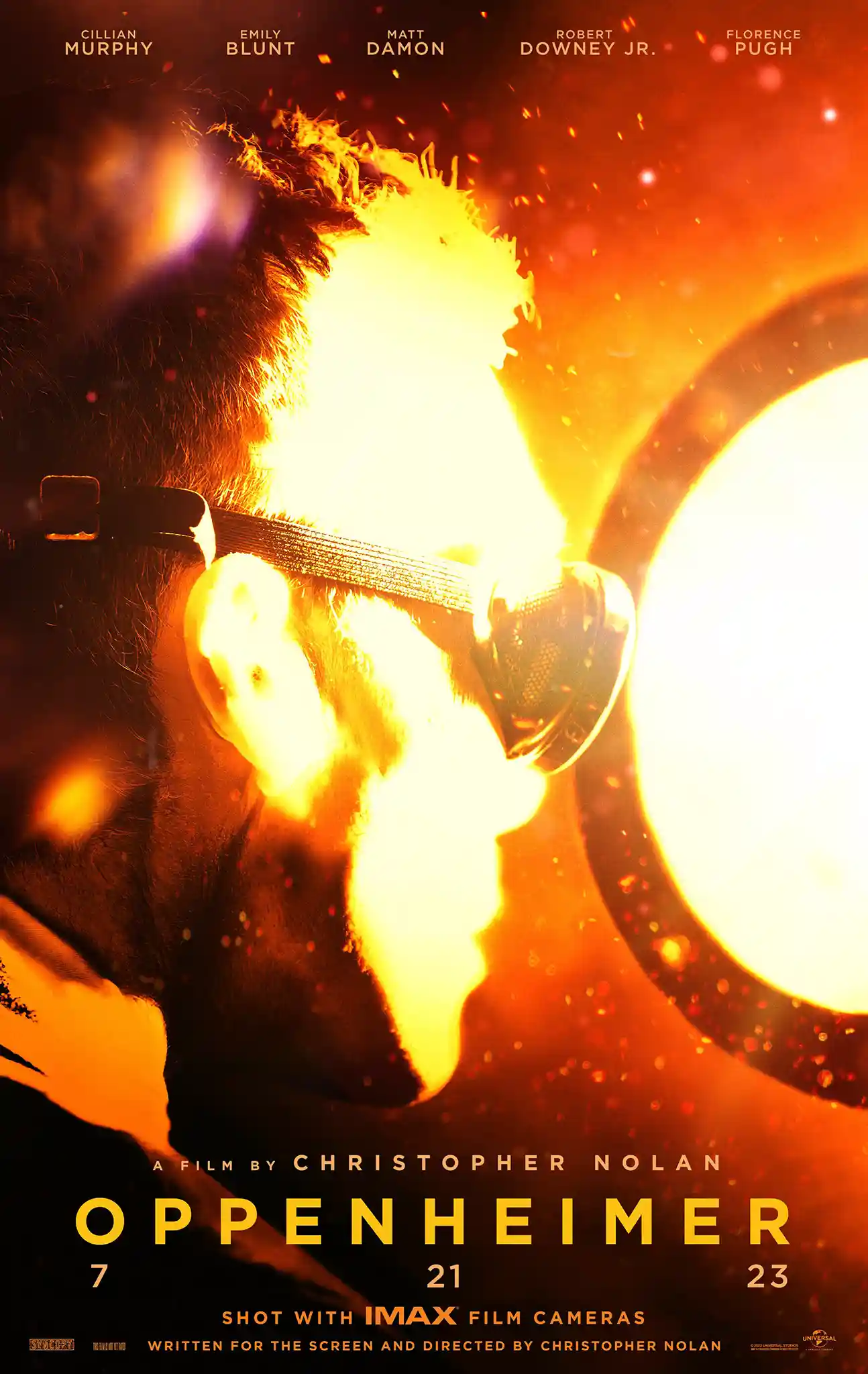
The face of Cillian Murphy engulfed in fire and atomic light — the man who became “death, the destroyer of worlds,” staring directly at the audience. Christopher Nolan’s IMAX epic received a poster that matched its moral gravity: a portrait consumed by the consequences of genius.
The fire isn’t background. It is him. The design asks the same question as the film: can you look at what you’ve made?
Dune: Part One (2021)
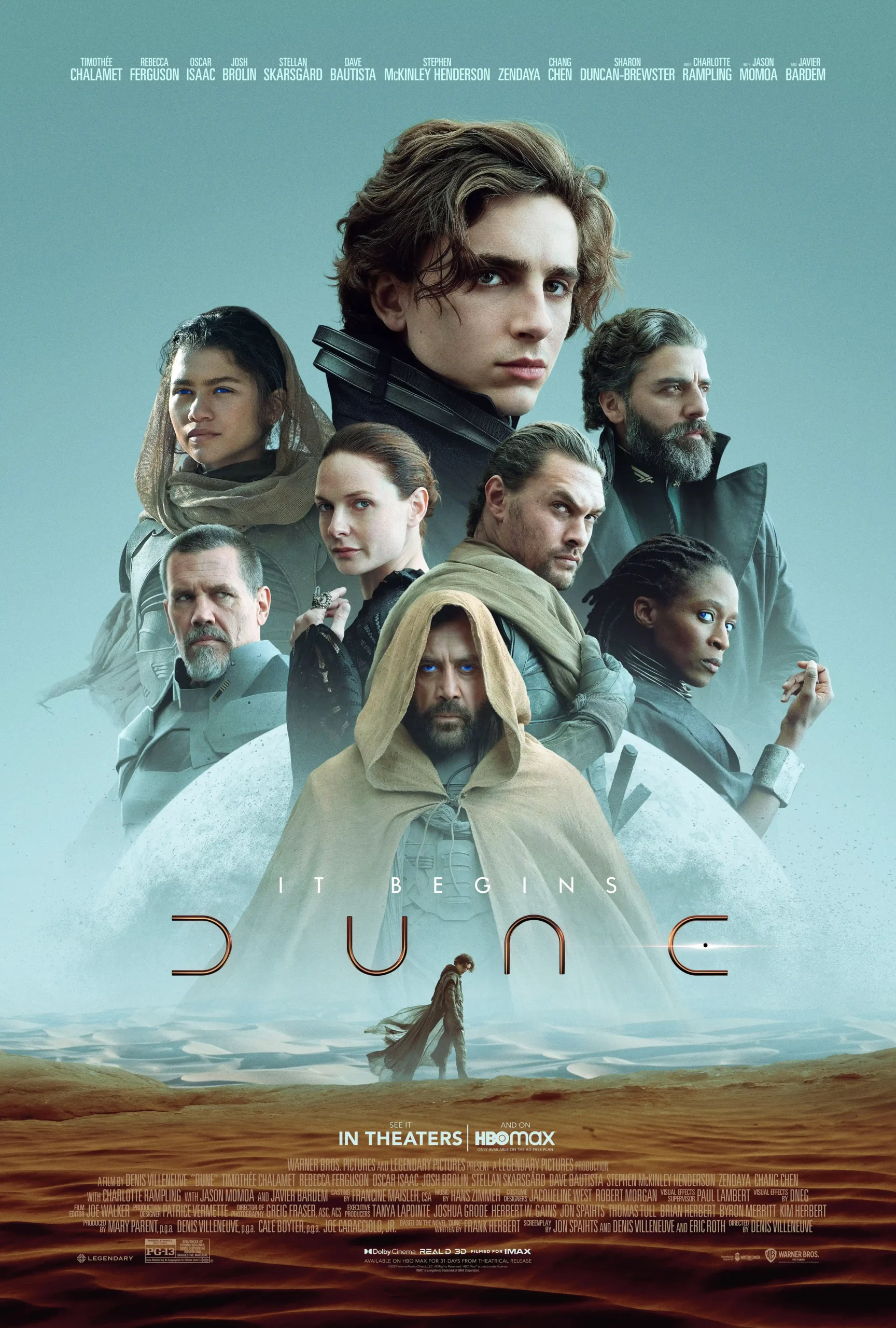
Denis Villeneuve’s adaptation of Frank Herbert’s epic novel received a poster worthy of its scale — the vastness of Arrakis reduced to a single figure against an ocean of sand. The spice-orange sky and the human silhouette convey the film’s central tension: individual significance against planetary indifference.
Timothée Chalamet’s slight figure against the desert horizon communicates Paul Atreides’ story before the film begins.
Everything Everywhere All at Once (2022)
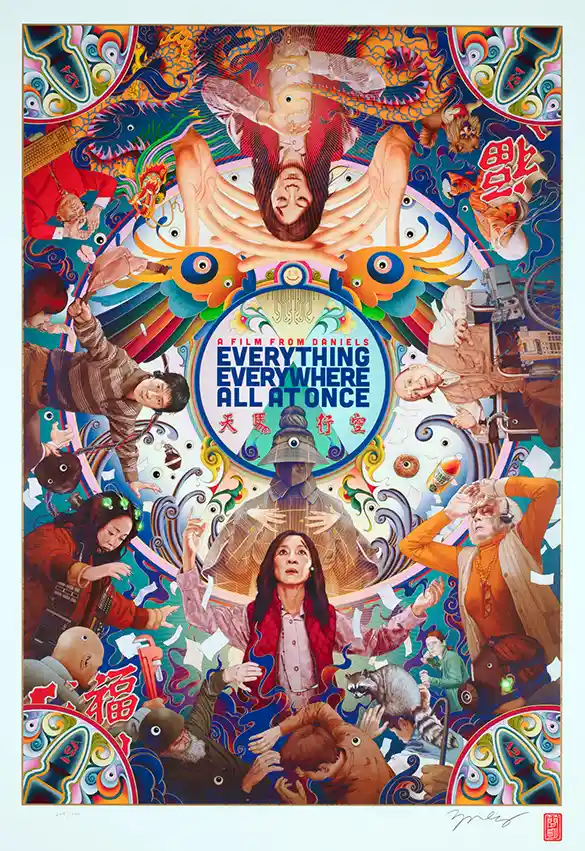
The multiverse of Michelle Yeoh, googly eyes, and organized chaos — the Everything Everywhere poster communicates the film’s entire delirious energy in a single image. It should be overwhelming and confusing, and it is, in exactly the right way.
A perfect poster for the most maximalist film of its decade — a design that dares you to look away and knows you won’t. The googly eyes alone are a visual manifesto for the entire film’s philosophy.
Joker (2019)
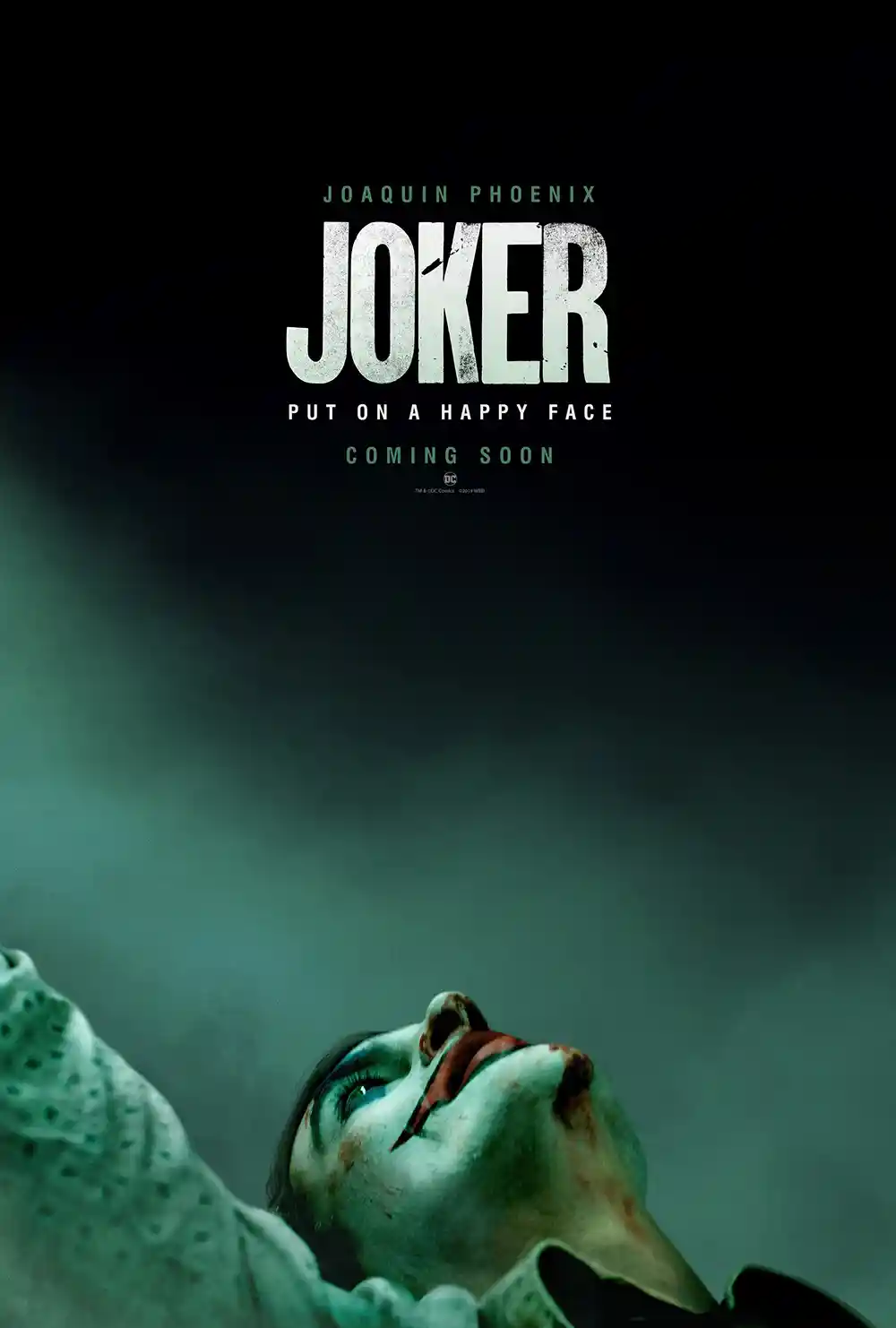
Joaquin Phoenix descending the stairs in full clown makeup, the city blurred behind him, the transformation-moment captured forever. The image was photographed by Niko Tavernise and became one of the most-shared movie images in years — before the film had even released.
It captures the exact feeling of the film: someone who was invisible finding, in the worst possible way, how to be seen. Dangerous, sad, and unforgettable.
Black Panther (2018)
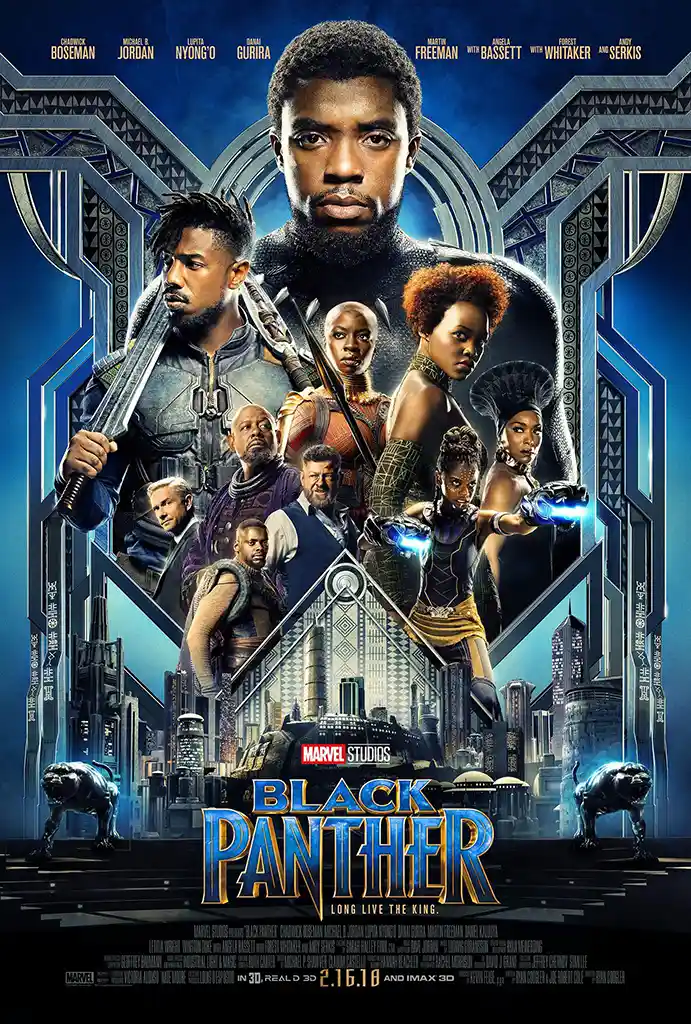
Chadwick Boseman’s T’Challa, arms crossed, the Wakandan sunset blazing behind him. Regal, powerful, historic.
The Black Panther poster became a cultural moment as much as a marketing image — it represented something that hadn’t been seen at this scale in mainstream cinema, and it looked exactly as grand as it deserved. Boseman’s posture, the Afrofuturist background, the purple and gold palette — every element earned its place.
Hereditary (2018)
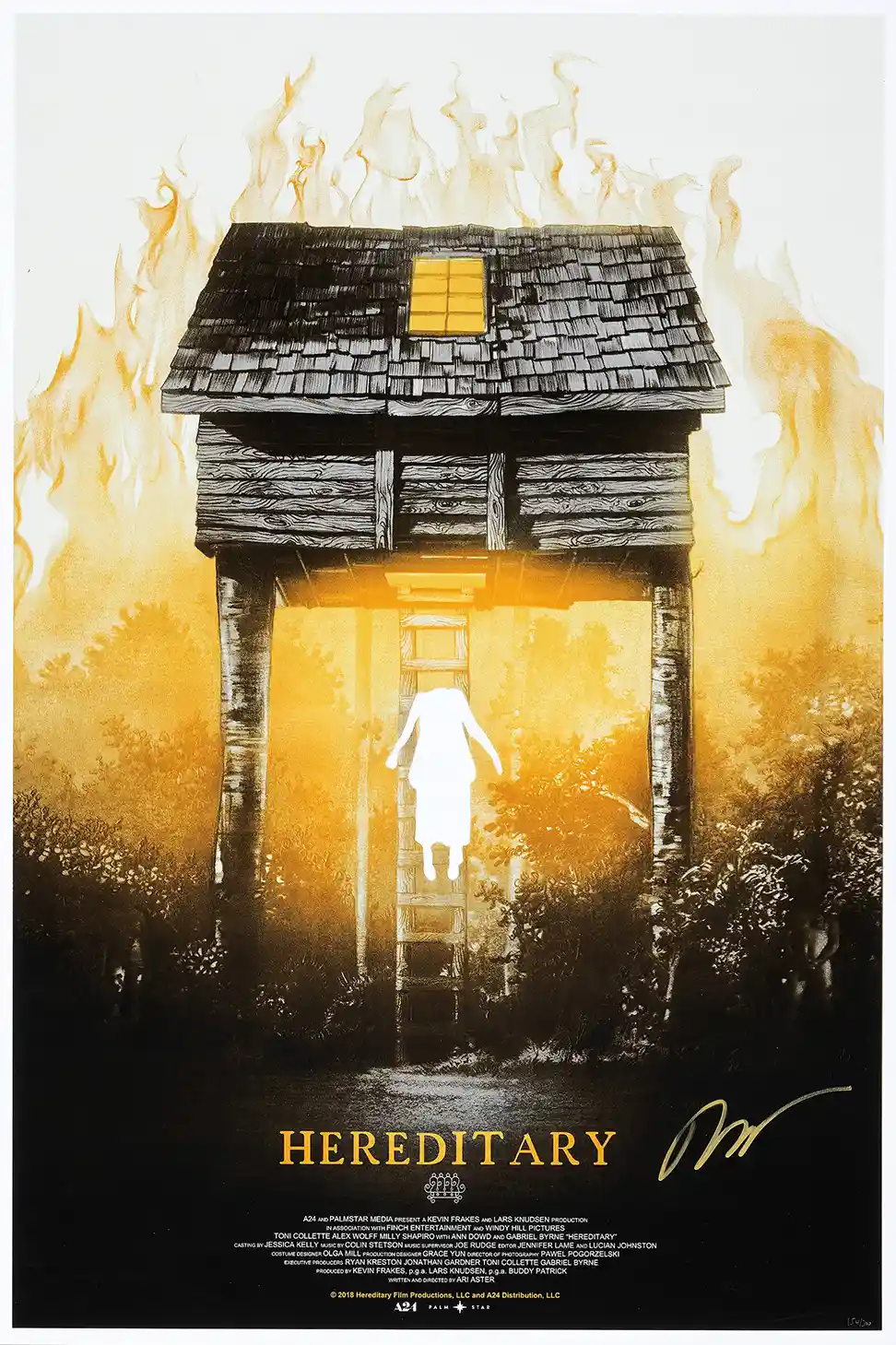
The miniature house with a figure visible in the attic window. Something is wrong with this house. Something is watching.
The Hereditary poster induces unease through mundane wrongness — dollhouse architecture that should be familiar but isn’t. A24’s marketing is consistently the most artistically ambitious in Hollywood, and this is their defining achievement. The horror comes not from what is shown, but from the uncanny wrongness of ordinary scale.
Moonlight (2016)
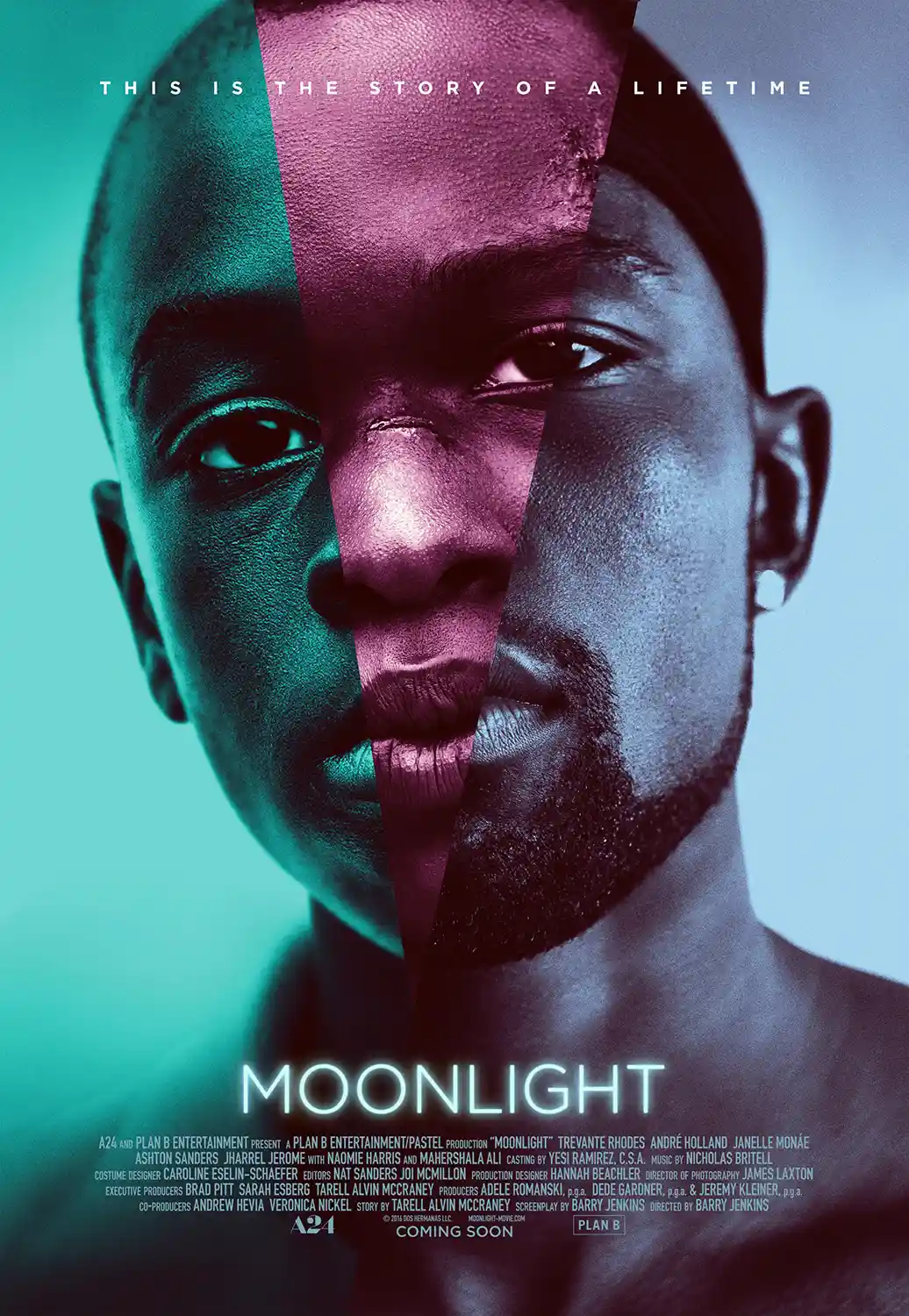
Three images of Chiron — as a child, a teenager, and a man — arranged in a mosaic of fragmented color. Simple, quiet, and profound. It communicates the film’s structure (three acts, three versions of one person) while suggesting the fragmented nature of identity and memory.
Won Best Picture. Deserved every award. The poster announced that this was a film about becoming — the long, nonlinear process of discovering who you are.
Parasite (2019)
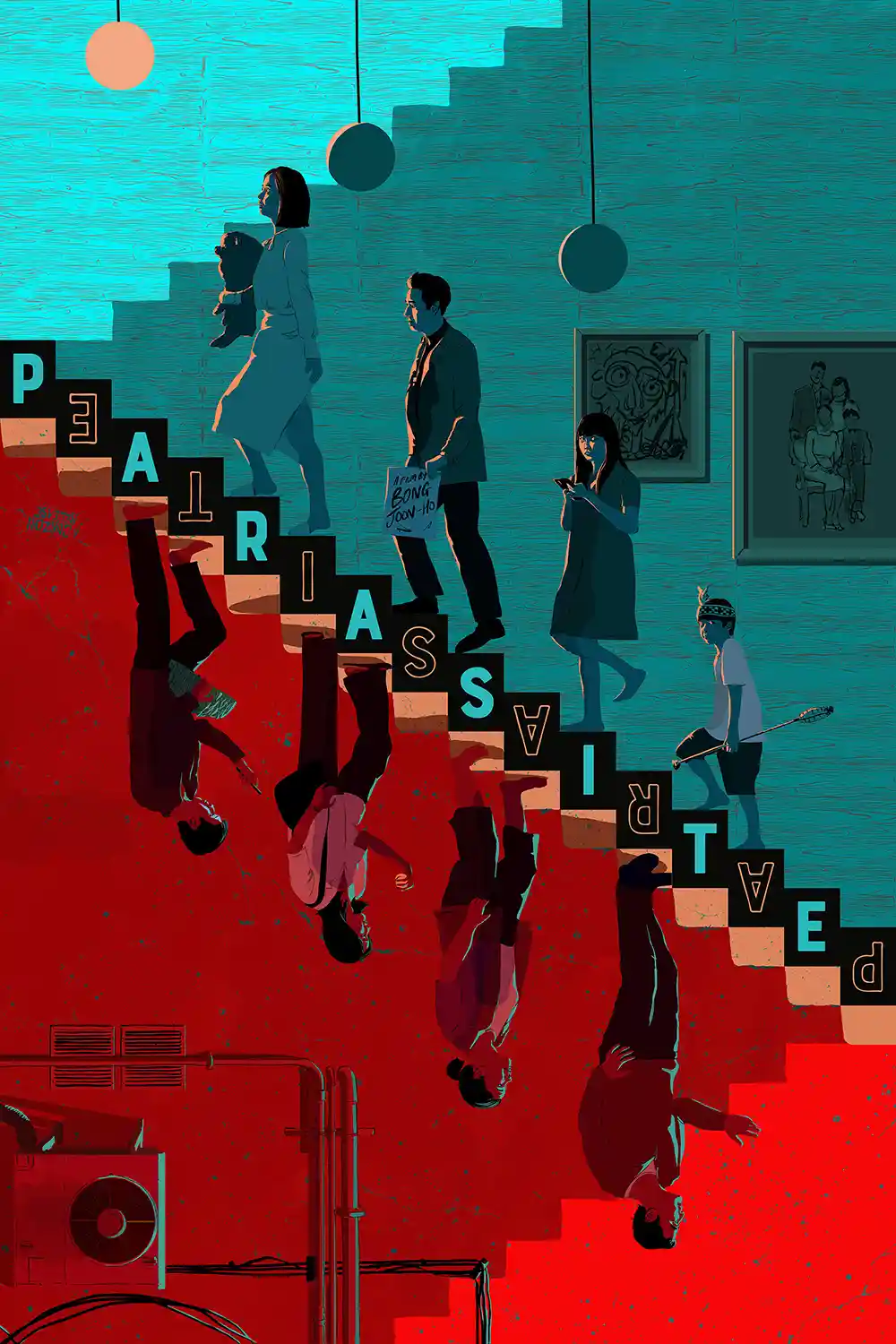
The Korean theatrical poster for Bong Joon-ho’s Oscar winner is a masterpiece of graphic design — the Park family on top, the Kim family below, connected and divided by the staircase that is both their link and their separator. It’s the film’s entire class warfare thesis illustrated as architecture.
The division of the frame — light above, shadow below — does more analytical work than most film criticism. The original Korean version remains superior to all international variants.
Get Out (2017)
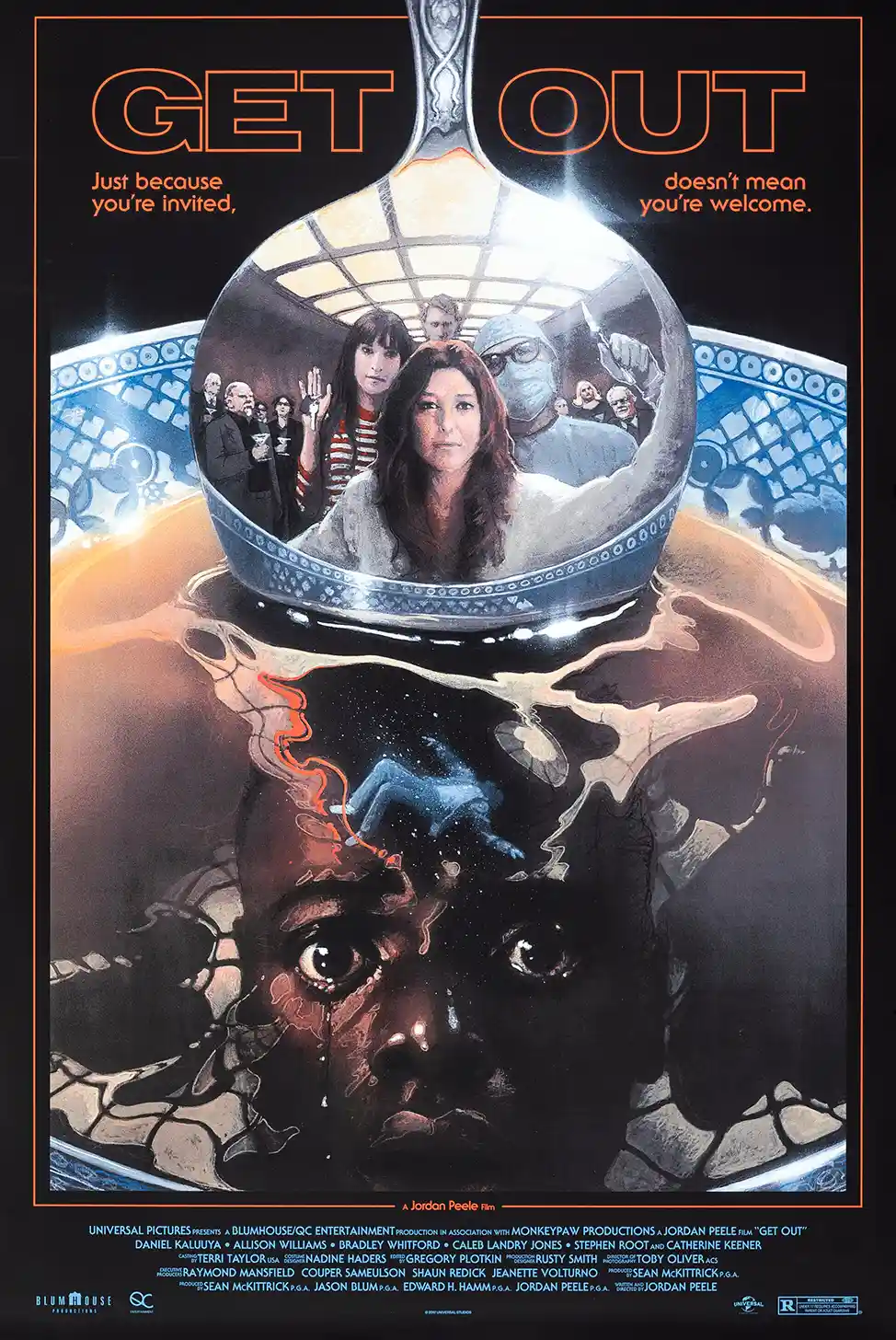
Jordan Peele’s debut horror film used its marketing to set up the film’s themes before a single frame was shown. The teaser poster — Daniel Kaluuya’s tearful face, the tear forming before it falls, the white background suggesting sterility and silence — communicated grief, fear, and deep unease without revealing anything about the plot.
Considered one of the best movie posters in the horror genre this decade. A face doing the work a hundred props couldn’t.
Mad Max: Fury Road (2015)
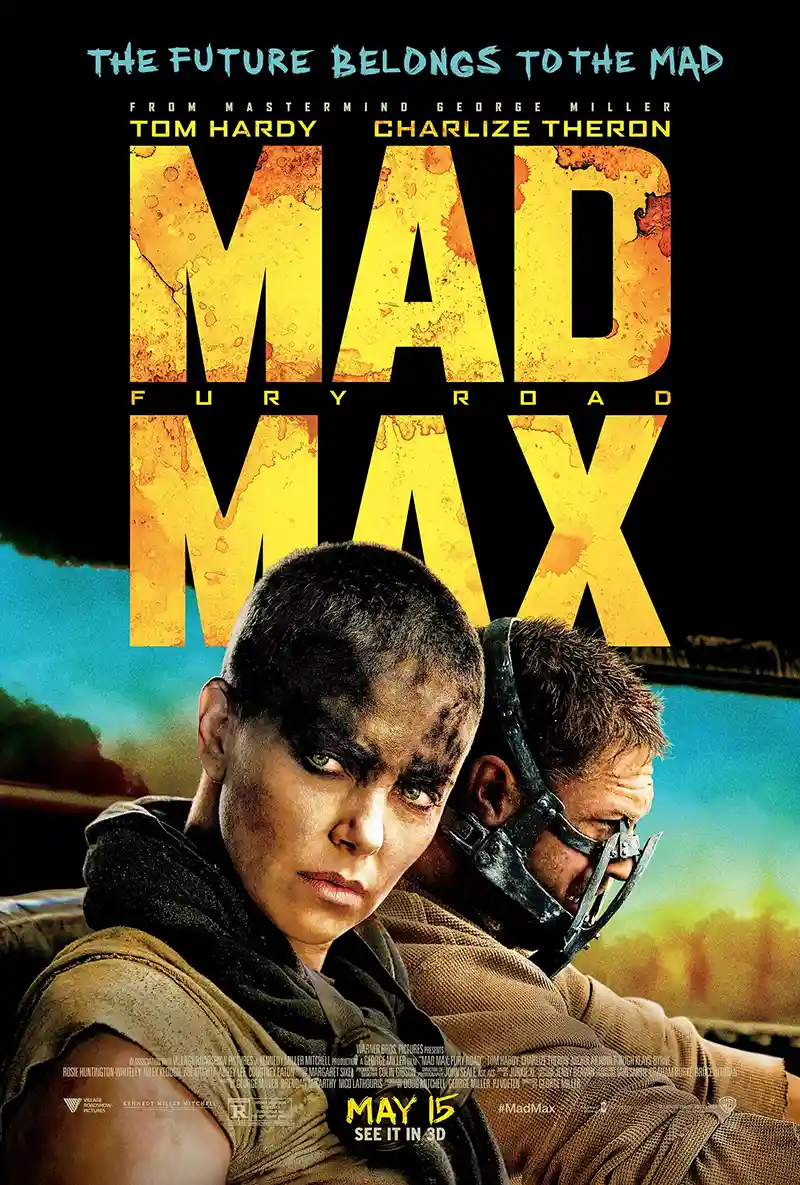
The War Rig charging through an apocalyptic storm, bolts of lightning surrounding it, the entire sky burning orange and red. It looks like a painting by a mad prophet.
George Miller’s film was a practical effects miracle, and the poster communicated its intensity perfectly. Every element is in motion — the truck, the lightning, the storm, the fire — and yet the composition holds. It is the most kinetic static image in blockbuster poster history.
Interstellar (2014)
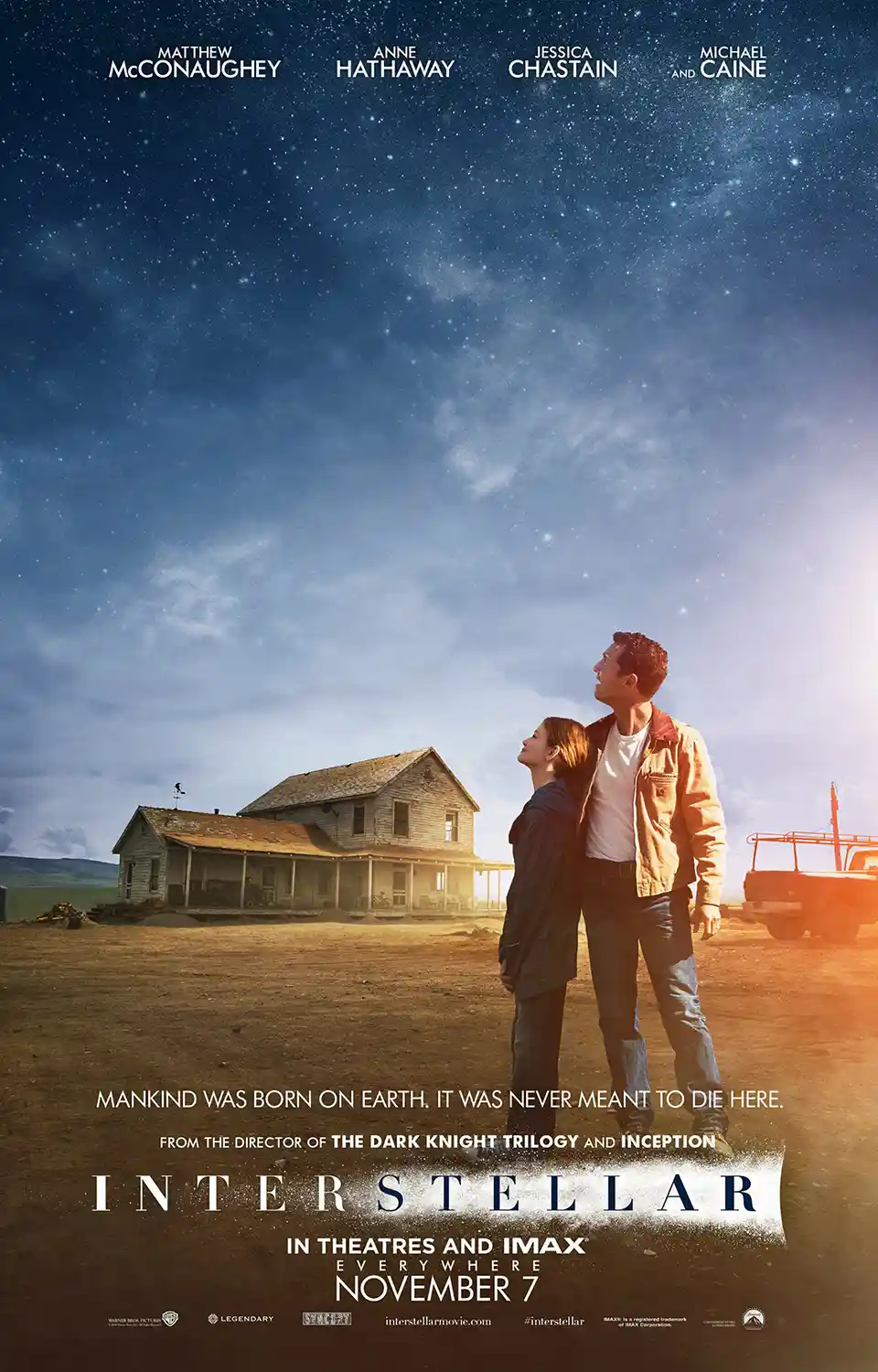
The tiny silhouette of Cooper’s truck against the massive wall of dust rolling across the horizon. It’s scale weaponized as emotion — humanity reduced to a speck against the indifferent enormity of nature.
Christopher Nolan’s space epic deserved a poster of this magnitude, and it received one. The design communicates the film’s central question — what are we, measured against the universe? — through nothing more than the ratio of a truck to a dust storm.
Inception (2010)
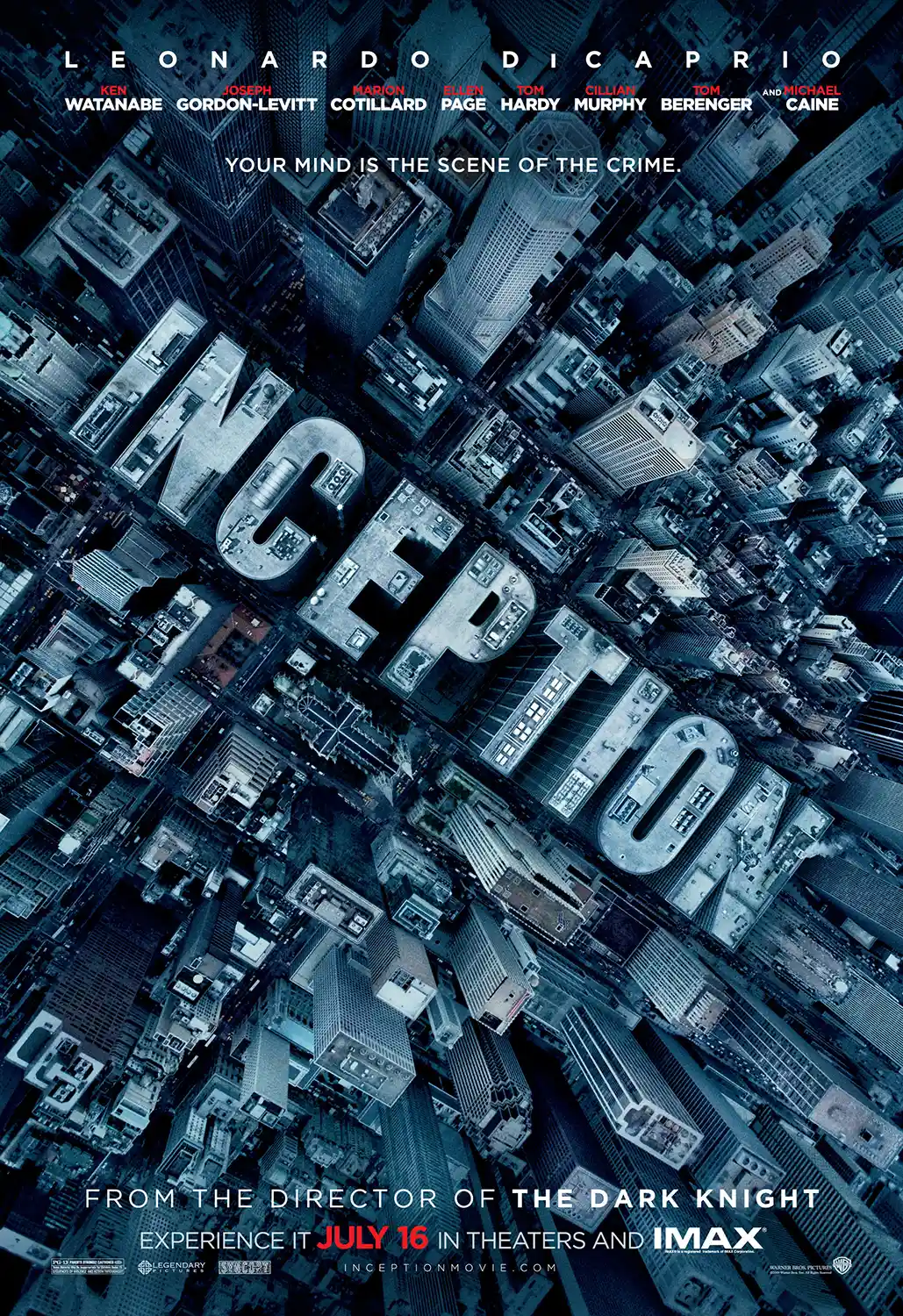
The folding city — Paris bending back on itself, Cillian Murphy running on a sidewalk that defies gravity. It communicated the film’s central concept (dreams bending reality) with jaw-dropping visual clarity.
Within a week of its release, it was the most-shared movie image on the internet. The poster didn’t just sell a film — it made the concept of “dream architecture” visually legible to a mass audience in a single image.
Best Movie Posters: Blockbuster Era (1990s–2000s)
The best movie posters of the 1990s and 2000s defined a generation. From Pulp Fiction’s pulp-cover cool to The Matrix’s digital rain — these iconic movie posters became the wallpaper of a decade.
Spirited Away (2001)
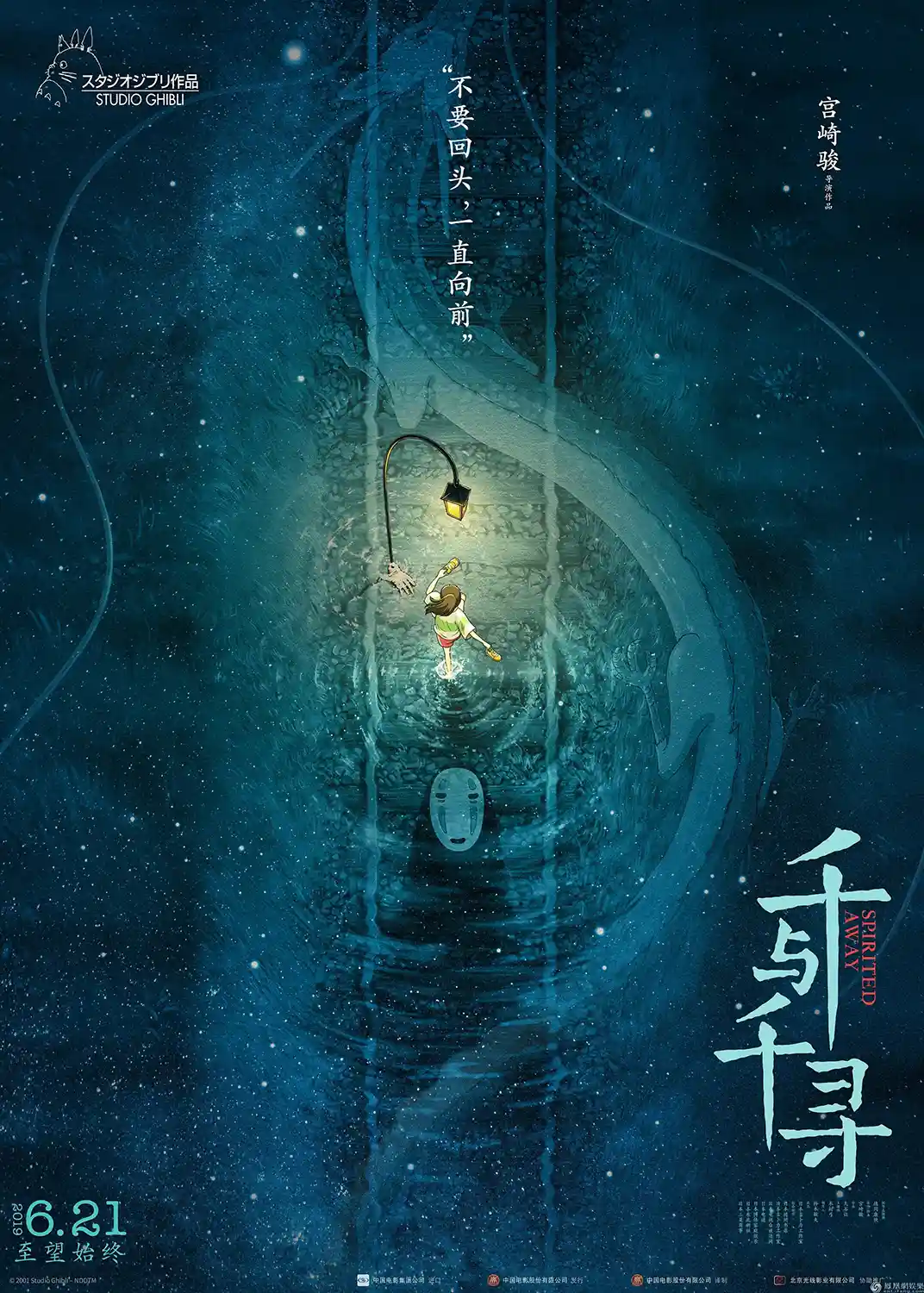
Studio Ghibli’s theatrical posters have a distinctive hand-drawn quality that digital design has never replicated. Chihiro running across the water, the spirit world stretching around her — it’s illustration as invitation.
This best movie poster from Studio Ghibli makes you want to step into it. The warmth of the hand-drawn linework, the impossible colors of the spirit bathhouse in the distance, the smallness of one girl against a world of magic — it communicates childhood wonder perfectly. Studio: Studio Ghibli / Hayao Miyazaki ✨ Modern Masterpieces: 2010s–Present {#modern}
The Lord of the Rings: The Fellowship of the Ring (2001)

New Line Cinema’s theatrical poster for Fellowship — the nine members of the Fellowship silhouetted against the fiery Eye of Sauron — set the tone for the entire trilogy. Epic in scale.
Mythic in feeling. It told audiences before a single trailer that this was not a children’s fantasy but a full-scale mythological epic. The composition borrowed from classical painted battle scenes and elevated the film poster into something closer to a literary illustration.
Key element:Nine small figures against a vast, burning eye — the weight of impossible odds
Shop The Lord of the Rings: The Fellowship of the Ring (2001) Canvas Art →
Forrest Gump (1994)
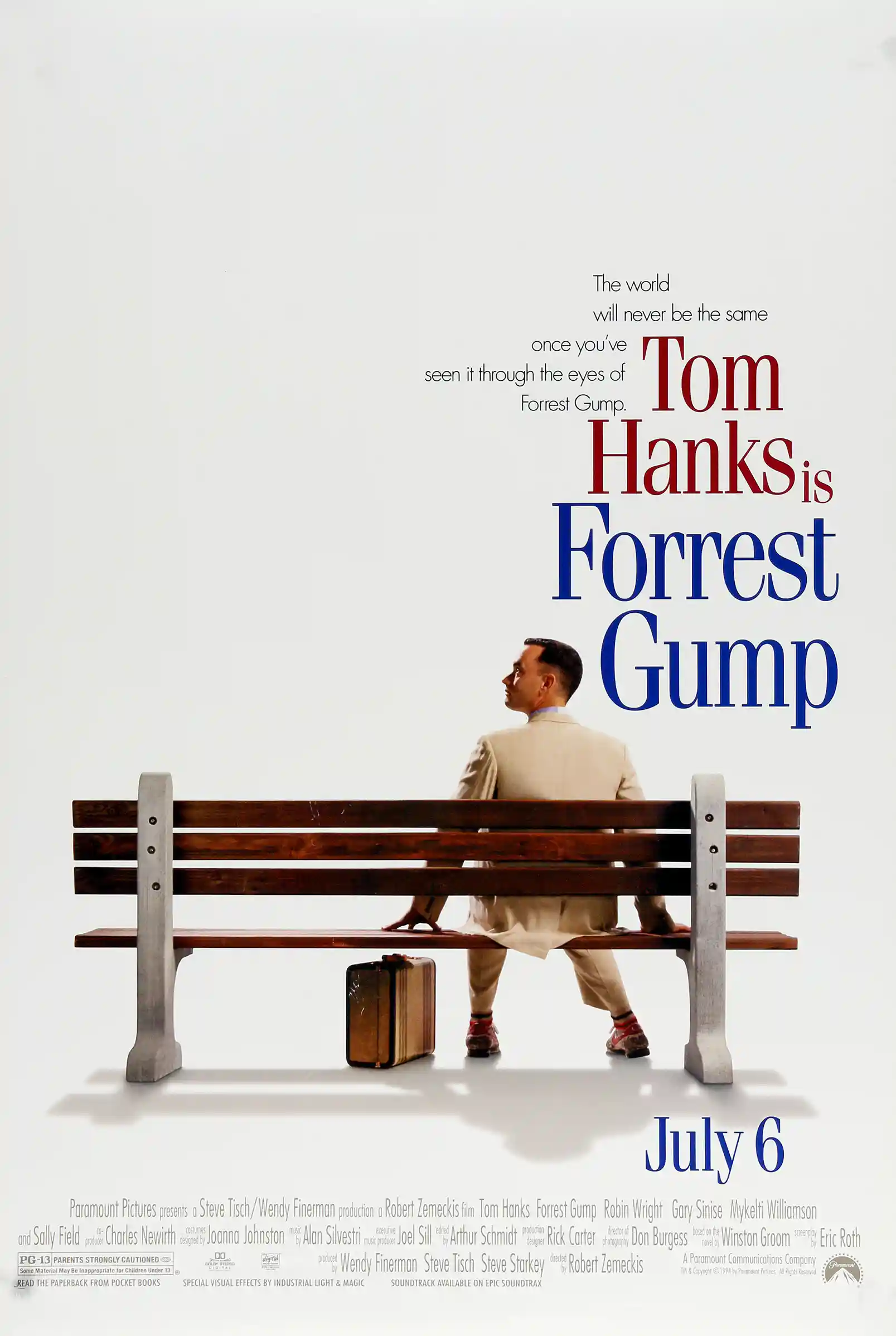
Tom Hanks on a bench, a feather floating overhead. It’s unpretentious, warm, slightly melancholy — exactly like the film.
The simplicity of the composition is deceptive; it took real skill to make a poster this unassuming feel this memorable. The feather is the film’s entire thesis — life as something that drifts, falls, and lands somewhere unexpected — and placing it at the top of the frame without explanation takes genuine confidence.
Key element:The feather — floating above Forrest, unhurried, going wherever it goes
Jurassic Park (1993)
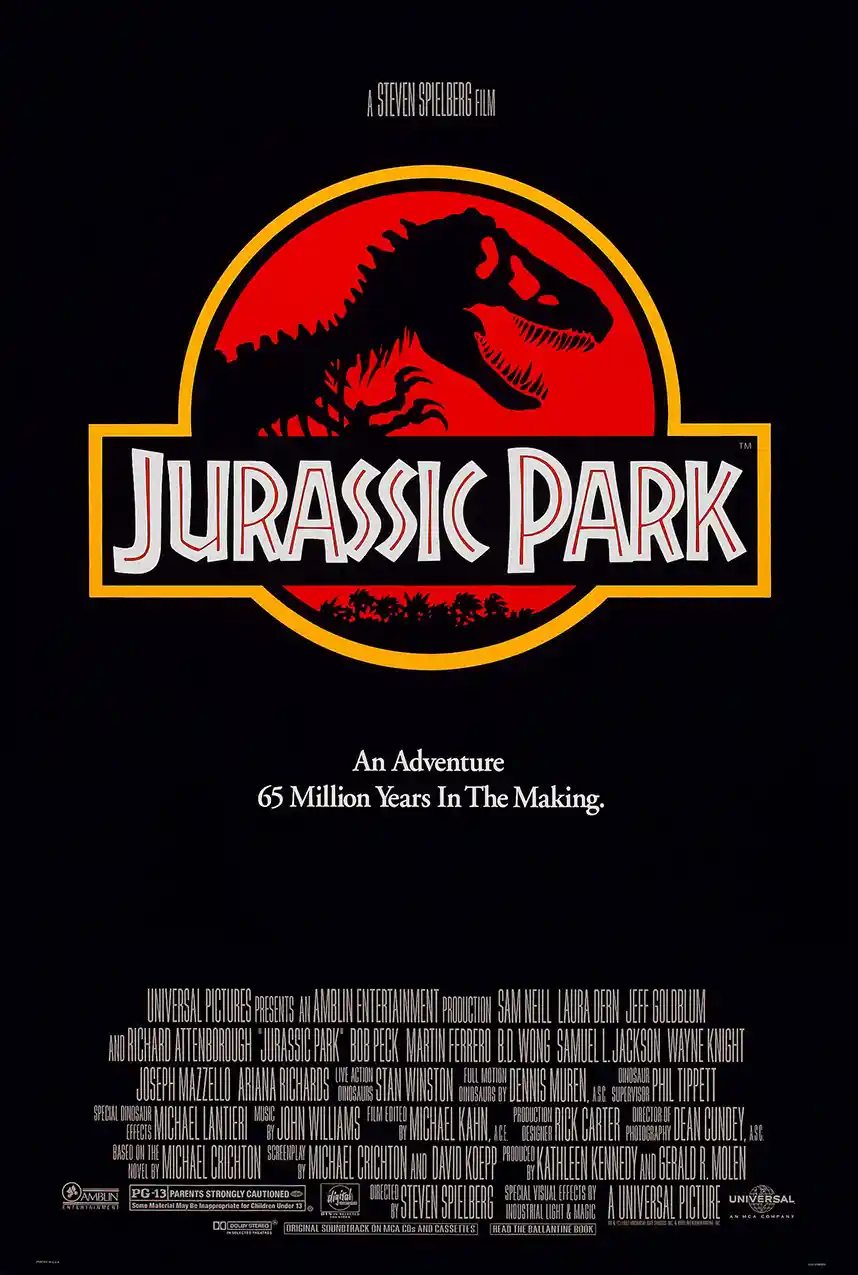
The Jurassic Park logo — that amber circle, the skeletal T-Rex — is one of the most effective pieces of branding in Hollywood history. The poster works because the logo IS the image: simple, powerful, and suggesting the prehistoric grandeur that the film would deliver.
Spielberg reportedly kept the actual dinosaurs hidden from promotional material until release — the logo alone sold the film. Clean, bold, and 30 years later still impossible to misidentify.
Key element:The amber circle — prehistoric preservation, modernized
The Silence of the Lambs (1991)
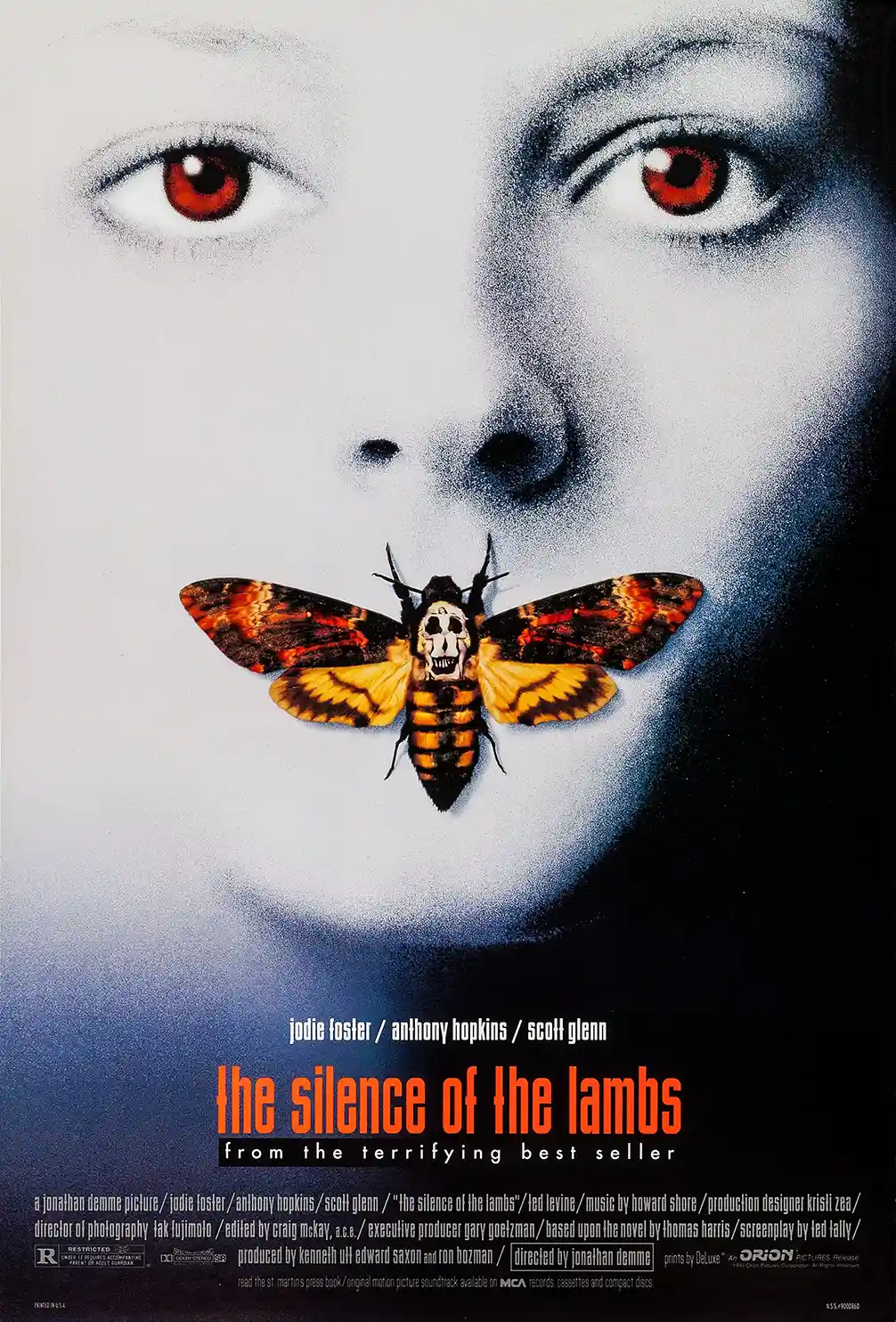
Jodie Foster’s face, the death’s-head hawk moth covering her mouth, Hannibal Lecter’s eyes reflected in the insect’s wings. It’s a puzzle box of a poster — the more you look, the more you see.
Genuinely unsettling, technically brilliant, and immediately iconic from the moment it was released. The moth wings contain a hidden skull formed from a photograph of nude figures — a secret within a secret, entirely in keeping with the film’s layered terror.
Key element:The Lecter eyes reflected in the moth wings — he sees everything, from inside something deadly
American Beauty (1999)
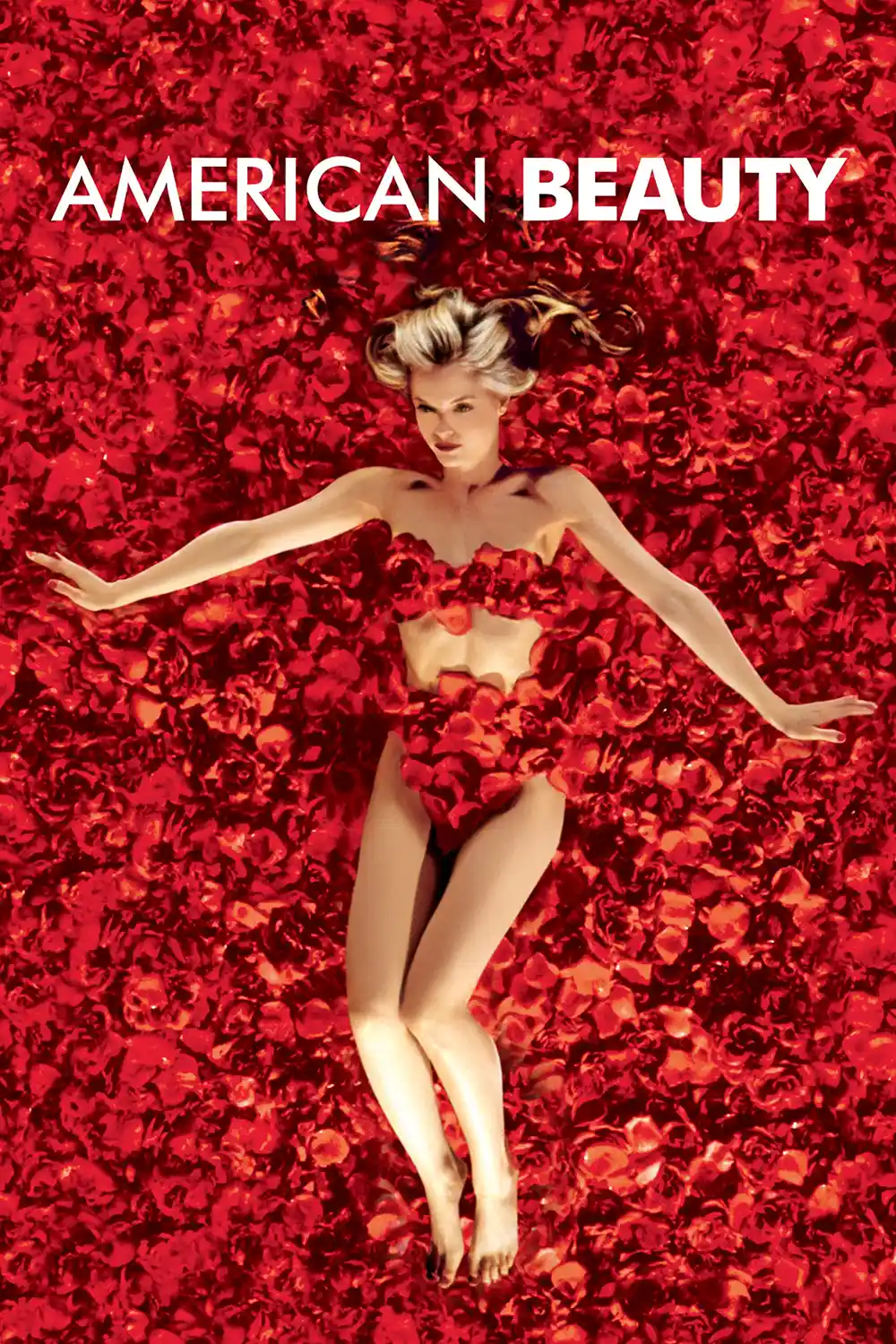
A single red rose resting on a woman’s bare stomach. Barely suggestive, beautifully composed, deeply enigmatic.
It captures the film’s themes — suburban desire, hidden lives, beauty in unexpected places — without showing a single identifiable character. One of the most artfully restrained movie posters of its decade, and a design that speaks entirely in implication. It tells you everything about the film without telling you anything at all.
Key element:The rose as the junction between beauty and transgression
Fight Club (1999)
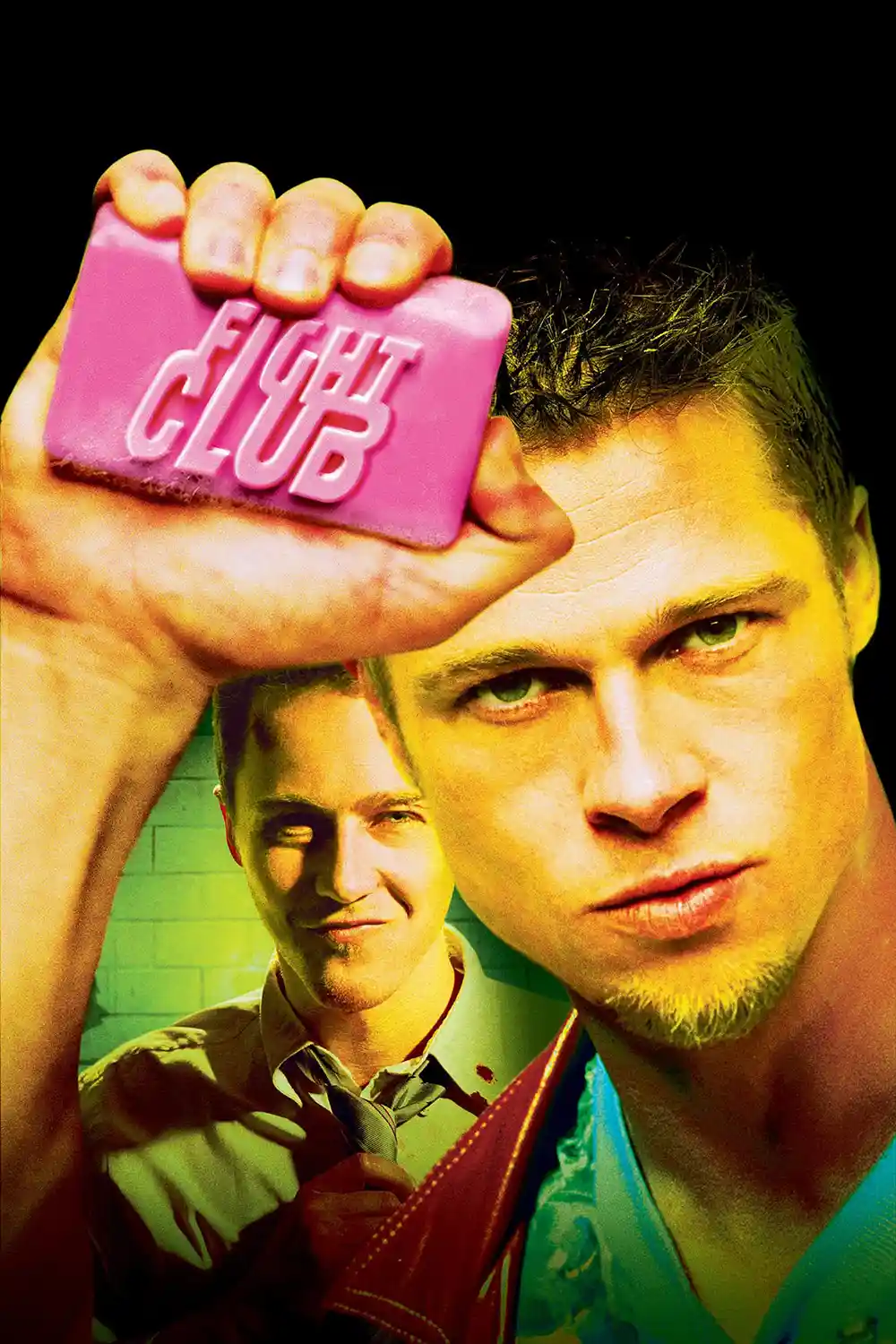
Brad Pitt and Edward Norton, suited and battered, clutching soap. Designed to look like a soap advertisement from the 1950s — and that’s exactly the joke. Consumer culture as violence.
The subversion is right there on the poster, if you know how to read it. The film’s entire thesis — the hollow masculinity of consumer society — is encoded in the design itself. It rewards repeat viewing exactly like the film does.
Key element:The bar of soap — the most dangerous household object ever depicted on a film poster
The Matrix (1999)
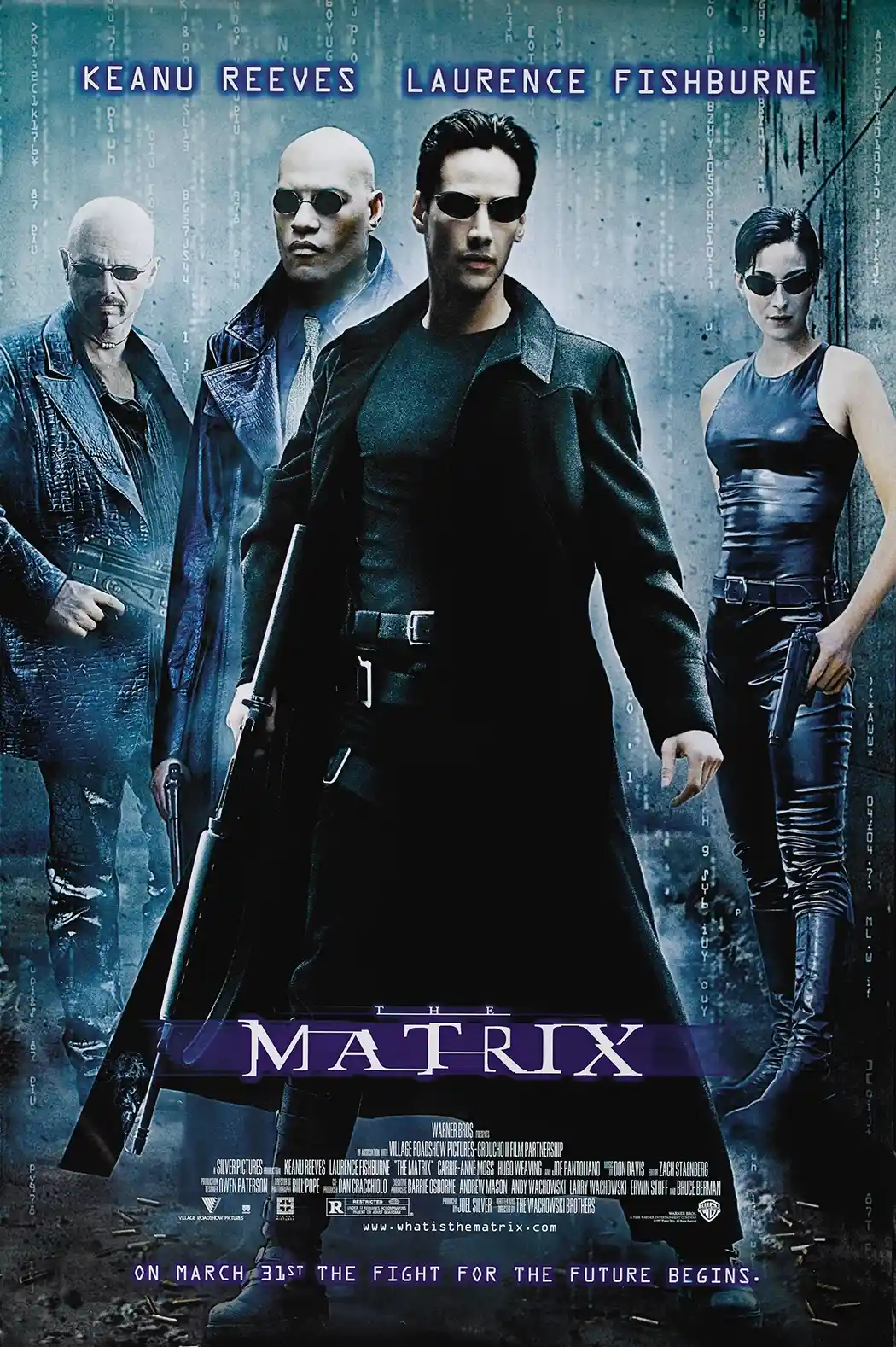
Neo in a long black coat, the green digital rain cascading around him, sunglasses reflecting the city below. It communicated something entirely new — a film where reality itself was the antagonist.
The Matrix poster launched a thousand imitations. The visual language it established still signals “simulation” and “cyberpunk” instantly to any audience on Earth, more than 25 years after its release.
Key element:The code-reflected cityscape in the sunglasses — seeing through the illusion
Schindler’s List (1993)
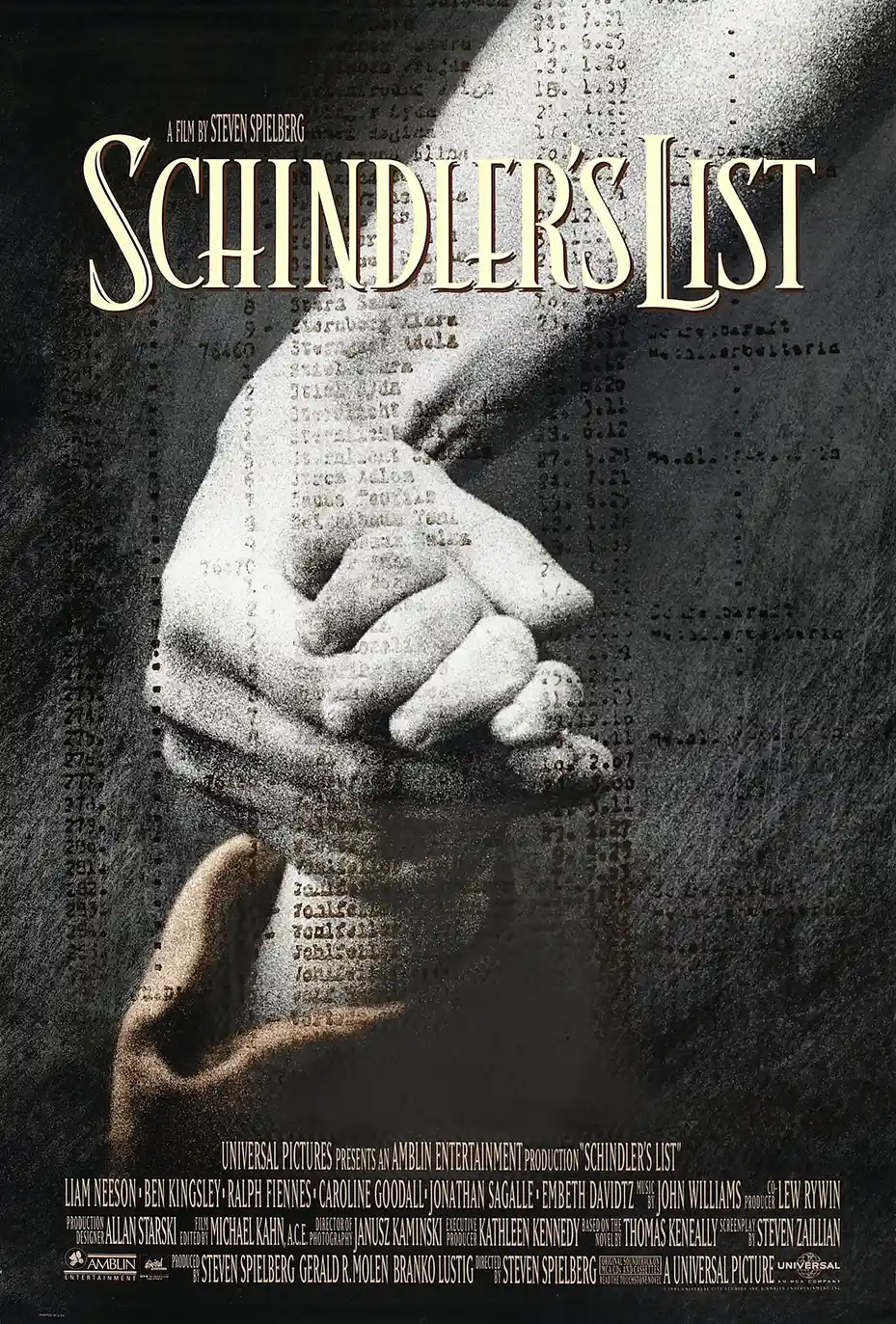
A child’s red coat against the black and white of wartime Poland. In a film that Spielberg shot entirely in monochrome, that single point of color became the film’s moral center — a symbol of individual life amid mass atrocity.
The poster uses the same device. It’s one of the most emotionally powerful movie images ever created. The restraint required to reduce the Holocaust to a single red coat — and to be right — is an act of profound creative courage.
Pulp Fiction (1994)
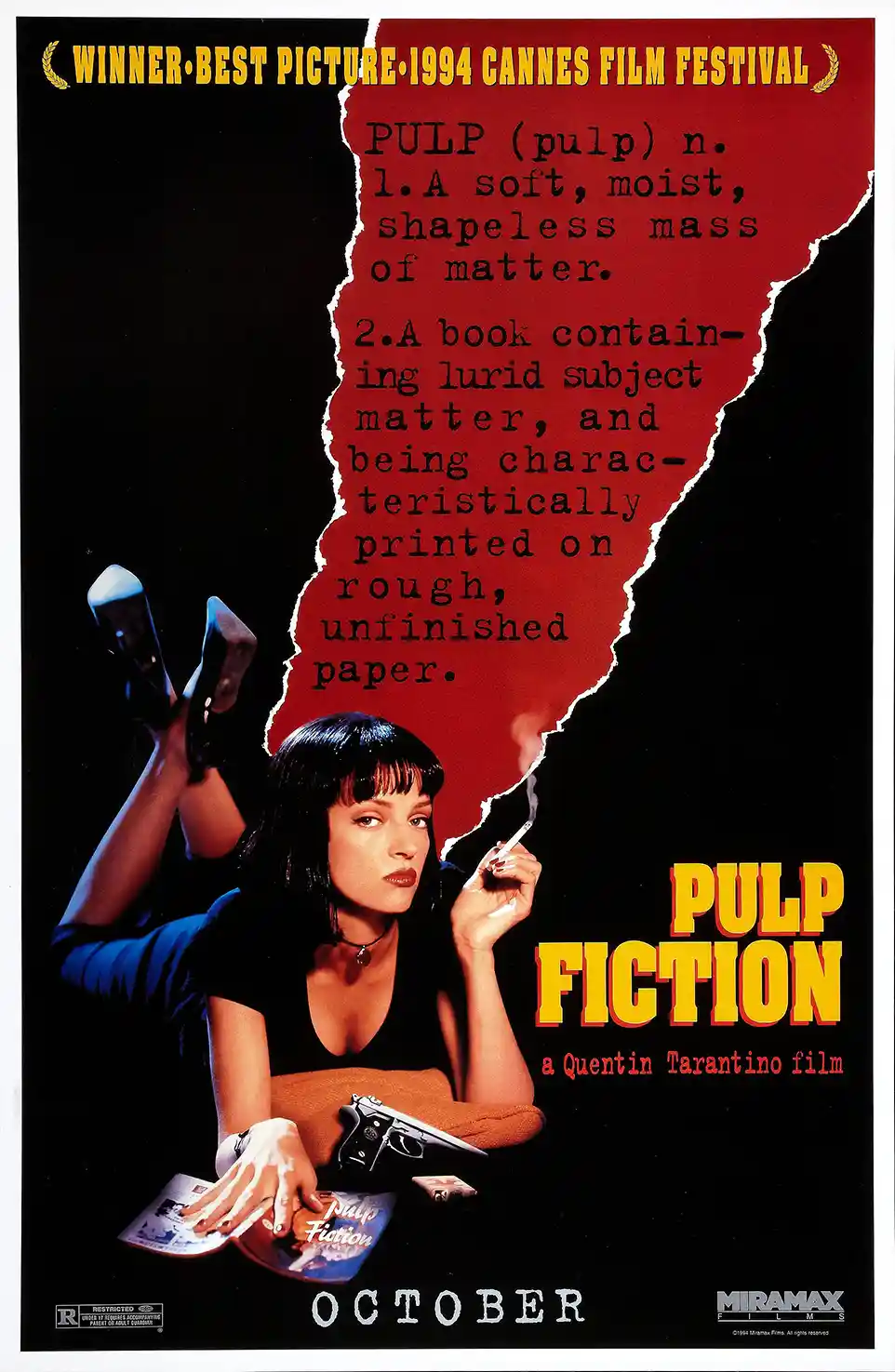
Uma Thurman lying on a bed with a cigarette and a gun, the whole composition styled like the cover of a 1950s pulp paperback novel. Tarantino’s film was an explosion of pop culture energy, and the poster matched it perfectly — retro, cool, dangerous, and unlike anything else in theaters that year.
Designed by James Verdesoto, it rejected every convention of contemporary film marketing and won. Possibly the most-pinned movie poster of the 1990s.
Best Movie Posters: New Hollywood (1970s–1980s)
The best movie posters of New Hollywood combined painterly illustration with raw emotional impact. Artists like Roger Kastel, Tom Jung, and Drew Struzan created iconic movie poster artwork that still sells millions of prints today.
Scarface (1983)
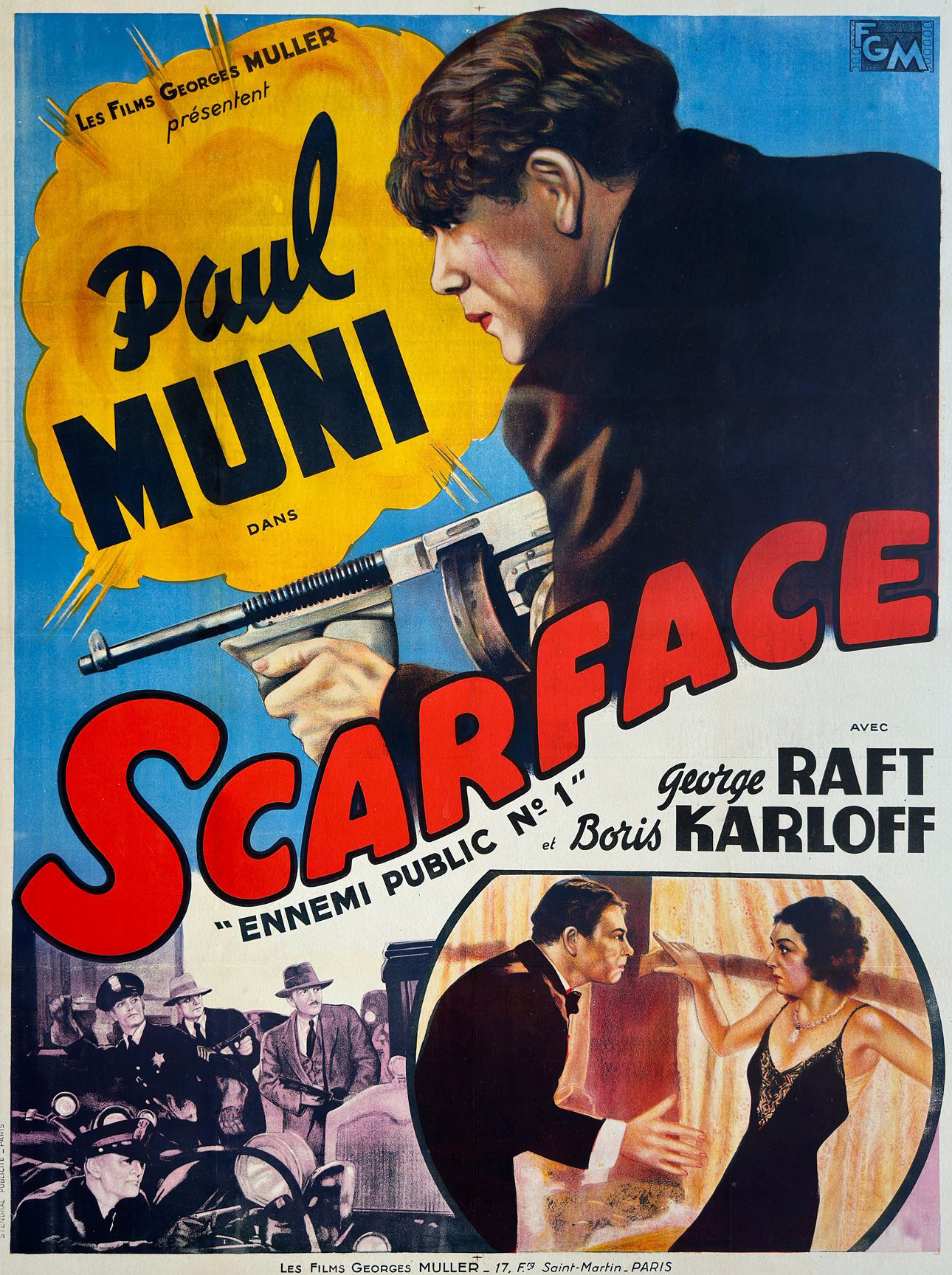
Tony Montana in white suit, the world at his feet, the iconic “The World is Yours” blimp glowing in the background. Bold, aspirational, and dangerous all at once.
The Scarface poster became a cultural icon far beyond the film itself — referenced, parodied, and hung on millions of walls across four decades. It communicates the American Dream’s dark twin: the fantasy of total dominance, and the price it extracts.
Key element:The diagonal body posture — aggressive, dominant, exposed 🎥 The Blockbuster Era: 1990s–2000s {#blockbuster}
The Shining (1980)
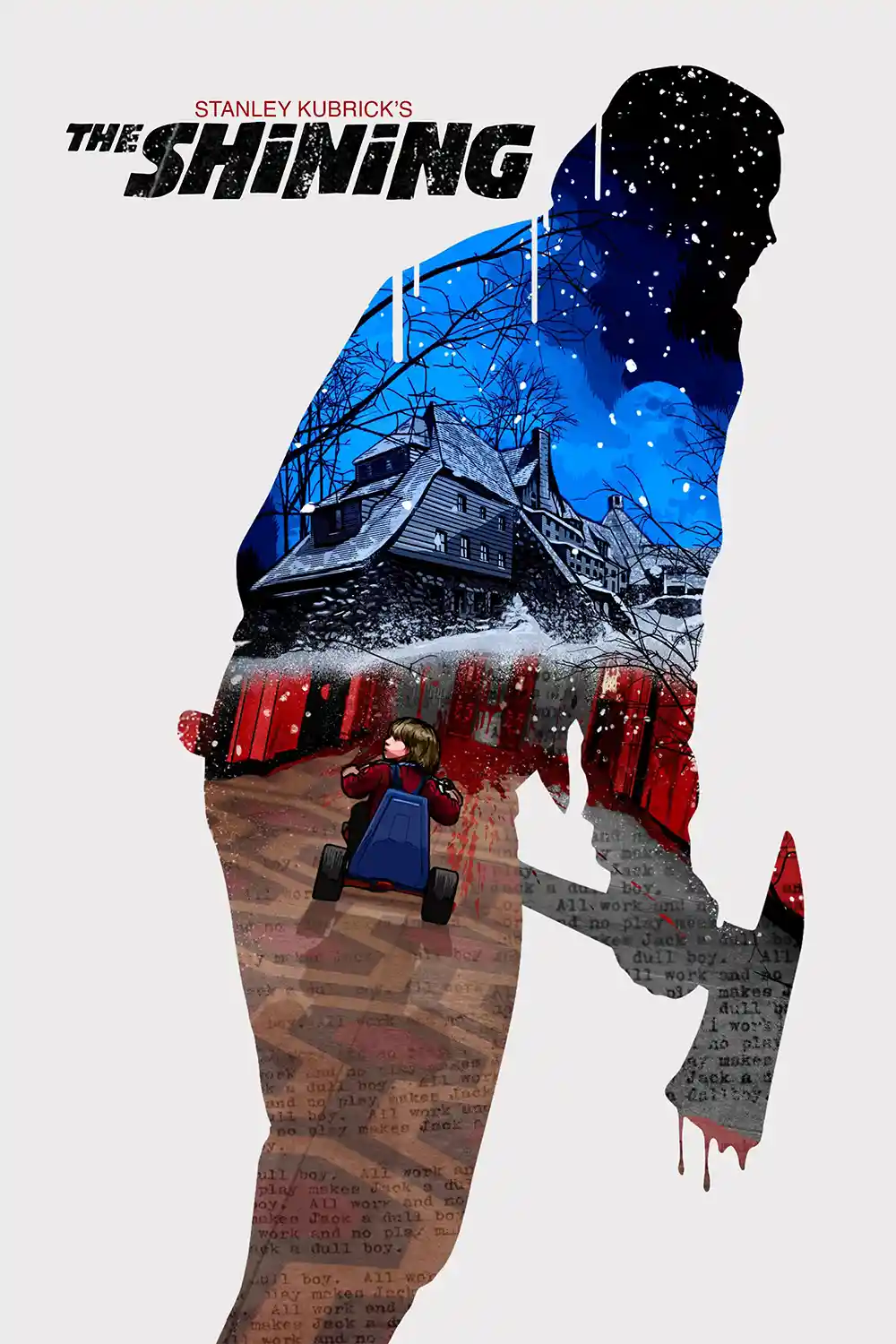
The axe splitting the door. Jack Nicholson’s face filling the gap with that unforgettable grin. It’s a jump scare frozen in time — an image that bypasses analysis and goes straight to the fear center of the brain.
The Shining poster is so effective that the image, even removed from the film entirely, feels threatening. Kubrick’s perfectionism extended to the poster. The result is one of the most viscerally frightening single images in art history.
Key element:The smile in the gap — visible even before the eye registers the axe
E.T. the Extra-Terrestrial (1982)
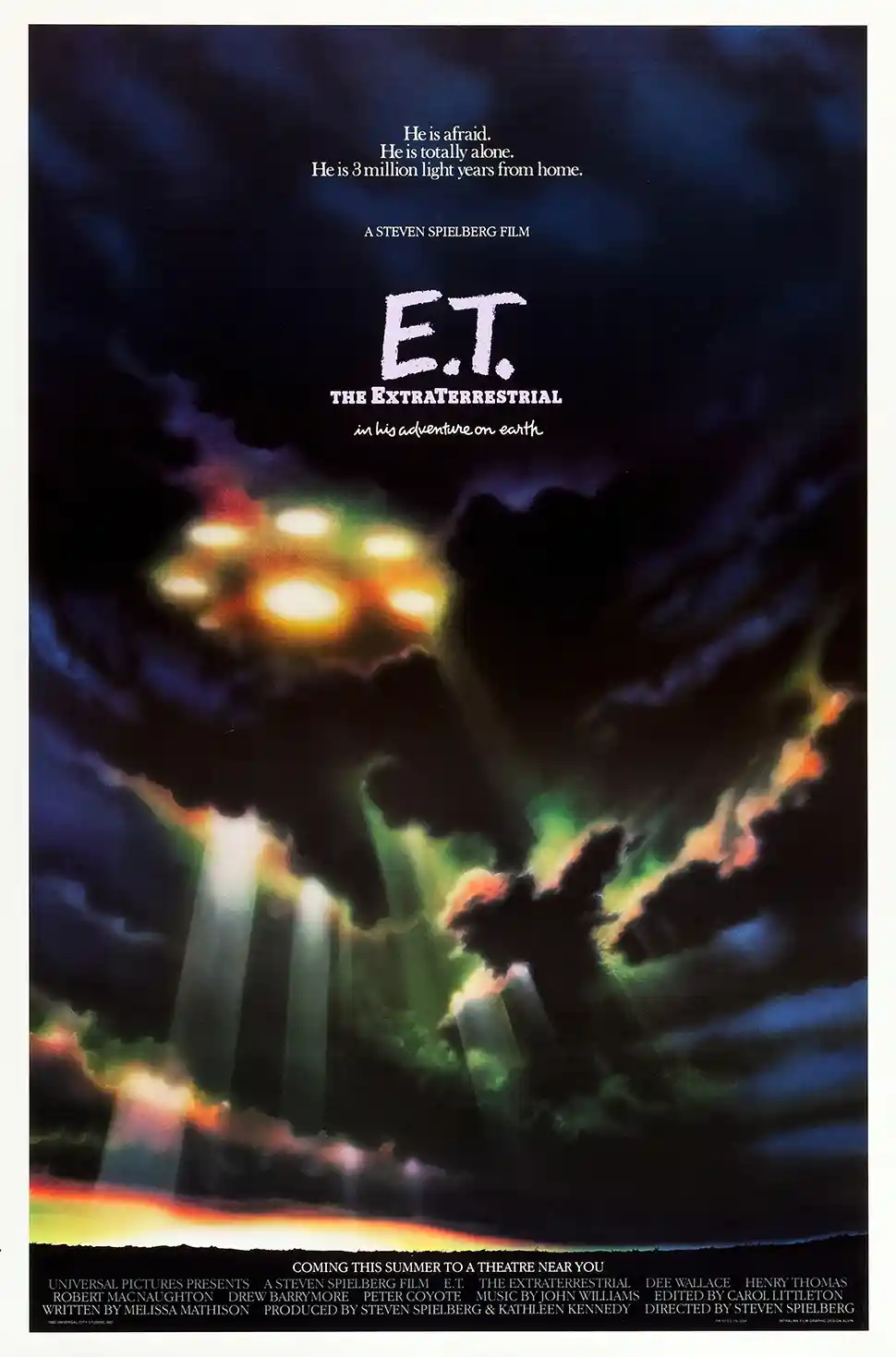
Two fingers reaching toward each other — the alien and the child, connecting across the impossible distance between worlds. Spielberg requested a direct visual reference to Michelangelo’s Creation of Adam, and the result became one of the most recognizable images in cinema.
It’s a poster about wonder, friendship, and the universal human need for connection. The starlit sky background makes it feel cosmic and intimate simultaneously.
Key element:The two reaching fingertips — humanity and the universe, almost touching
Back to the Future (1985)
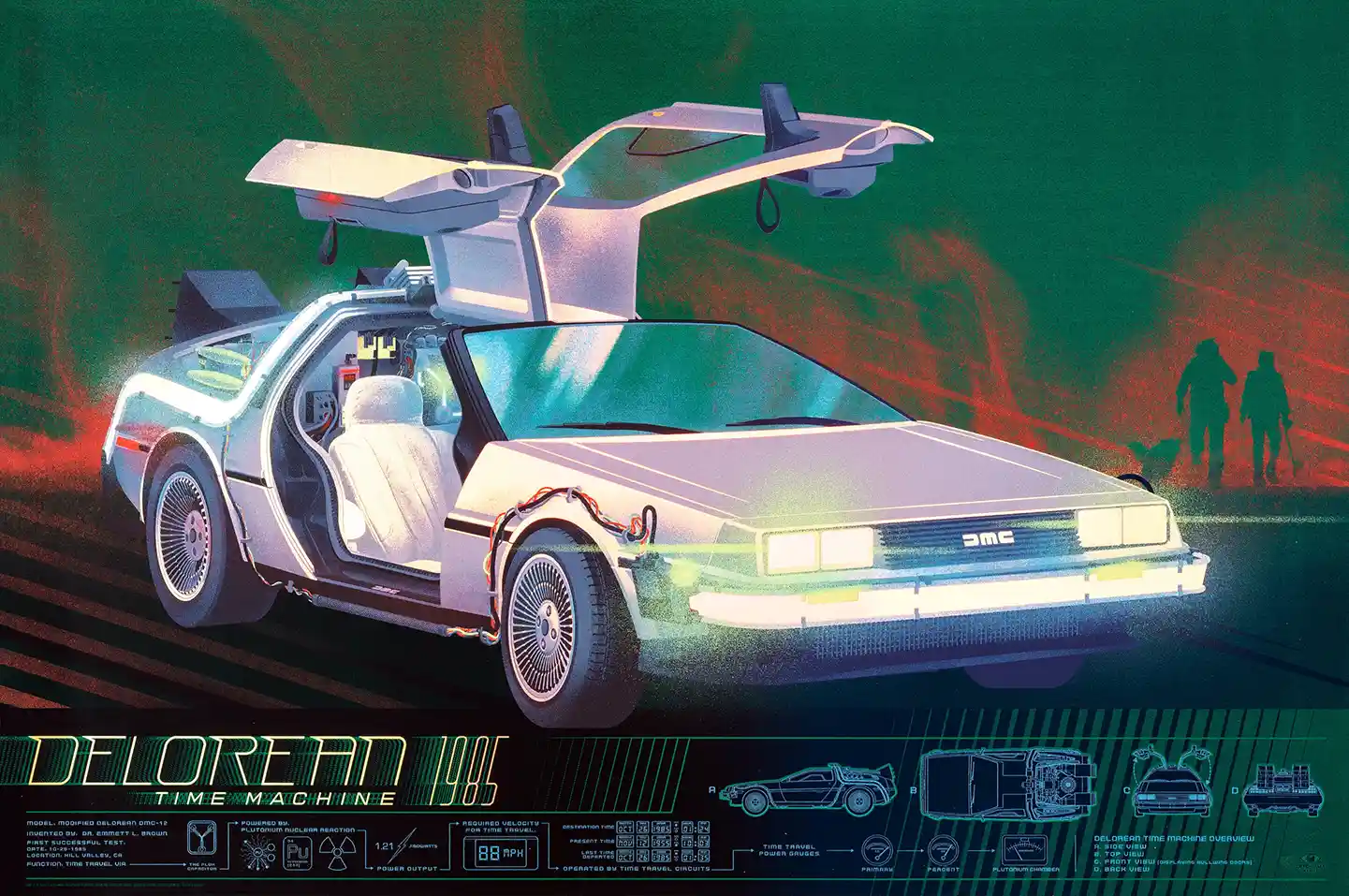
Drew Struzan’s iconic illustration — Marty McFly checking his watch while Doc Brown looks on, the DeLorean gleaming in cinematic light — captures pure joy. Struzan’s painterly style defined the blockbuster poster aesthetic of the entire decade.
He also painted Indiana Jones, Star Wars, and E.T. — but Back to the Future may be his most beloved composition. It radiates the exact feeling of the film: adventure, wonder, and excitement.
Blade Runner (1982)
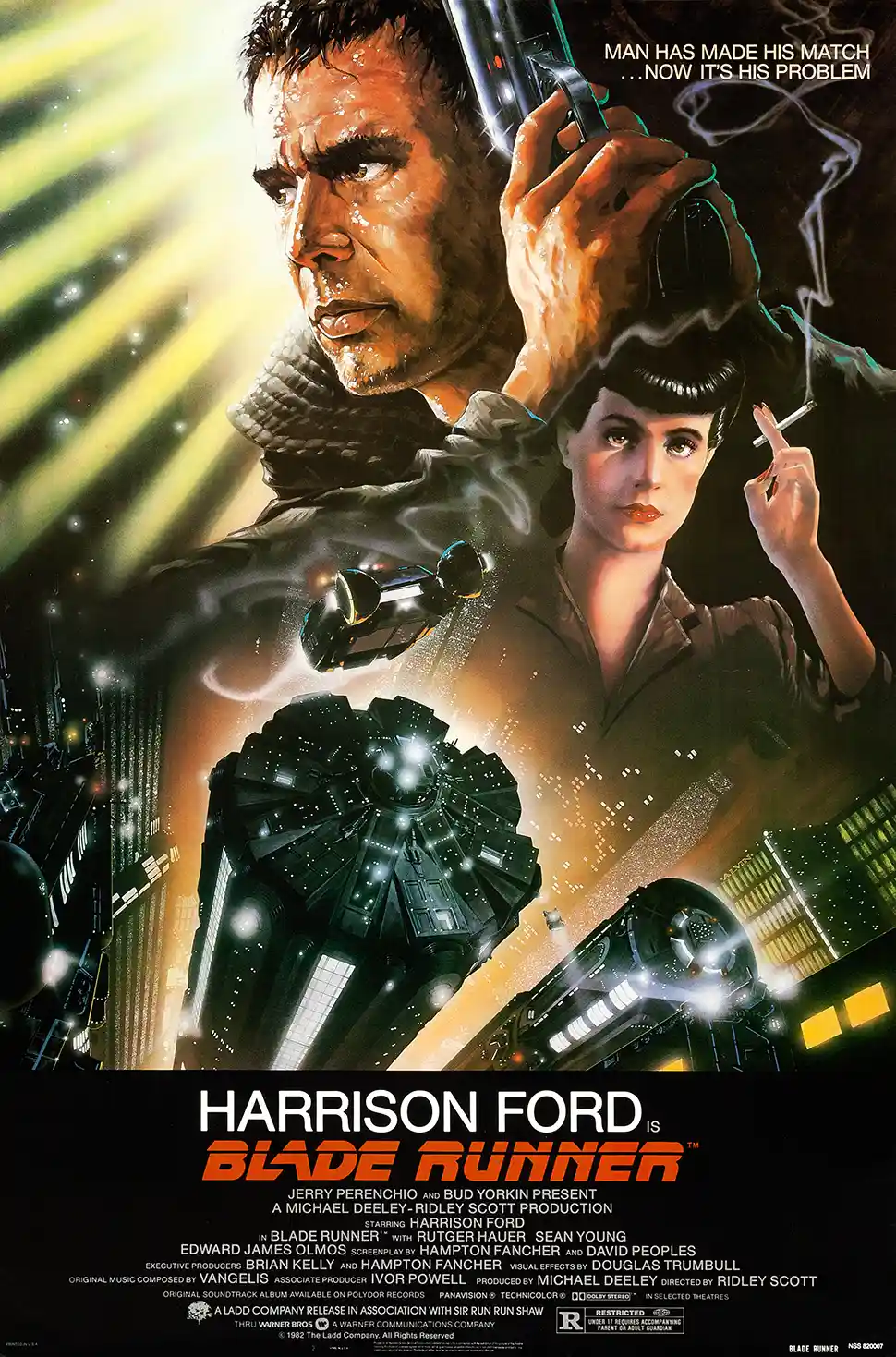
John Alvin’s Blade Runner poster is a noir cityscape lit by neon and rain — a future Los Angeles that feels both impossible and completely believable. Harrison Ford’s silhouette against the towering Tyrell Corporation building.
This best movie poster for sci-fi noir set the visual language of cyberpunk and influenced every science fiction film that came after it. The Matrix, Ghost in the Shell, Dune — the DNA of Blade Runner’s poster is in all of them.
Apocalypse Now (1979)
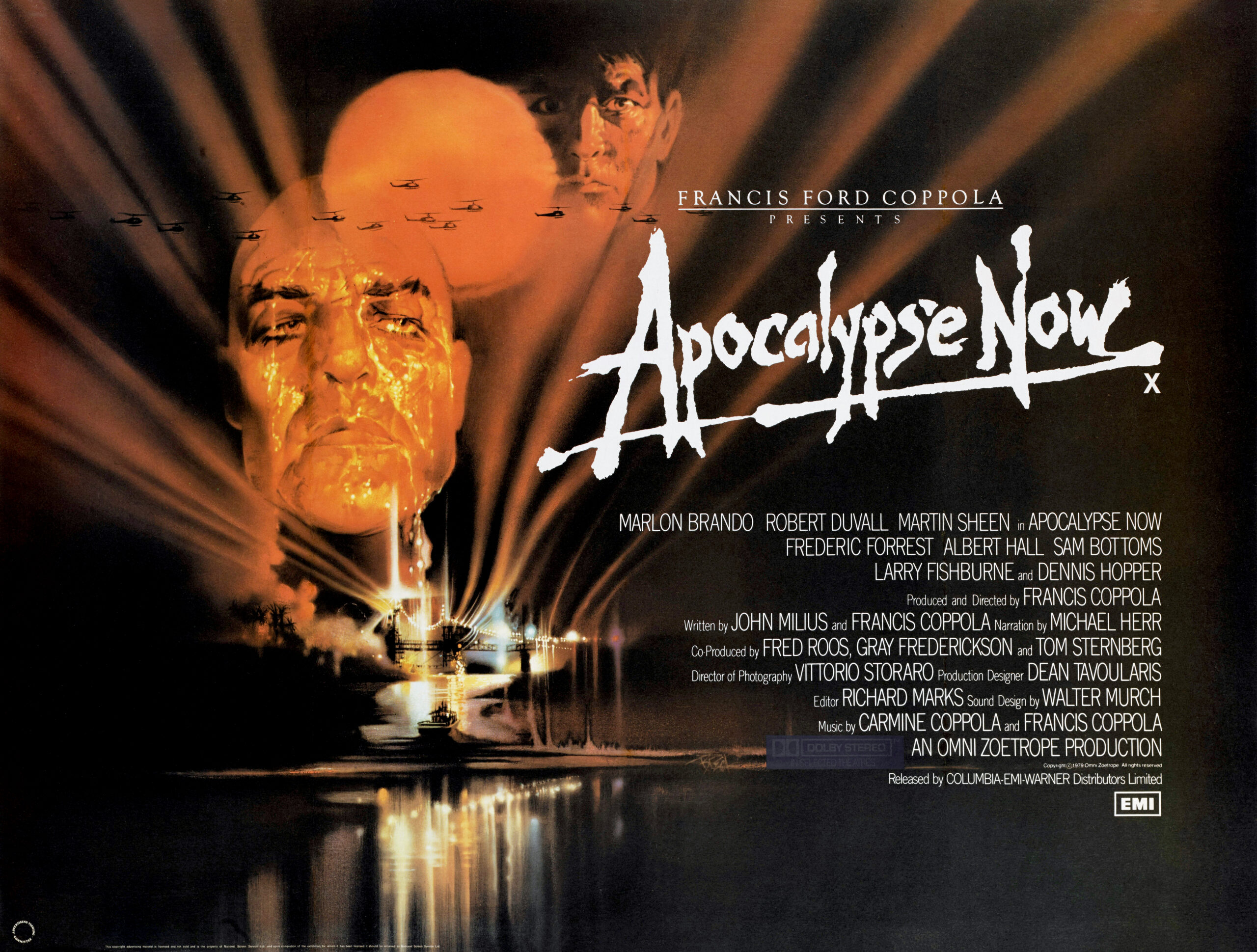
A helicopter silhouette against an orange and red apocalyptic sky, reflected in the river below. It looks like a painting.
It evokes heat, dread, and the fever-dream quality of Coppola’s Vietnam masterpiece perfectly. The color alone — that burning orange gradient — communicates something no tagline could. It is the best movie poster for atmospheric war cinema ever created, and it achieves that entirely through light and color.
Key element:The orange sky reflection — the river as a mirror for the burning world above
The Godfather (1972)
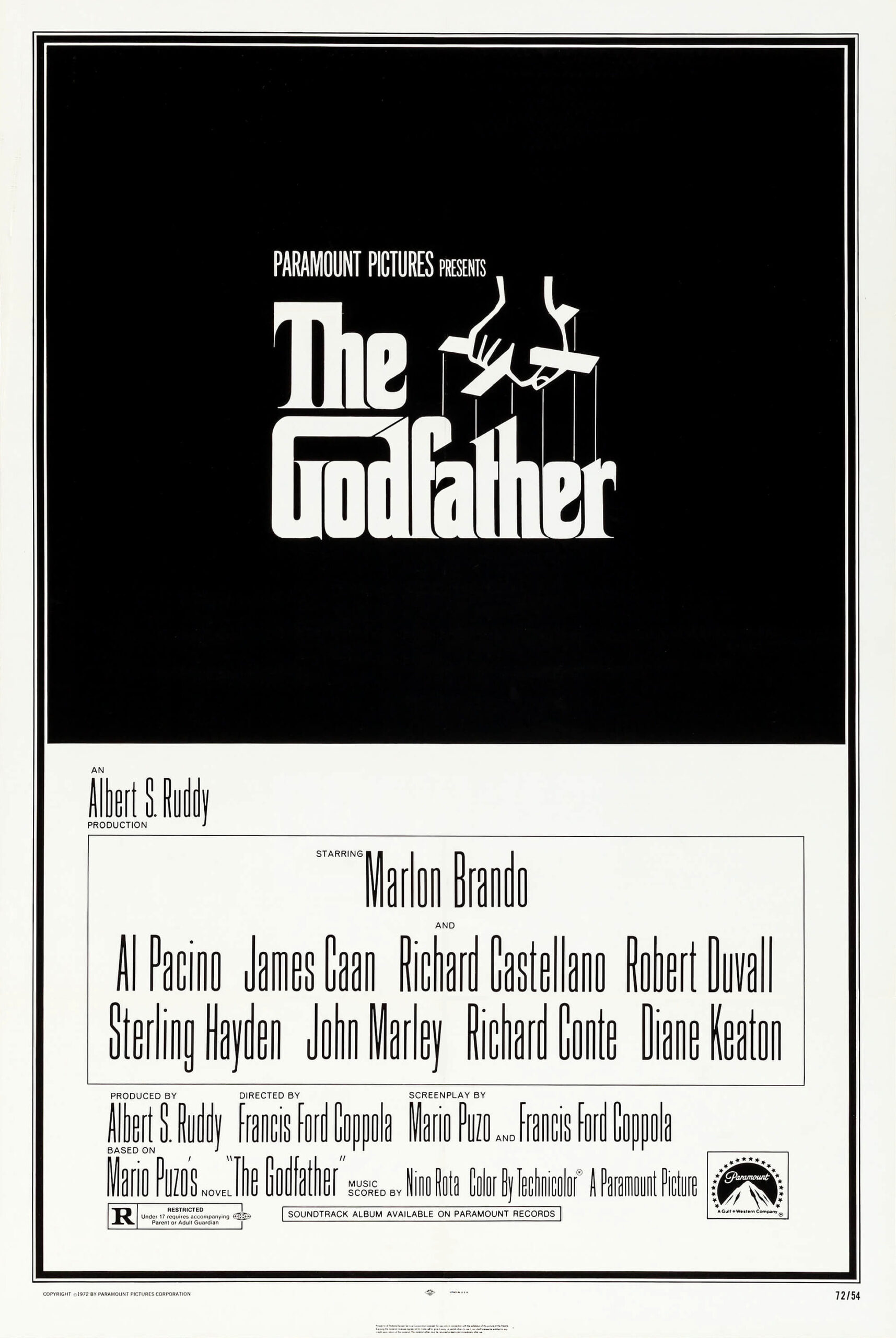
The hand of a puppet master controlling the strings. No faces. No title.
Just power, control, and the dark elegance of the Corleone empire communicated through a single image. Designed by S. Neil Fujita, the Godfather puppet-strings logo conveys the film’s themes — manipulation, family, crime as business — more efficiently than any synopsis ever could. A design so perfect that it has never needed updating.
Alien (1979)
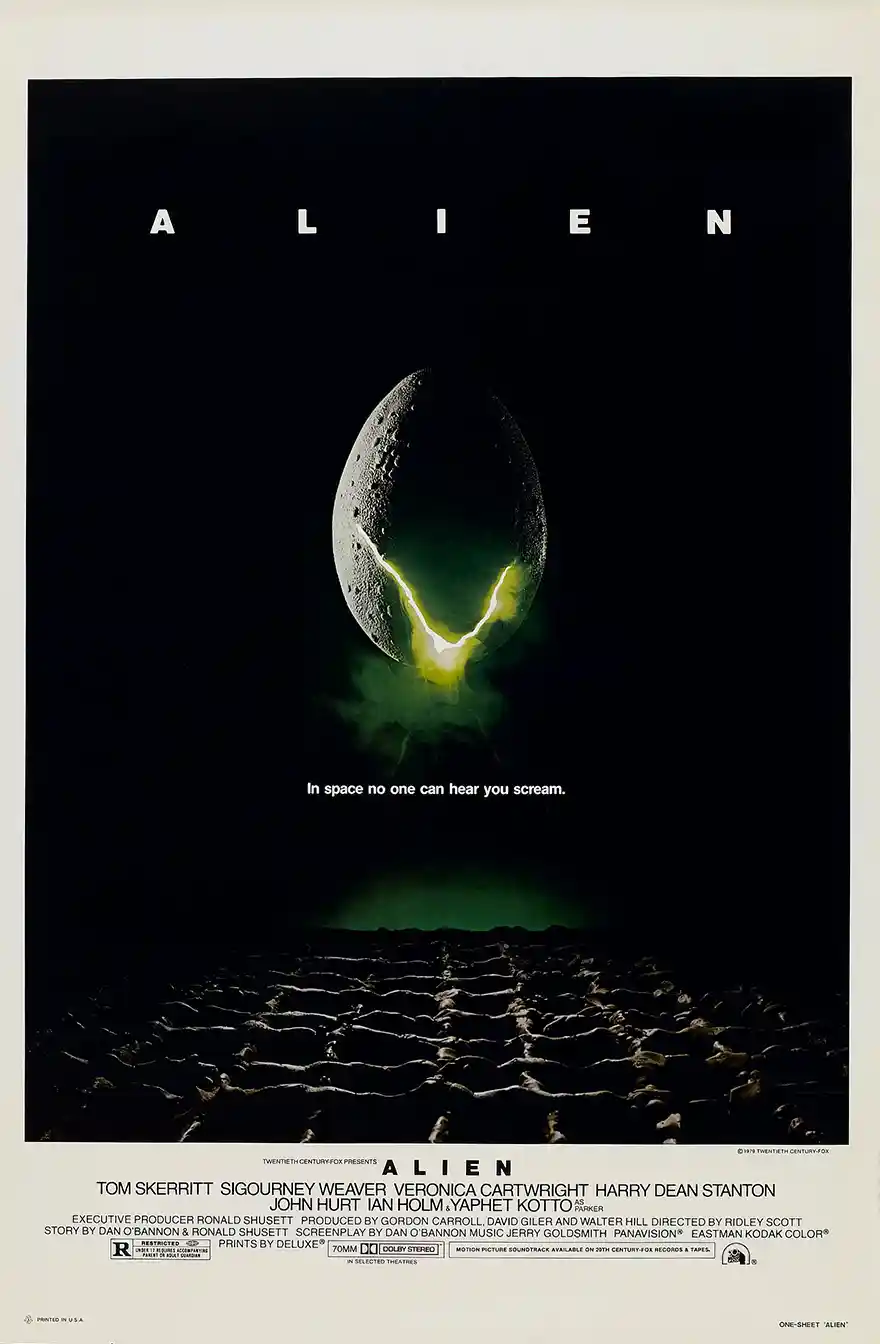
“In space, no one can hear you scream.” The Alien poster doesn’t show the creature. It shows an egg — cracked, glowing, releasing something unseen into darkness. The tagline and the image work in perfect synergy: isolation, vulnerability, and the unknown.
It’s a masterclass in restraint. Show less. Frighten more. No horror poster before or since has weaponized negative space quite so effectively.
Key element:The glowing crack in the egg against absolute black
Star Wars (1977)
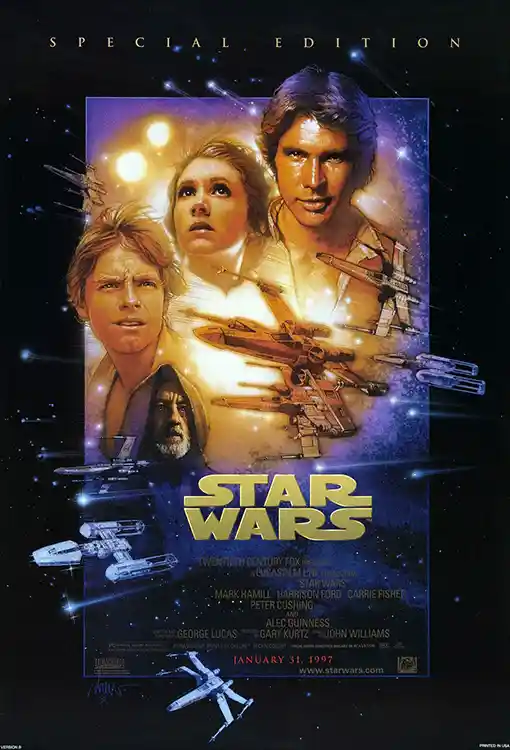
Tom Jung’s original Star Wars poster is a symphony of composition. Luke at the center, lightsaber raised. Leia in white.
Vader looming in shadow above everything. The twin suns of Tatooine in the background. It’s operatic, heroic, and it told audiences in a single image that this was something genuinely new in cinema. The most recognizable best movie poster in history — a cultural icon in every country on Earth.
Key element:The triangular composition driving the eye upward toward Vader
Jaws (1975)
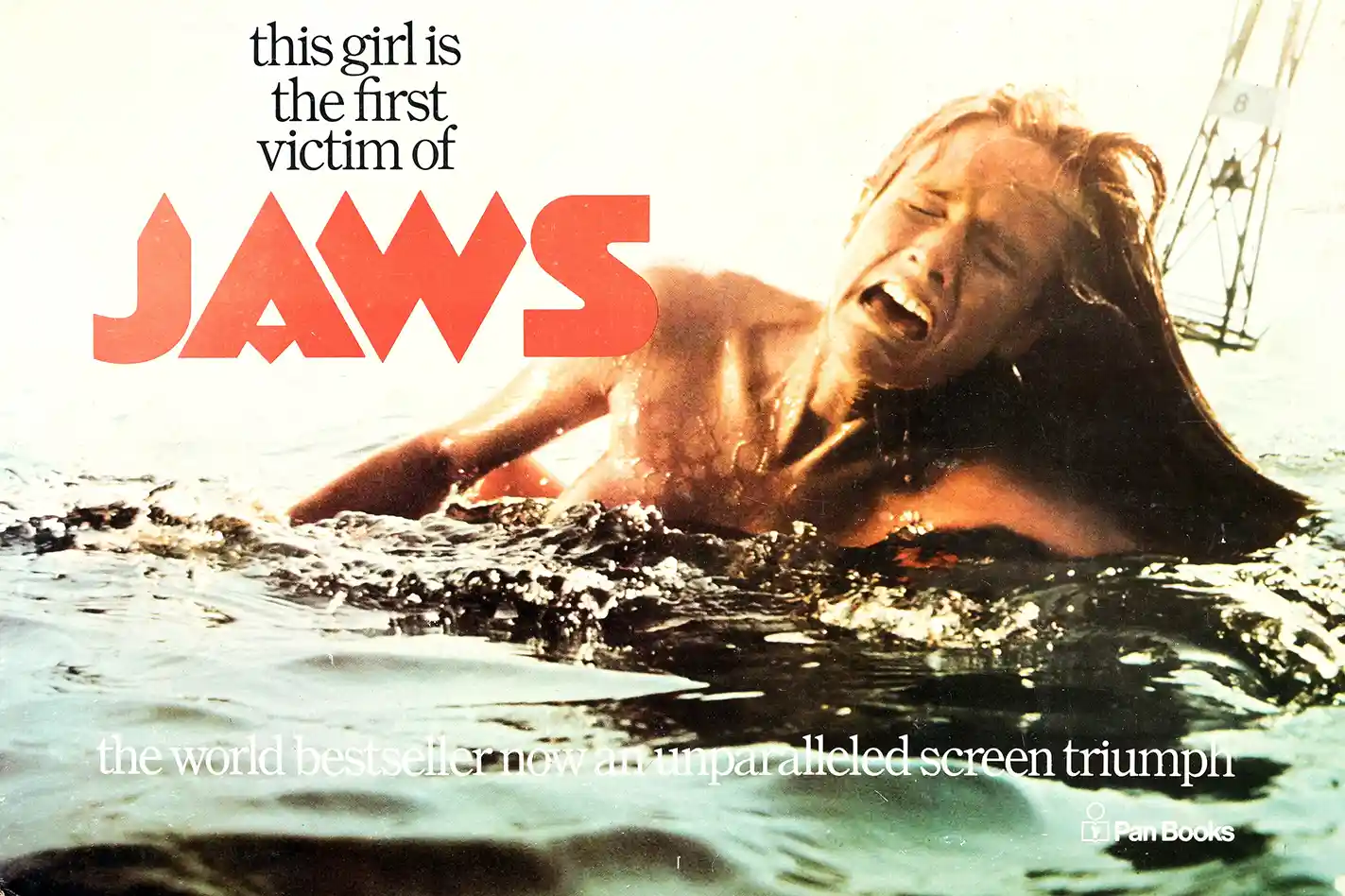
Roger Kastel’s illustration of the great white rising beneath an oblivious swimmer is one of the most effective pieces of commercial art ever created. It is one of the best movie posters ever made — single-handedly inventing the summer blockbuster concept.
That open mouth, those rows of teeth pointed directly upward — it triggered a primal fear response in audiences that still works today. Universally recognized across generations and cultures. One of the best movie posters and best-selling prints in history.
Best Movie Posters: Classic Era (1920s–1960s)
The best movie posters of the classic era invented the visual language of cinema itself. Saul Bass’s modernist genius, Art Deco’s mechanical beauty, and golden-age Hollywood glamour produced the most collectible iconic movie posters in history.
2001: A Space Odyssey (1968)
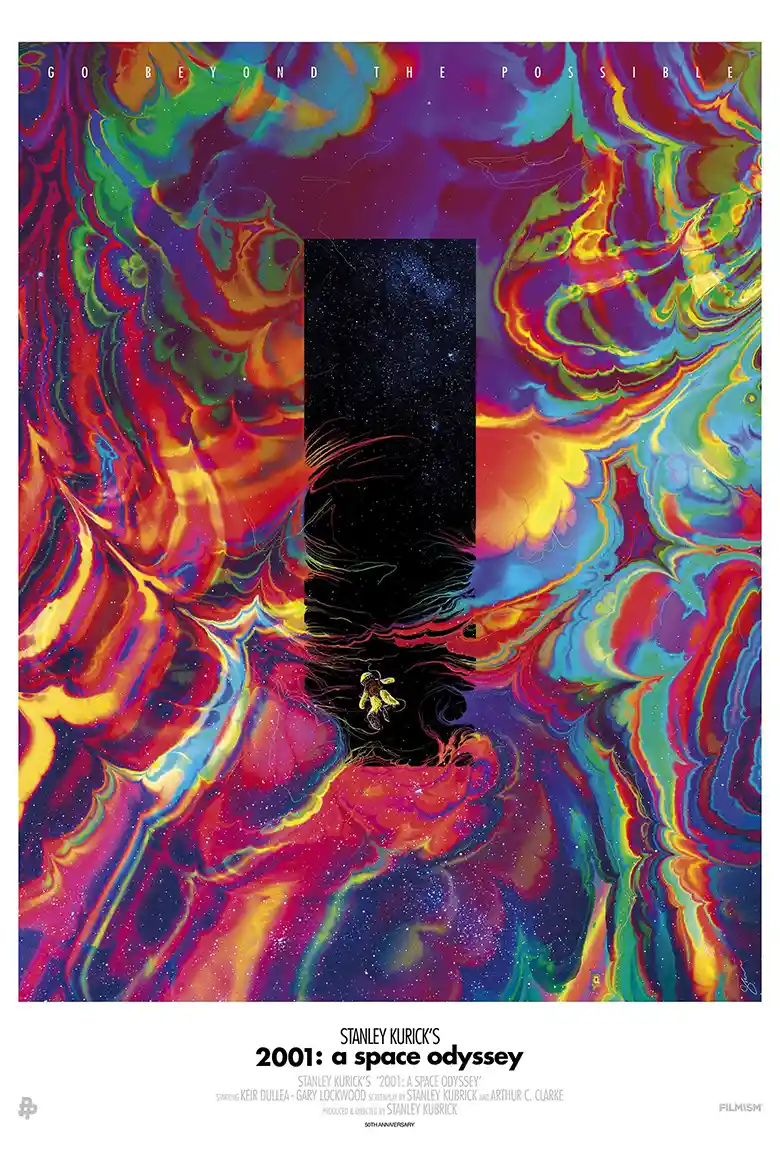
Stanley Kubrick’s cosmic vision needed a poster as minimal as the film itself. The glowing monolith, the Earth and Moon in perfect alignment, the overwhelming blackness of space — it’s a poster that makes you feel small in the best possible way.
Fifty-seven years after its release, it still looks futuristic. No other best movie poster has ever captured the sublime scale of the universe with such economy of image.
Key element:The monolith as a rectangle of pure, indifferent authority 🎬 New Hollywood Golden Age: 1970s–1980s {#new-hollywood}
Psycho (1960)
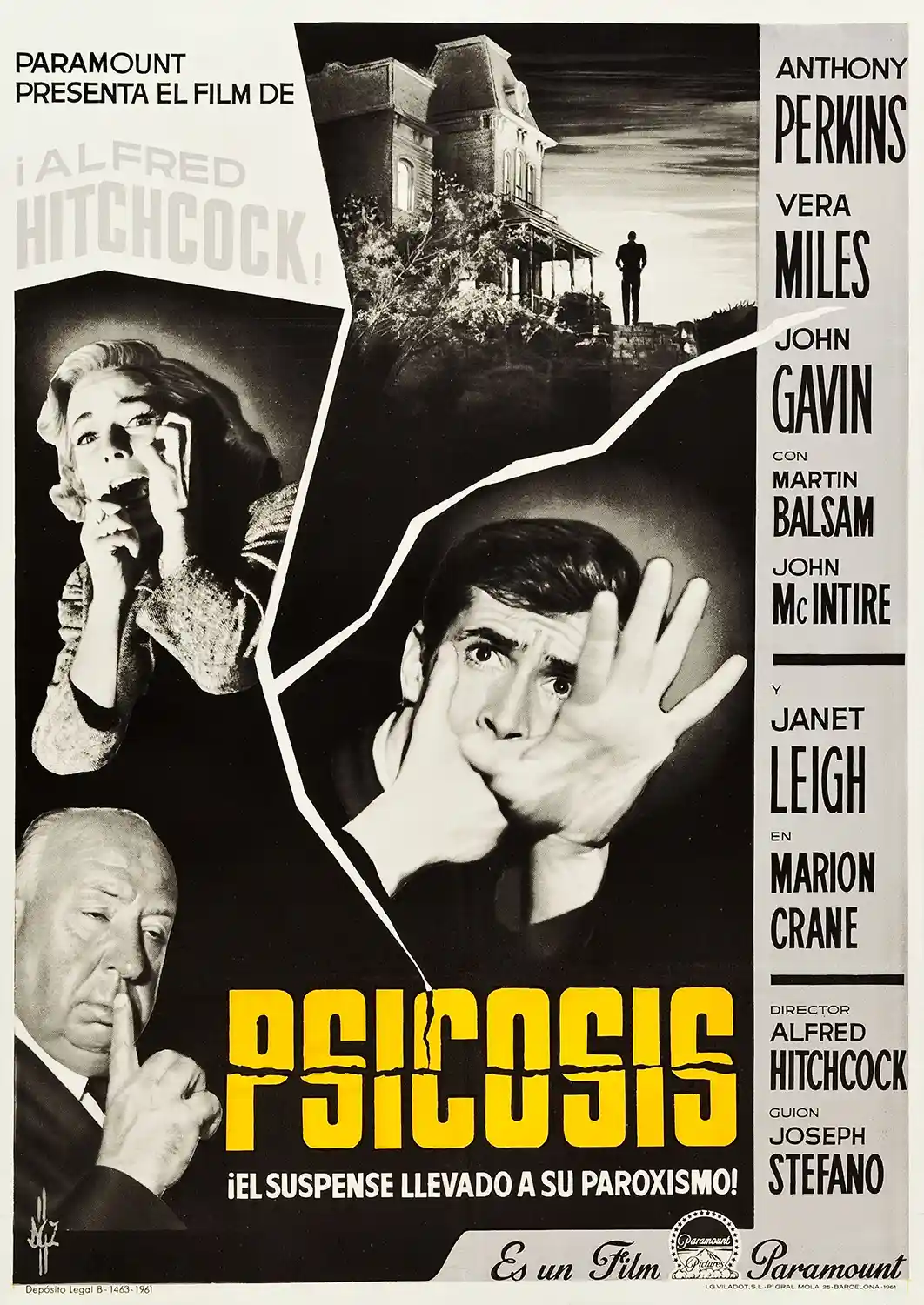
Another Saul Bass masterpiece — and possibly his finest work. The fragmented, angular typography. Janet Leigh in black and white, pieced together like evidence at a crime scene.
The Psycho poster conveyed the fragmented, voyeuristic nature of Hitchcock’s film without showing a single explicit image. It is still studied in every graphic design and film studies program in the world. The poster alone made audiences feel they were looking at something forbidden.
Key element:The sliced, reassembled portrait — form mirroring content
Vertigo (1958)
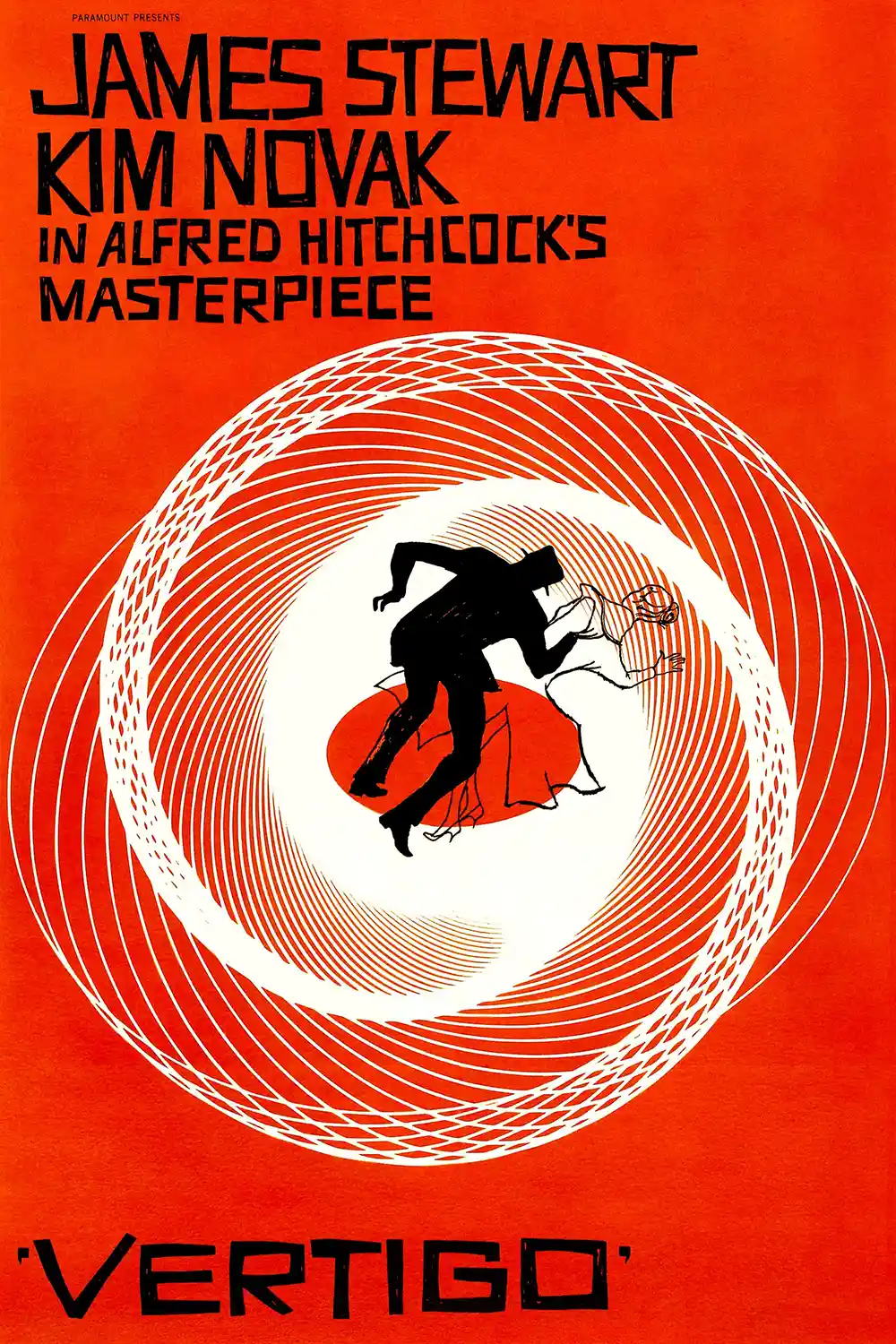
Saul Bass designed the Vertigo poster, and in doing so created a template for psychological thriller visual identity that designers still study today. The spiral, the falling figures, the disorienting geometry — it’s simultaneously beautiful and deeply unsettling.
Bass’s poster work for Hitchcock (he also designed Psycho and North by Northwest) remains the absolute gold standard of cinematic graphic design.
Casablanca (1942)
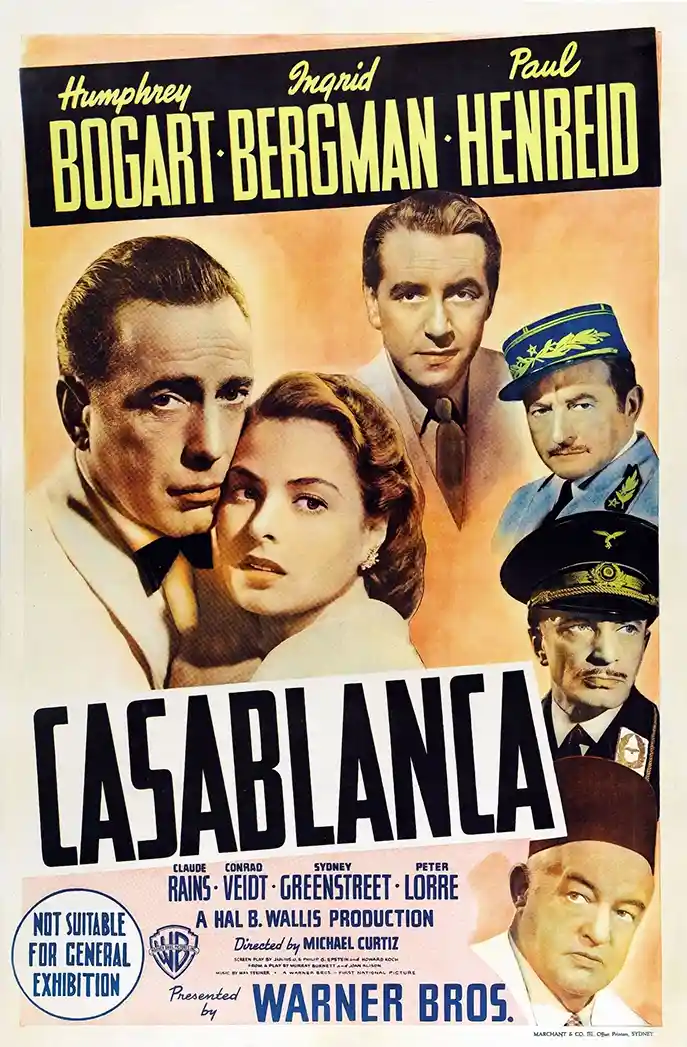
Humphrey Bogart and Ingrid Bergman, faces half in shadow, the electric tension between them visible even in still image. The Casablanca poster captures the film’s entire emotional core — romance, danger, sacrifice — in a single composed frame.
It remains one of the most-printed classic movie posters in history, appearing on walls in every decade since 1942 without once feeling dated.
Key element:The half-shadow lighting technique that hides and reveals simultaneously
Metropolis (1927)
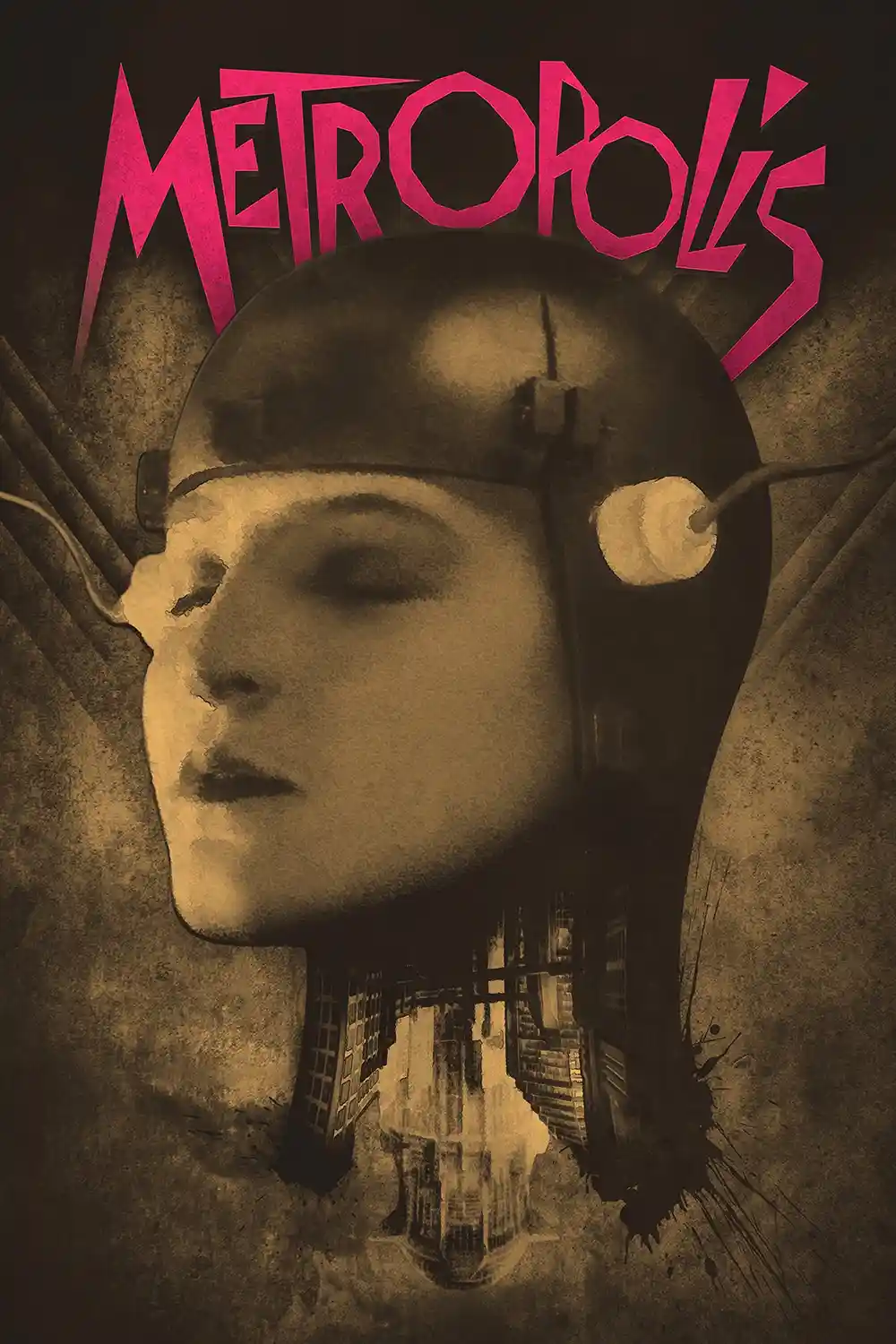
Fritz Lang’s science fiction masterpiece produced what may be the most influential movie poster ever printed. The art deco female robot — bold angles, mechanical grace, electric yellows and blacks — set the visual language for science fiction for the next century.
Every cyberpunk aesthetic, every robot-themed film poster released in the 100 years since, owes a debt to this image. It didn’t just sell a film. It defined a genre.
🎖️ More Best Movie Posters: Honorable Mentions
These iconic entries are equally stunning for your walls:
| Movie Title | Year | Action |
|---|---|---|
| Lawrence of Arabia | 1962 | View Poster → |
| Chinatown | 1974 | View Poster → |
| Rear Window | 1954 | View Poster → |
| Sunset Boulevard | 1950 | View Poster → |
| Apocalypto | 2006 | View Poster → |
| The Revenant | 2015 | View Poster → |
| Arrival | 2016 | View Poster → |
| Roma | 2018 | View Poster → |
| Portrait of a Lady on Fire | 2019 | View Poster → |
| Whiplash | 2014 | View Poster → |
How to Order & Size Guide
Every poster in this collection can be ordered in multiple sizes. We recommend 18″ × 24″ for living room statement walls.
| Format | Standard Size | Price |
|---|---|---|
| Premium Canvas | 24″ × 36″ | $59.90 |
| Gallery Paper | 18″ × 24″ | $44.90 |
| Digital Download | High-Res 300dpi | $3.90 |