


Francis Bacon Prints
Showing 81–85 of 85 resultsSorted by latest
Price range: $3.90 through $74.90
Price range: $3.90 through $74.90
Price range: $3.90 through $74.90
Price range: $3.90 through $74.90
Price range: $3.90 through $74.90
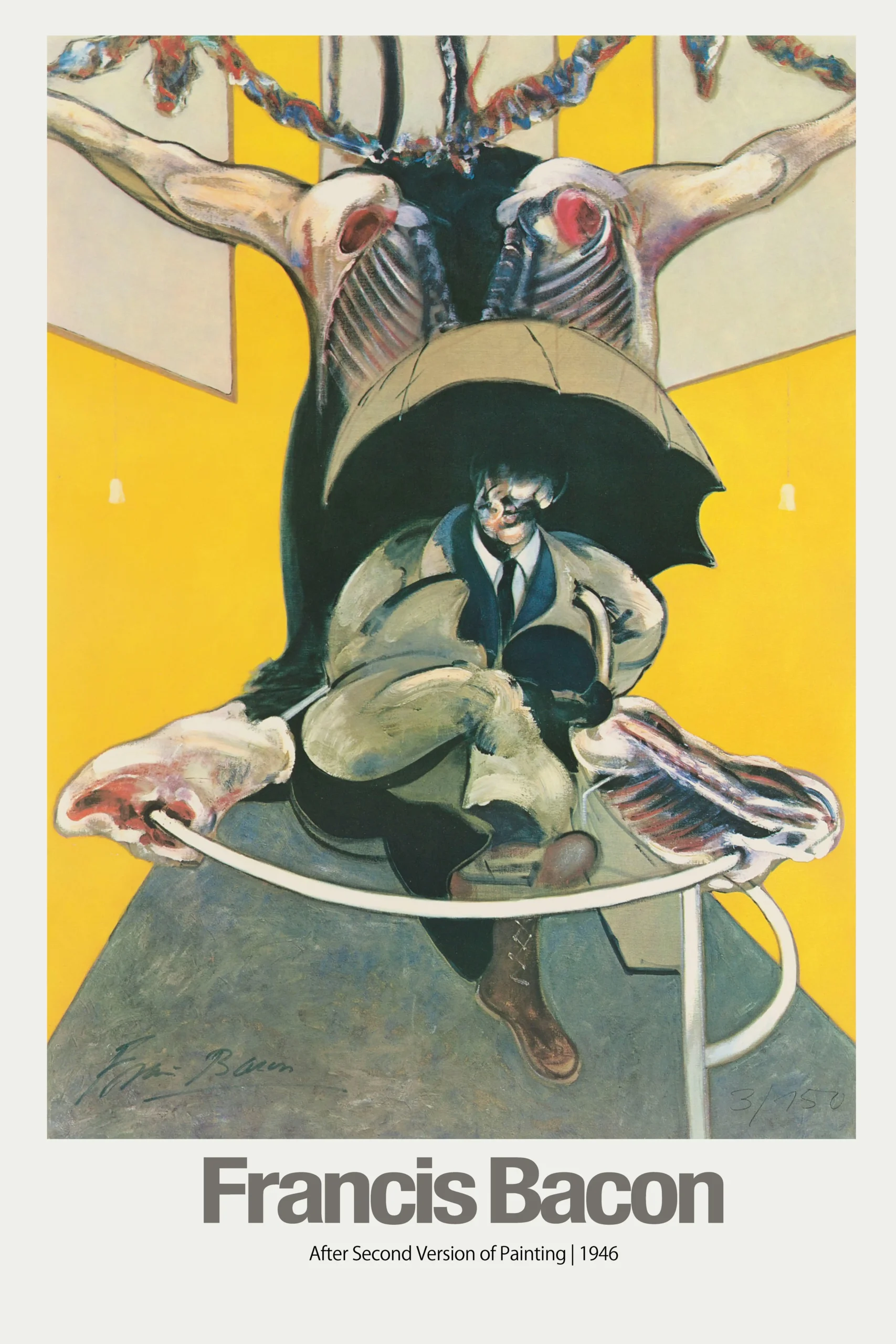
Why Choose Francis Bacon Art Prints?
Francis Bacon art prints provide accessible entry into collecting one of the 20th century's most important and influential artists. Original Bacon paintings command astronomical prices—his triptych "Three Studies of Lucian Freud" sold for $142.4 million in 2013, setting the world auction record. Most originals reside in major museums, making them permanently inaccessible to private collectors.
High-quality reproduction prints democratize access to Bacon's artistic genius while maintaining the visual power, psychological intensity, and dramatic impact that make his work so significant. Limited edition prints created during Bacon's lifetime, particularly his lithographs and etchings from the 1970s-1980s, have themselves become valuable collectibles, with some fetching £50,000+ at auction.
Contemporary museum-quality reproductions allow art lovers, collectors, and design enthusiasts to experience Bacon's revolutionary vision in their daily lives. These prints suit serious collectors who understand Bacon's art historical importance, design-conscious individuals seeking powerful focal points, and anyone who values challenging, intellectually rigorous art over safe decoration.
Investment Value of Bacon Prints
The Francis Bacon print market has shown remarkable strength and consistent demand. Since 2000, over 90% of Bacon lots sold at auction have been prints, typically fetching between £1,000 and £50,000. Bacon's total print market capitalization exceeds £69 million, with peak activity years (2019 and 2022) seeing over 150 works sold publicly.
Limited edition prints with matching triptych numbers command premium prices. Special editions including artist's proofs (AP), hors de commerce (HC), and presentation proofs are particularly sought-after by serious collectors. Prints published by prestigious galleries like Marlborough Graphics, Galerie Lelong, and Galerie Maeght maintain strong secondary market values.
While contemporary reproductions don't offer investment potential, they provide accessible ways to own museum-quality representations of historically significant artworks. For many collectors, owning high-quality Bacon reproductions bridges the gap between appreciation and the impossibility of acquiring originals.
Bacon's Most Collectible Print Subjects
Screaming Pope Series: Bacon's most iconic and sought-after images reinterpreting Velázquez's dignified Pope Innocent X as trapped, shrieking figures. These prints capture authority's vulnerability and remain his most recognized works, perfect statement pieces for contemporary interiors.
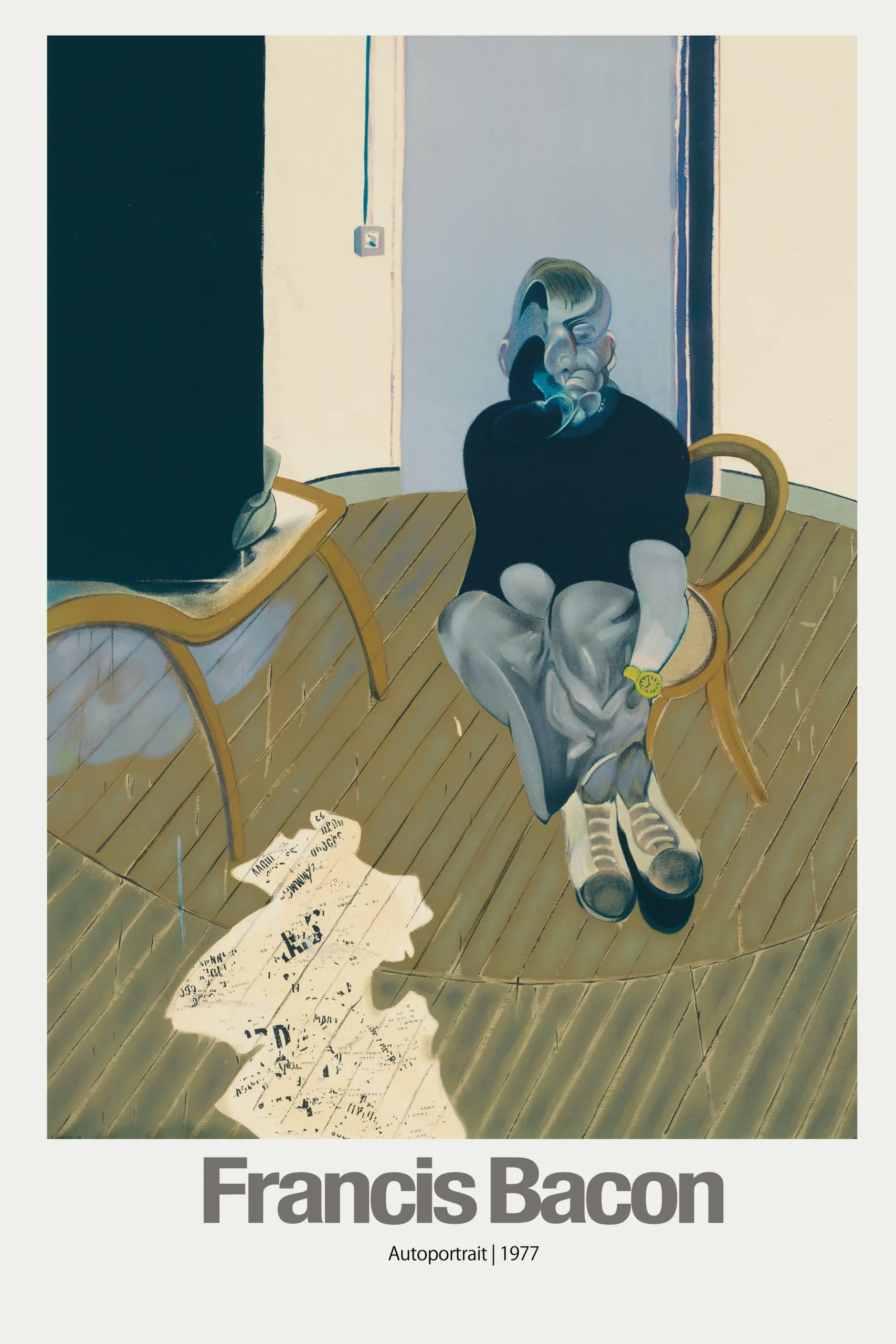
Head & Portrait Studies: Powerful close-up studies of distorted heads and portraits showing Bacon's revolutionary approach to representing the human face. Works like "Head II" (1958) and various self-portraits demonstrate his ability to capture psychological truth through distortion.
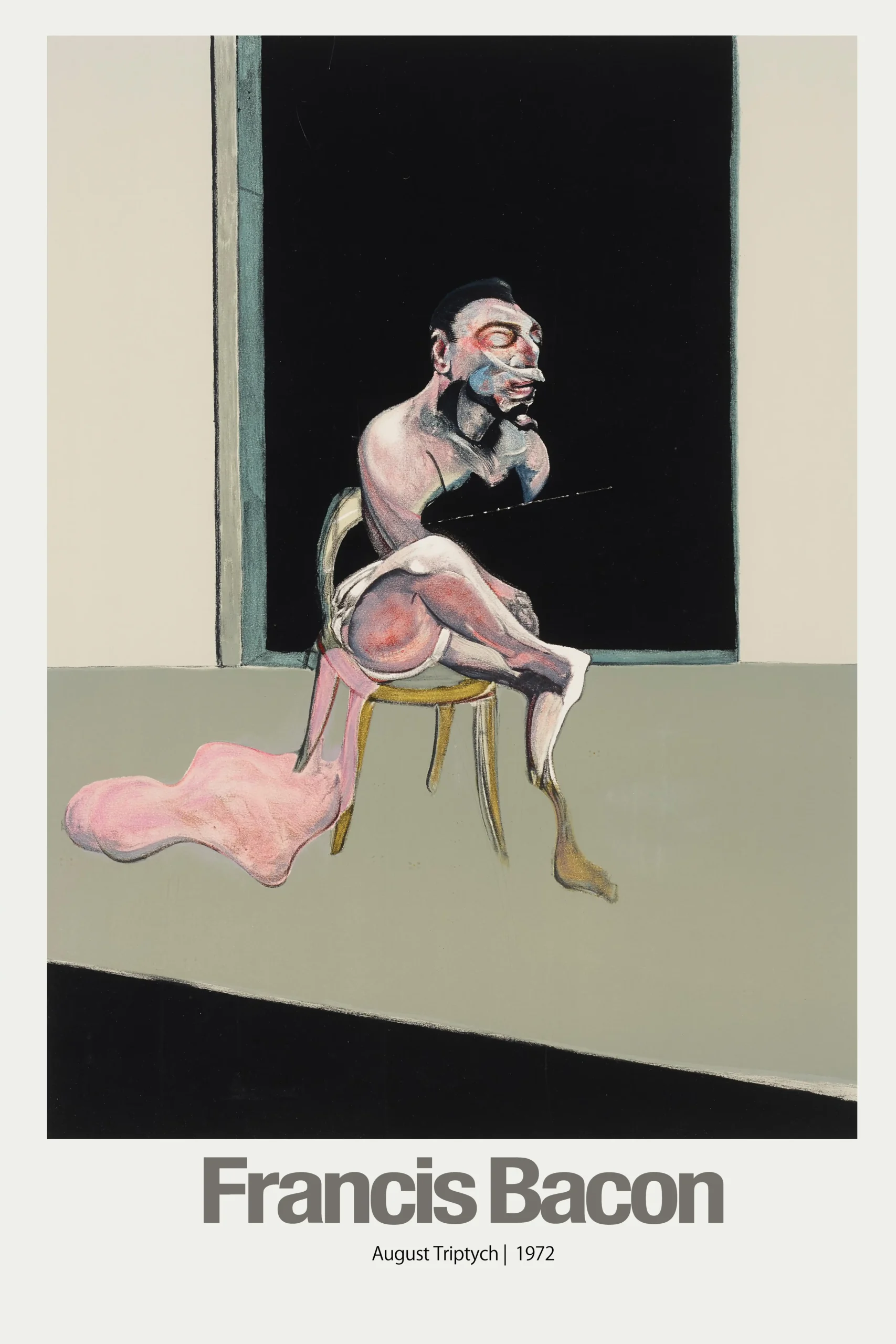
Triptych Works: Three-panel compositions borrowed from religious altarpiece formats but repurposed for secular, often disturbing subjects. Complete triptychs with matching edition numbers are particularly valuable and visually impactful when displayed together.
Figure Studies: Isolated bodies in stark geometric spaces exploring themes of existential isolation, physical vulnerability, and human fragility. These works suit collectors interested in Bacon's philosophical explorations of the human condition.
Crucifixion Themes: Non-religious interpretations of crucifixion imagery focusing on human suffering and bodily vulnerability. These prints showcase Bacon's ability to strip religious iconography of spiritual meaning while maintaining visual power.
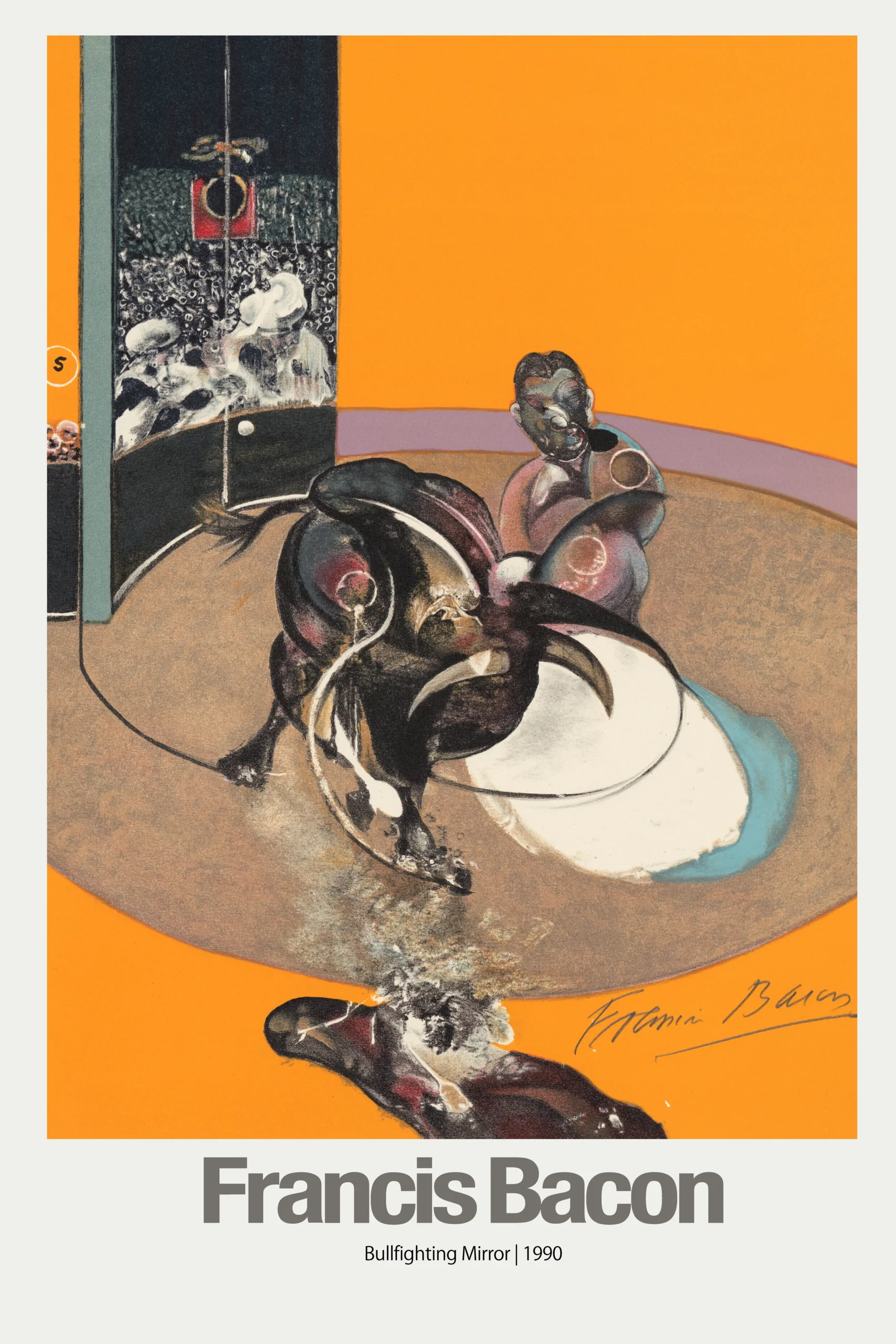
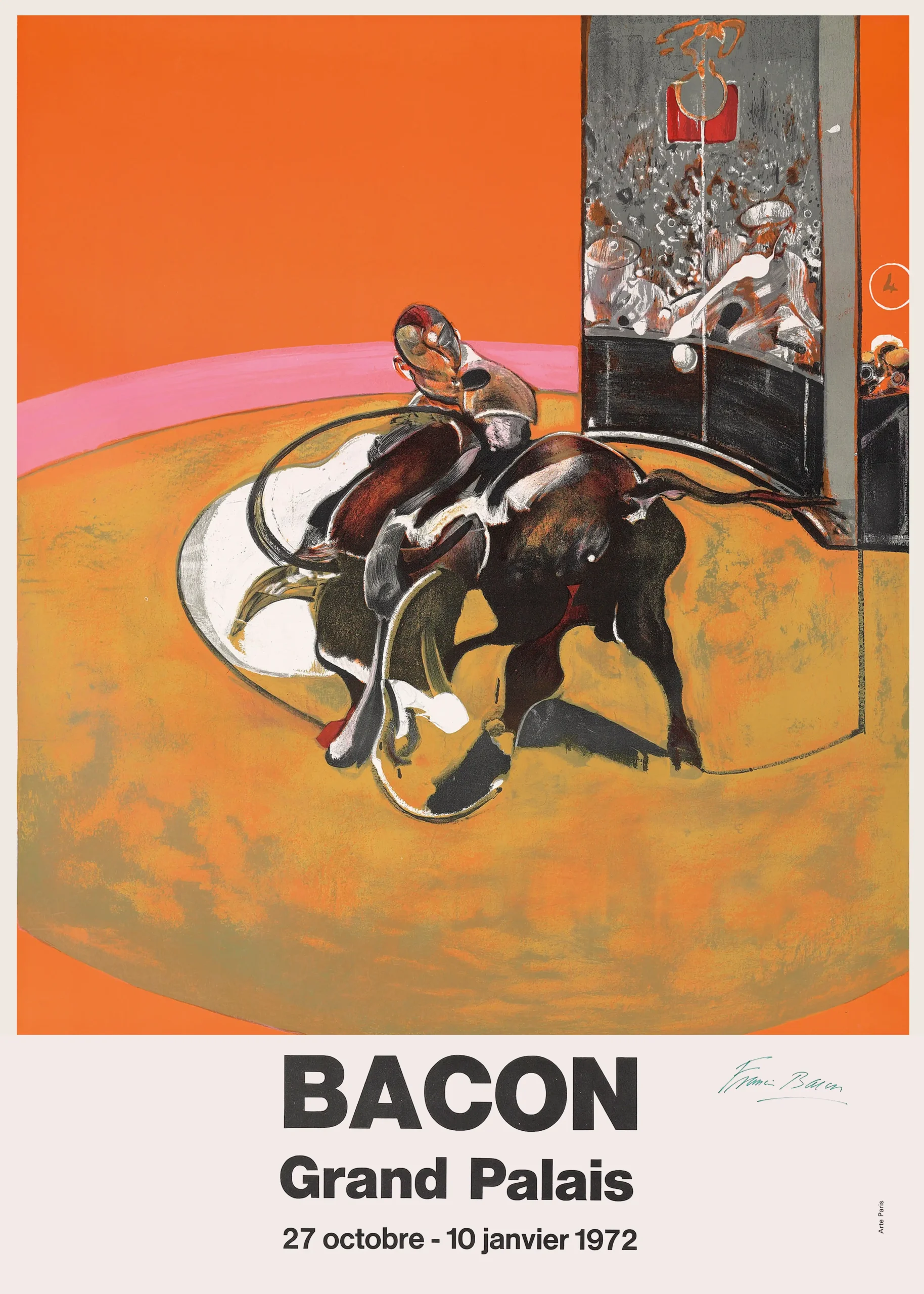
Bullfighting Scenes: A recurring subject throughout Bacon's career, bullfighting prints explore violence, spectacle, and the relationship between human and animal. The four lithographs focusing on bullfighting sold at Sotheby's for £85,000 in 2015.
Understanding Print Quality & Authenticity
Original Limited Edition Prints: Created during Bacon's lifetime (1909-1992) through lithography, etching, or screen printing processes. These typically bear edition numbers (e.g., 25/90), signatures, and publisher marks. Authenticity verification through reputable dealers and auction houses is essential for valuable editions.
Museum-Quality Reproductions: Contemporary high-resolution prints reproducing Bacon's paintings with museum-standard color accuracy and detail. While not original limited editions, quality reproductions serve educational, decorative, and appreciation purposes, making Bacon's work accessible to broader audiences.
Provenance Matters: For collectible prints, verified provenance from established galleries (Marlborough, Tate, Pompidou, MoMA) significantly affects value. Documentation, exhibition history, and publisher information authenticate prints and establish market credibility.
Displaying Francis Bacon Prints
Francis Bacon prints require thoughtful presentation to maximize their dramatic impact. These works suit modern, contemporary, minimalist, and industrial interiors where their psychological intensity can be fully appreciated without competing visual elements.
Frame Bacon prints simply in black, natural wood, or metal frames that don't distract from the artwork's power. Avoid ornate or decorative framing that contradicts his modernist aesthetic. Conservation-grade glazing protects prints from UV damage while reducing glare that might obscure details.
Proper lighting dramatically enhances Bacon prints. Directed spotlighting or track lighting emphasizes his distinctive colors and gestural brushwork. Position prints on prominent walls with surrounding space allowing contemplation. These aren't background decorations—they command attention and reward sustained viewing.
Ideal Spaces for Bacon Art Prints
Living rooms benefit from Bacon prints as powerful conversation-starting focal points. Home offices and studies gain intellectual gravitas and creative inspiration. Art studios and creative spaces find motivation in his revolutionary approach to figurative painting. Contemporary dining rooms embrace his sophisticated yet challenging aesthetic.
Commercial applications include law offices projecting serious intellectual engagement, design firms demonstrating sophisticated taste, contemporary restaurants creating memorable atmospheres, and gallery spaces celebrating 20th-century art movements.
Bacon's work generally doesn't suit children's spaces, traditional or romantic décor, or environments seeking calming, soothing aesthetics. His confrontational imagery demands mature audiences and appreciation for challenging contemporary art.
Size Considerations & Impact
Bacon's work often benefits from larger scale reproduction. Small prints can diminish the confrontational impact essential to his vision. Medium to large formats (24x36 inches and above) better convey the physical presence and psychological intensity of the originals.
Triptych works require significant wall space but create museum-quality presentation when displayed together. Ensure adequate room for viewers to step back and experience the complete composition. Gallery walls mixing multiple Bacon prints can showcase his thematic obsessions and stylistic evolution.
Educational & Cultural Significance
Displaying Francis Bacon art prints provides daily engagement with post-war European art's most significant figures. His work documents existential philosophy, post-war anxiety, and modernism's evolution beyond abstraction toward renewed figuration.
For students, educators, and art enthusiasts, Bacon prints serve as references for studying 20th-century art movements, understanding how artists responded to World War II trauma, and analyzing how traditional genres (portraiture, religious painting) can be radically reinterpreted for modern contexts.
These works spark discussions about beauty's definition, art's purpose, representation versus abstraction, and psychological truth versus physical accuracy—fundamental questions that continue resonating with contemporary audiences.
Collecting Strategy & Building Collections
Beginning collectors should start with Bacon's most famous and accessible images—screaming popes, head studies, or well-known triptychs. These works provide entry into understanding his visual language and thematic obsessions.
Intermediate collectors might explore his complete career chronologically, tracking stylistic evolution from early 1940s breakthrough works through mature 1960s-1970s masterpieces to late-period refinements. Thematic collecting—focusing exclusively on portraits, crucifixions, or papal imagery—creates focused, intellectually coherent collections.
Advanced collectors seek original limited editions, particularly rare special proofs and complete triptychs with matching edition numbers. These investment-grade prints require authentication, condition assessment, and market knowledge best gained through established dealers and auction house specialists.
Perfect Gifts for Serious Art Lovers
Francis Bacon art prints make exceptional gifts for contemporary art collectors expanding holdings, art history students and professors, museum members and gallery visitors, design professionals with sophisticated taste, and anyone who values intellectually challenging art over conventional beauty.
Suitable occasions include new home celebrations for serious collectors, office openings for creative professionals, graduation gifts for art students pursuing careers, retirement presents for lifelong art enthusiasts, and milestone anniversaries for couples sharing artistic interests.
These gifts demonstrate understanding of recipient's intellectual sophistication and respect for their willingness to engage with challenging, psychologically complex artwork. They're presents for those who see art as essential cultural engagement rather than mere decoration.
Complementary Artists & Collection Building
Bacon collectors often appreciate other 20th-century masters exploring similar existential themes. Lucian Freud (Bacon's close friend) shares interest in unflinching psychological portraiture. Alberto Giacometti's elongated figures express parallel existential isolation. Edvard Munch's "The Scream" connects to Bacon's screaming mouths. Willem de Kooning's gestural figuration relates to Bacon's brushwork energy.
Contemporary artists influenced by Bacon—including Jenny Saville, Cecily Brown, and Marlene Dumas—create collections bridging 20th-century masters with 21st-century continuations of figurative painting's psychological possibilities.
Authenticity & Buying Considerations
When purchasing collectible Francis Bacon prints, always buy from reputable dealers, established auction houses, or galleries specializing in modern prints. Request documentation including edition information, publisher details, provenance history, and condition reports.
Examine prints personally when possible, checking for printing quality, paper condition, signature authenticity (if applicable), and any damage or restoration. Professional appraisals provide insurance documentation and market value assessment for significant purchases.
For contemporary reproductions, prioritize museums-quality printing using archival inks and papers. Color accuracy is crucial—Bacon's specific reds, oranges, flesh tones, and blacks create emotional impact that poor reproduction diminishes.
Shop our Francis Bacon art prints collection today and engage with the 20th century's most psychologically powerful artist. Each print celebrates Bacon's revolutionary vision and unflinching exploration of human vulnerability, isolation, and existential truth. Transform your space with museum-quality Bacon prints that command attention, provoke thought, and demonstrate serious commitment to important contemporary art.