
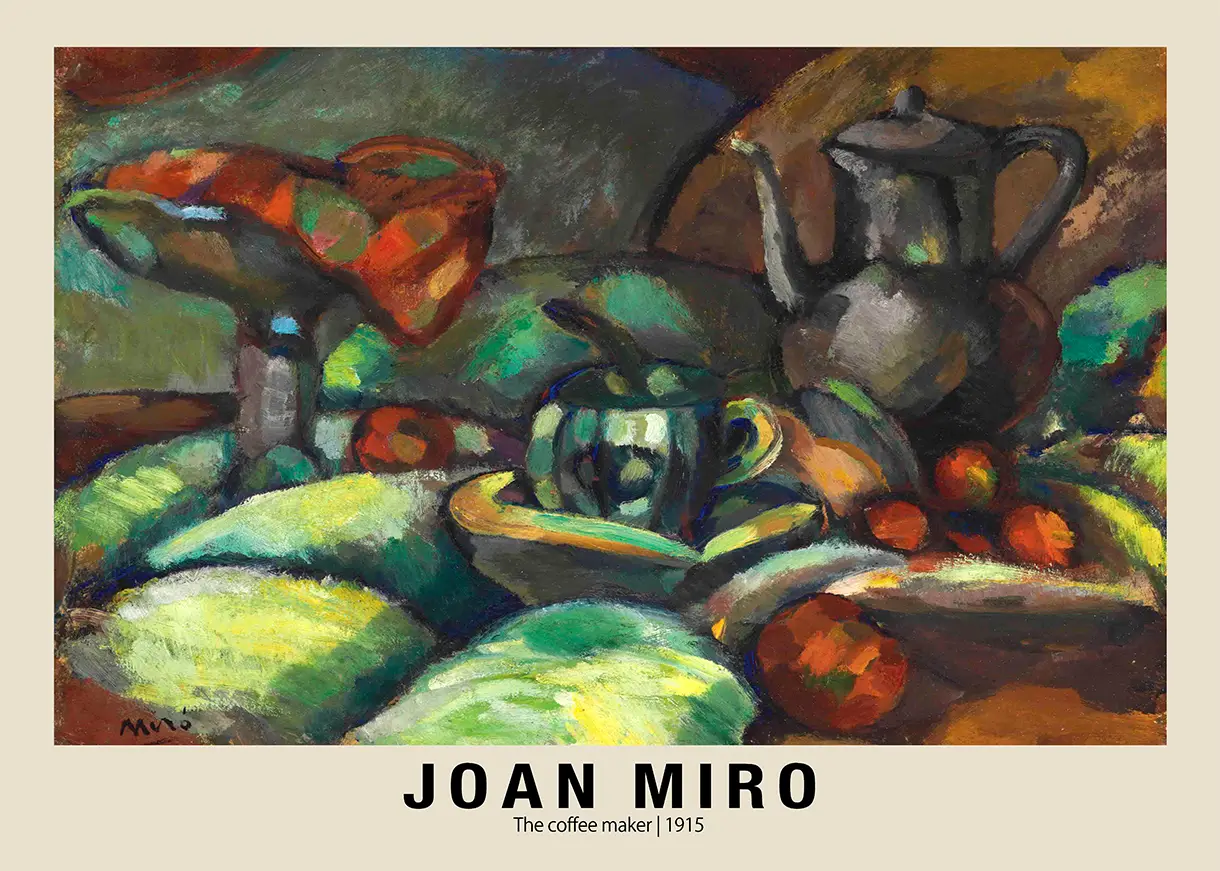
Classic Joan Miró Coffee Maker – 1915 Fauvist Expressionist Fine Art Print
This Joan Miró coffee maker print showcases the artist’s early foray into Fauvist experimentation with heavy texture and bold shadows. This Fauvist still life is rendered on 200 GSM museum-grade matte paper for a glare-free, professional finish.
What You Will Receive
- Made to order, museum-grade art print. Frame not included unless stated.
- Printed on 200 GSM premium matte paper for crisp detail and zero glare.
- Archival giclée inks that resist fading for decades.
- Multiple size options. Use the selector above.
- Protective packaging: rigid mailer or sturdy tube.
Print Quality
Every print is produced using state-of-the-art giclée technology on heavyweight 200 GSM matte paper. The non-reflective surface eliminates glare while the archival pigment inks deliver rich, accurate colours designed to last a lifetime.
Size Guide
For walls above furniture, choose a print roughly two thirds to three quarters the width of the piece below it. Smaller sizes up to 11×14 inches suit gallery walls. Larger formats of 18×24 inches and above create striking focal points.
Verified Customer Reviews
Shipping
Every order is printed on demand. Processing takes 3 to 5 business days, then ships free worldwide with tracking.
| Region | Processing | Delivery | Total |
|---|---|---|---|
| USA | 3–5 days | 2–6 days | 5–11 days |
| Canada | 3–5 days | 5–10 days | 8–15 days |
| UK & Europe | 3–5 days | 5–10 days | 8–15 days |
| Australia & NZ | 3–5 days | 8–15 days | 11–20 days |
| Asia | 3–5 days | 7–15 days | 10–20 days |
| Rest of world | 3–5 days | 10–20 days | 13–25 days |
📦 Packaging
Prints up to 12×18 inches ship flat in rigid cardboard mailers with backing board. Larger prints are rolled in sturdy tubes with protective end caps. Every package includes moisture barriers and Handle With Care labels.
Returns and Replacements
- 30-day return window from delivery. No questions asked.
- Report damage within 48 hours with photos for a free replacement.
- Full refunds for eligible returns in original condition.
- Cancel before production starts for a complete refund.
- Return shipping covered for defective or incorrect items.
Need help? info.merchfuse@gmail.com
How to Care for Your Print
Follow these steps to keep your print looking gallery fresh for decades.
Handling
Allow rolled prints to relax flat for 30 to 60 minutes. Handle by the edges with clean, dry hands and avoid touching the printed surface.
Placement
Avoid direct sunlight, heat sources and high humidity areas. North-facing walls receive less UV. Use LED or incandescent lighting instead of fluorescent.
Framing
Use acid-free mats and UV protective glass or acrylic for maximum longevity. Leave a small gap between print and glazing for airflow.
Cleaning
Dust framed glass with a soft cloth. Spray the cloth, not the glass. For unframed prints, use a dry microfibre cloth and never apply liquids to the surface.
Climate
Keep temperature at 18–24 °C and humidity at 40–60%. Avoid attics, basements and garages where conditions swing widely.
Storage
Store flat in acid-free folders, interleaved with tissue paper, in a cool dark place. Never fold. Check stored prints annually.
⚠️ Avoid
- Prolonged direct sunlight or fluorescent lighting.
- Bathrooms, kitchens and areas above heat sources.
- Tape, adhesives or liquids applied directly to the print.
- Rolling with the image facing inward as this can crack the ink layer.
- Extreme or rapid temperature and humidity changes.
📊 Expected Lifespan
- 100+ years when framed with UV protective glazing and indirect light.
- 50–75 years when framed with standard glass and indirect light.
- 25–50 years when stored correctly in darkness.
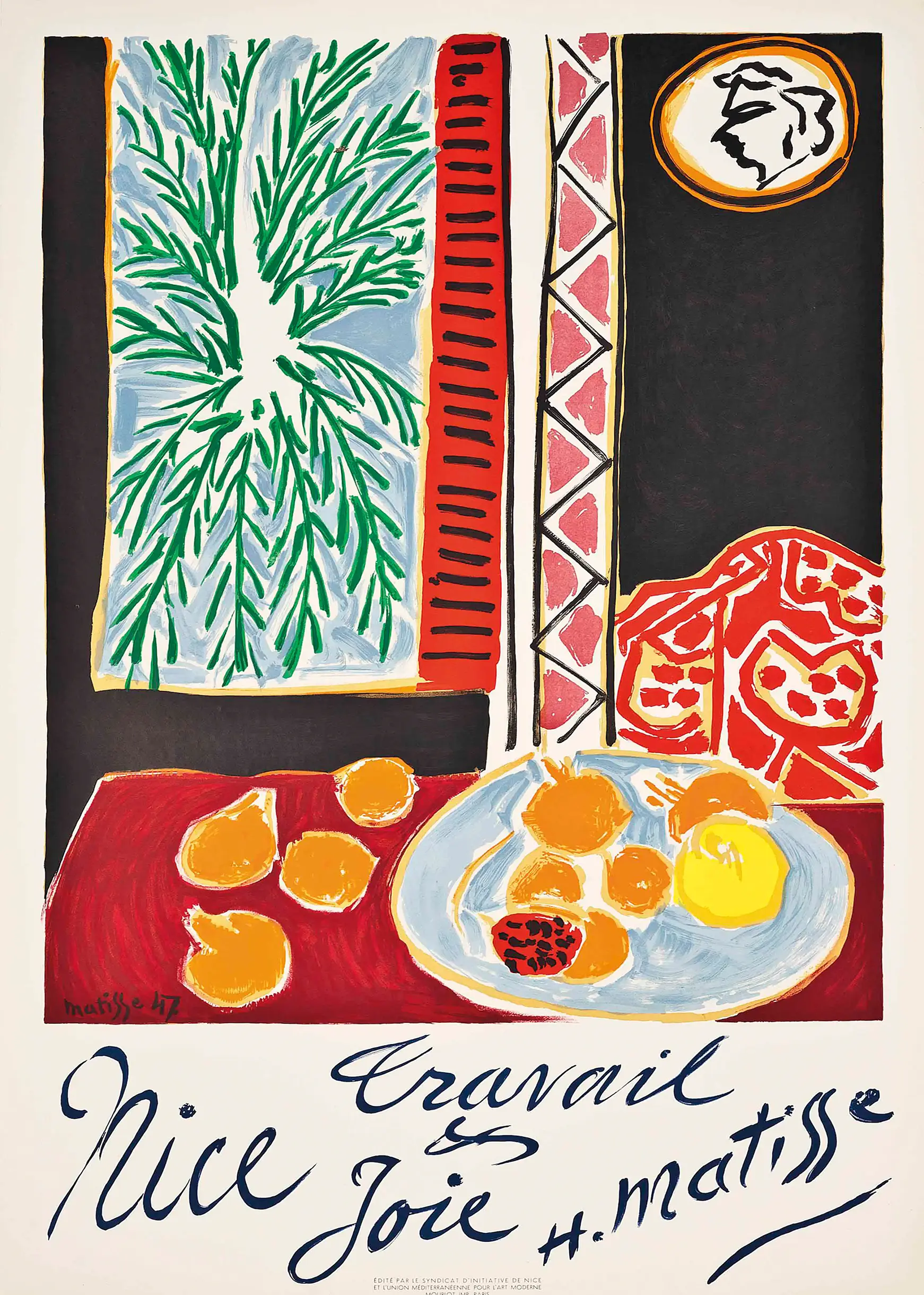
This Joan Miró coffee maker reproduction captures a pivotal moment in the career of the Catalan icon. Created in 1915, the original work serves as a prime example of the artist’s early departure from traditional realism into the more emotive realms of Fauvism and Expressionism. The composition centers on a dark, heavy coffee pot that anchors the frame, surrounded by objects that appear to vibrate with internal energy. The thick application of pigment and the deliberate, almost aggressive brushwork reveal a young artist exploring the physical properties of paint and light.
Historical Context of the Joan Miró Coffee Maker
In 1915, the artistic world was shifting rapidly, and this work reflects that volatility. The Joan Miró coffee maker represents the period when the artist was deeply influenced by the vibrant palettes of the French Fauves and the structural innovations of the Cubists. Instead of depicting a serene morning scene, the artist uses saturated greens, deep ambers, and heavy ochres to create a dense, tactile environment. The shadows are not merely the absence of light but are rendered as solid, dark forms that give the daily objects a sculptural weight. This piece marks a departure from his later surrealist style, offering a glimpse into his foundations in figurative expression.
Visual Composition and Color Palette
The visual weight of the Joan Miró coffee maker is distributed through a series of intersecting planes and heavy outlines. The coffee pot itself is rendered with metallic sheens achieved through high-contrast highlights and deep charcoal shadows. Adjacent to the central pot, a small green bowl and various pieces of fruit are depicted with energetic strokes that suggest movement. The background is not a void but a continuation of the rhythmic brushwork, blending earthy browns with hints of blue and teal. This creates a sense of depth that feels carved rather than painted, ensuring the viewer remains engaged with the texture of the scene.
For those looking to add a touch of early modernism to their collection, the Joan Miró coffee maker provides a sophisticated aesthetic that bridges the gap between classic still life and modern abstraction. The interplay between the organic shapes of the fruit and the rigid geometry of the kitchenware creates a visual tension that is hallmark of this era. This print is not merely a decorative object; it is a document of a revolutionary artistic evolution that paved the way for the surrealist movements of the 1920s.
Technical Specifications and Archival Standards
Acquiring a Joan Miró coffee maker print from our collection ensures that the intensity of the original pigment is preserved through modern technology. We utilize professional large-format printers and fade-resistant archival inks to reproduce every nuance of the 1915 original. The paper used is a 200 GSM museum-grade matte finish, which prevents glare and allows the deep color saturation to remain prominent even under direct lighting. The 300 DPI resolution ensures that the grain of the canvas and the individual bristles of the brush are visible to the naked eye.
Every Joan Miró coffee maker edition is produced with meticulous attention to color accuracy. We prioritize the preservation of the mid-tones and highlights that define the metallic luster of the original pot. This print ships unframed and is sized to fit standard frame dimensions, making it an ideal choice for an office, dining area, or private gallery. The durability of the archival materials ensures that the vibrant greens and warm oranges will not fade over time, maintaining the integrity of the artist’s vision for years to come.
This is fan-inspired artwork and an original artistic interpretation. It is not affiliated with, endorsed by, or officially licensed by any studio, production company, label, artist, photographer, or rights holder.
Price range: $3.90 through $74.90
Price range: $3.90 through $74.90
Price range: $3.90 through $74.90
Price range: $3.90 through $74.90