
Exclusive Passenger Pigeon Print – Audubon Birds of America Wall Art
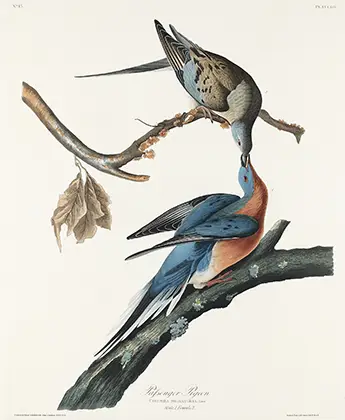
This Passenger Pigeon Print displays a detailed 19th-century ornithological study on archival paper. Each vintage nature illustration utilizes fade-resistant inks on museum-grade matte stock.
What You Will Receive
- Made to order, museum-grade art print. Frame not included unless stated.
- Printed on 200 GSM premium matte paper for crisp detail and zero glare.
- Archival giclée inks that resist fading for decades.
- Multiple size options. Use the selector above.
- Protective packaging: rigid mailer or sturdy tube.
Print Quality
Every print is produced using state-of-the-art giclée technology on heavyweight 200 GSM matte paper. The non-reflective surface eliminates glare while the archival pigment inks deliver rich, accurate colours designed to last a lifetime.
Size Guide
For walls above furniture, choose a print roughly two thirds to three quarters the width of the piece below it. Smaller sizes up to 11×14 inches suit gallery walls. Larger formats of 18×24 inches and above create striking focal points.
Verified Customer Reviews
Shipping
Every order is printed on demand. Processing takes 3 to 5 business days, then ships free worldwide with tracking.
| Region | Processing | Delivery | Total |
|---|---|---|---|
| USA | 3–5 days | 2–6 days | 5–11 days |
| Canada | 3–5 days | 5–10 days | 8–15 days |
| UK & Europe | 3–5 days | 5–10 days | 8–15 days |
| Australia & NZ | 3–5 days | 8–15 days | 11–20 days |
| Asia | 3–5 days | 7–15 days | 10–20 days |
| Rest of world | 3–5 days | 10–20 days | 13–25 days |
📦 Packaging
Prints up to 12×18 inches ship flat in rigid cardboard mailers with backing board. Larger prints are rolled in sturdy tubes with protective end caps. Every package includes moisture barriers and Handle With Care labels.
Returns and Replacements
- 30-day return window from delivery. No questions asked.
- Report damage within 48 hours with photos for a free replacement.
- Full refunds for eligible returns in original condition.
- Cancel before production starts for a complete refund.
- Return shipping covered for defective or incorrect items.
Need help? info.merchfuse@gmail.com
How to Care for Your Print
Follow these steps to keep your print looking gallery fresh for decades.
Handling
Allow rolled prints to relax flat for 30 to 60 minutes. Handle by the edges with clean, dry hands and avoid touching the printed surface.
Placement
Avoid direct sunlight, heat sources and high humidity areas. North-facing walls receive less UV. Use LED or incandescent lighting instead of fluorescent.
Framing
Use acid-free mats and UV protective glass or acrylic for maximum longevity. Leave a small gap between print and glazing for airflow.
Cleaning
Dust framed glass with a soft cloth. Spray the cloth, not the glass. For unframed prints, use a dry microfibre cloth and never apply liquids to the surface.
Climate
Keep temperature at 18–24 °C and humidity at 40–60%. Avoid attics, basements and garages where conditions swing widely.
Storage
Store flat in acid-free folders, interleaved with tissue paper, in a cool dark place. Never fold. Check stored prints annually.
⚠️ Avoid
- Prolonged direct sunlight or fluorescent lighting.
- Bathrooms, kitchens and areas above heat sources.
- Tape, adhesives or liquids applied directly to the print.
- Rolling with the image facing inward as this can crack the ink layer.
- Extreme or rapid temperature and humidity changes.
📊 Expected Lifespan
- 100+ years when framed with UV protective glazing and indirect light.
- 50–75 years when framed with standard glass and indirect light.
- 25–50 years when stored correctly in darkness.
Passenger Pigeon Print collectors and natural history enthusiasts recognize the historical weight of John James Audubon’s “The Birds of America.” This specific Plate 62 recreation depicts the extinct Ectopistes migratorius with scientific rigor and artistic grace. The male bird perches atop a gnarled branch, reaching down toward the female in a display of social interaction that was common before the species vanished from the wild. This illustration captures the specific anatomy and coloration of the birds, including the iridescent neck patches and the long, tapered tails that characterized their flight profiles.
The Artistic Precision of the Passenger Pigeon Print
The visual depth of this Passenger Pigeon Print is achieved through high-resolution scanning of the original 19th-century lithograph. Every stroke of the engraver’s tool is visible, from the fine downy feathers on the breast to the sharp, dark primary feathers of the wings. The composition uses a centralized focus, with the birds’ interlocking forms creating a focal point against the neutral background. Audubon’s ability to imbue his subjects with character without sacrificing biological accuracy is the primary reason this Passenger Pigeon Print remains a staple for academic and aesthetic environments alike. The physical traits of the birds in this illustration are of particular interest to biologists and historians. The male’s crown is a soft slate gray, which transitions into the iridescent plumage of the neck. The underparts show a rich, cinnamon-red hue that fades into a pale white toward the tail. In contrast, the female’s coloration is more restrained, favoring grays and browns that would have provided camouflage during nesting. The branch itself is a study in texture, featuring peeling bark and small clusters of moss or lichen, which adds a tactile quality to the print.
Historical Context and Scientific Importance
During the mid-1800s, the passenger pigeon was the most abundant bird in North America. Audubon witnessed the massive migrations firsthand, noting that the sky would darken for hours as the birds passed overhead. Integrating a Passenger Pigeon Print into your collection serves as a reminder of this lost natural phenomenon. The artistic style reflects the Golden Age of natural history illustration, where the goal was to document every species of the New World with absolute fidelity. This wall art fits effectively within a variety of interior design schemes, particularly those favoring traditional, rustic, or dark academia aesthetics. The neutral tones of the paper and the organic shapes of the birds allow it to complement wooden furniture, leather-bound books, and brass accents. In a home office or library, the Passenger Pigeon Print acts as a conversation piece regarding the intersection of art and conservation.
Museum-Grade Materials and Production Quality
Quality is paramount when reproducing antique documents. Our Passenger Pigeon Print is manufactured using 200 GSM museum-grade matte paper, which offers a non-reflective surface perfect for viewing under varied lighting conditions. We utilize archival-grade inks that are formulated to resist UV degradation, preventing the fading that often plagues lower-quality posters. The paper’s weight ensures it remains flat during the framing process, preserving the crisp edges of the illustration. To keep the Passenger Pigeon Print looking pristine, we suggest framing under UV-protective glass if placed in direct sunlight.
- Paper: 200 GSM museum-grade matte finish with high opacity.
- Inks: Professional large-format archival pigments for long-term color stability.
- Resolution: 300 DPI high-definition reproduction of the original Audubon plate.
- Format: Unframed, shipped in heavy-duty protective tubes to prevent creasing.
- Digital Download: High-resolution 300 DPI files available for immediate use at $3.90.
This Passenger Pigeon Print is a respectful recreation of a defining work in ornithology. Whether displayed as a single focal point or as part of a larger series of Audubon prints, the clarity and historical accuracy of the piece are maintained. This is fan-inspired artwork and an original artistic interpretation. It is not affiliated with, endorsed by, or officially licensed by any studio, production company, label, artist, photographer, or rights holder.
Price range: $3.90 through $74.90
Price range: $3.90 through $74.90
Price range: $3.90 through $74.90
Price range: $3.90 through $74.90